

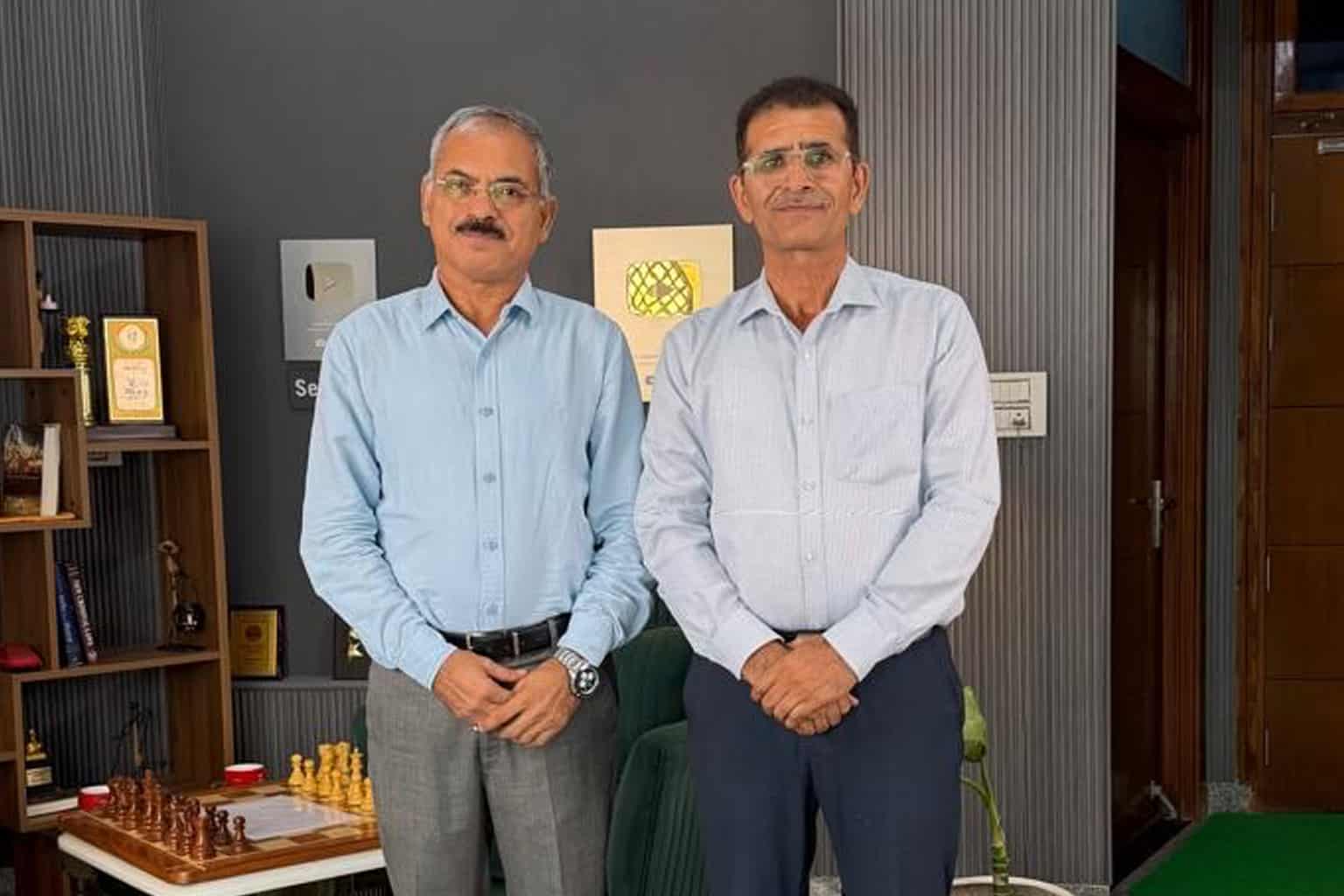
On 3 November 2014, a firing incident involving an Indian Army checkpoint at Chattergam in Jammu and Kashmir’s Budgam district left two young men dead and two others injured.
The incident reportedly began after security forces received information about the possible movement of militants in a white Maruti car. Mobile checkpoints were established along the suspected route. When a vehicle reportedly failed to stop, firing took place.
The immediate operation ended within moments.
Its consequences did not.
The deaths triggered grief, protests, stone-pelting, political controversy and a serious breakdown of trust between the affected families and the security forces. Compensation was announced, but the bereaved families were reportedly unwilling to accept it at that stage.
Brigadier Brijesh Pandey, who was serving as Colonel Brijesh Pandey in the region, recalled being asked to help find a way forward.
He travelled in a civilian vehicle to the home of one of the deceased youths. The surrounding atmosphere was hostile, and he believed that discovery of his military identity could place his life in danger.
He stood outside the family’s closed door, telephoned them and identified himself.
He did not demand entry.
He asked for permission to sit with them in their grief.
After several tense minutes, the door opened.
What followed became one of the most memorable leadership experiences of his long tenure in Jammu and Kashmir.
What happened in Chattergam in November 2014?
According to public reporting from the period, the Army had received intelligence regarding possible militant movement in a white Maruti vehicle.
A Rashtriya Rifles unit established mobile vehicle checkpoints along the suspected route. A white car carrying young occupants subsequently approached the area.
Brigadier Pandey recalled that the vehicle did not stop at the first checkpoint. By the time it approached the next position, soldiers had become alert.
He also remembered hearing about a collision or sound resembling a blast shortly before firing began. However, the precise reason for that sound is not clearly established in his account and should not be presented as a confirmed fact.
Firing from the checkpoint struck the occupants.
The principal outcome publicly reported was:
- two young men were killed;
- two others were injured;
- the injured were moved for medical treatment;
- public anger increased rapidly; and
- the Army initiated an inquiry.
Brigadier Pandey’s recollection also refers to another occupant leaving the vehicle and escaping. This detail belongs to his personal account and should be attributed accordingly.

Why did the incident create such widespread anger?
Civilian casualties in a disturbed area do not remain limited to the location where an operation takes place.
The Chattergam deaths became connected with:
- public demonstrations;
- stone-pelting;
- separatist mobilisation;
- political criticism;
- rejection of compensation;
- distrust of security forces; and
- demands for accountability.
Grief and public anger were also amplified by groups seeking to use the incident for their own political or ideological objectives.
For military commanders, this created two simultaneous challenges.
The first was to maintain security and prevent further violence.
The second was to acknowledge that two families had lost their sons and that official procedures alone could not repair the damage.
The situation could not be handled only as a law-and-order problem.
It had become a crisis of trust.
Why are counter-insurgency decisions exceptionally difficult?
Brigadier Pandey explained that counter-insurgency is fundamentally different from conventional warfare.
In a conventional war, the opposing force may be identified through:
- uniform;
- formation;
- direction of movement;
- weapons;
- known positions; and
- a broadly defined battlefield.
Counter-insurgency rarely provides that level of clarity.
A soldier or commander may have only seconds to determine whether a person or vehicle represents:
- an ordinary civilian;
- a frightened driver;
- a local militant;
- a foreign terrorist;
- someone attempting to avoid a checkpoint; or
- an immediate armed threat.
Intelligence may be incomplete. Visibility may be poor. Civilians and armed actors may use similar vehicles, roads and clothing.
The tactical decision may have to be made instantly, but its social and political consequences can continue for months.
Brigadier Pandey compared professional training, traditions and accumulated military experience to an internal software system operating in a commander’s mind.
When time is limited, decisions depend on that internal preparation.
But even highly trained personnel can make errors when the available information is uncertain and the situation changes rapidly.

How does a commander balance security and human responsibility?
Brigadier Pandey placed national security at the highest level of priority.
A commander cannot knowingly allow a serious threat to continue merely because the surrounding situation is sensitive.
At the same time, counter-insurgency requires an understanding that every person in a disturbed area cannot be treated as an identical threat.
A commander may encounter:
- foreign terrorists who have infiltrated across the border;
- hardened local militants;
- recently recruited youths;
- unarmed supporters;
- protestors;
- innocent civilians; and
- frightened people reacting unpredictably.
Where operational circumstances permit, security forces may try to:
- apprehend rather than kill;
- encourage surrender;
- separate local recruits from violent networks;
- communicate through families;
- prevent further radicalisation; and
- support rehabilitation.
Force remains necessary when an immediate threat exists.
But force is not the only instrument available to a commander.
The larger responsibility is to protect national security while preventing avoidable harm and preserving the possibility of long-term stability.

Why was financial compensation unable to restore communication?
Following the incident, financial relief was announced for the families of the deceased and the injured.
However, compensation is an administrative response.
Grief is personal.
A family that has lost a child may view an immediate financial offer as inadequate or emotionally disconnected when acknowledgement and accountability have not yet been established.
Brigadier Pandey recalled that the families were not prepared to accept the compensation.
This did not necessarily mean that the amount itself was the central issue.
Their refusal reflected a deeper breakdown in communication.
The families needed to feel that their loss had been recognised by the people and institution involved.
Someone had to approach them not merely as beneficiaries of a compensation package, but as grieving parents.
Why did Colonel Pandey travel in a civilian vehicle?
The area surrounding the family’s house remained tense.
Stone-pelting was taking place, and public hostility toward the Army was high.
A visible military convoy could have:
- attracted a crowd;
- provoked confrontation;
- placed the family at additional risk;
- prevented a private meeting;
- triggered another security incident; and
- hardened public attitudes further.
Colonel Pandey therefore travelled in a civilian vehicle.
This was not an attempt to mislead the family.
Once he reached the door, he openly identified himself as Colonel Brijesh Pandey.
The civilian vehicle allowed him to approach without drawing immediate public attention.
His objective was to create a small opportunity for communication inside an otherwise hostile environment.
What did Colonel Pandey say at the family’s door?
Colonel Pandey stood outside the closed door and telephoned the family.
He introduced himself and explained why he had come.
In substance, he told them that he had arrived to express condolences.
He also acknowledged that the decision to open the door belonged entirely to them.
They could refuse him entry and inform the people outside that an Army officer was present.
Or they could allow him to enter and sit with them during their mourning.
For several minutes, there was no response.
During that silence, he did not know whether the family would open the door or expose his presence to the hostile crowd outside.
Eventually, the door opened.
What happened inside the grieving family’s home?
Colonel Pandey did not begin by defending the Army’s actions.
He did not explain the intelligence input, checkpoint arrangement or firing sequence.
He did not pressure the family to accept compensation.
He sat among them.
The relatives were grieving. He listened and shared their sorrow. He recalled becoming emotional himself.
For approximately 10 to 15 minutes, he participated in the condolence gathering without turning it into an official meeting.
This restraint was significant.
When grief is still fresh, explanations can sound like excuses. An institution that begins by defending itself may appear more concerned with reputation than with the lives that were lost.
Colonel Pandey first acknowledged the family’s pain.
Only after pain is acknowledged can meaningful communication begin.
How did the family respond to the visit?
As Colonel Pandey prepared to leave, the father of the deceased reportedly told him that the family had seen another side of the Army.
Until that moment, their most immediate experience of the military was connected with checkpoints, weapons and the death of their son.
Inside their home, they encountered an officer willing to enter a hostile area, sit silently among them and acknowledge their grief.
According to Brigadier Pandey, the fathers of the two deceased youths came to Army headquarters the next day.
They met the Corps Commander.
The meeting did not erase their loss.
It did not eliminate every question surrounding the firing.
But it restored a communication channel that had appeared completely closed.
That was the immediate non-kinetic achievement.
What is the difference between kinetic and non-kinetic action?
Kinetic action involves the direct or threatened use of physical force.
It may include:
- firing;
- armed interception;
- cordon-and-search operations;
- raids;
- encounters;
- checkpoints; and
- area domination.
Non-kinetic action attempts to influence the security environment without making force the principal method.
It may include:
- dialogue;
- surrender negotiations;
- community engagement;
- grievance handling;
- rehabilitation;
- information outreach;
- condolence visits; and
- trust-building.
The vehicle firing was a kinetic event.
The public anger that followed could not be resolved through additional checkpoints and patrols alone.
Colonel Pandey’s visit was a non-kinetic intervention.
It did not change the past.
It changed the possibility of what could happen next.

Why can empathy become an operational capability?
Empathy is sometimes incorrectly presented as the opposite of military strength.
In reality, understanding another person’s fear, anger and perception can improve operational judgement.
Empathy may help a commander understand:
- why a community is protesting;
- whether a family might support a surrender effort;
- how misinformation is spreading;
- when official communication has failed;
- whether anger could escalate into violence; and
- what action might reopen dialogue.
Empathy does not require accepting every allegation or compromising security.
It requires recognising that people do not respond only to orders, compensation or warnings.
They also respond to dignity, respect and sincerity.
In counter-insurgency, public trust can influence:
- local intelligence;
- cooperation with authorities;
- recruitment into militant groups;
- surrender efforts;
- public legitimacy; and
- the likelihood of future violence.
Human engagement is therefore not separate from security.
In certain circumstances, it becomes part of security.
Did the Army acknowledge that a mistake had occurred?
Public reporting from the period states that the Army accepted responsibility for the incident and described the firing as a mistake.
Compensation was announced, and an inquiry was ordered.
Subsequent media reports stated that nine personnel, including a Junior Commissioned Officer, were indicted during the Army’s investigation.
These developments matter because human engagement cannot replace accountability.
A condolence visit can reopen communication, but it cannot substitute for:
- an investigation;
- examination of rules of engagement;
- administrative responsibility;
- corrective action; and
- institutional learning.
Compassion without accountability may appear cosmetic.
Accountability without human contact may remain emotionally distant.
A credible response requires both.
What is publicly reported, and what comes from Brigadier Pandey’s account?
Several central facts surrounding the Chattergam incident are part of the public record.
Other details come specifically from Brigadier Pandey’s first-person recollection.

What details remain undisclosed or uncertain?
The available account does not establish every operational detail.
A responsible article should not invent:
- the precise cause of the blast-like sound;
- the full identity of every vehicle occupant;
- who issued the firing order;
- the exact size of the crowd outside the house;
- the route taken by Colonel Pandey;
- the complete conversation inside the home;
- the discussion with the Corps Commander;
- whether compensation was later accepted;
- or whether the visit alone ended the surrounding unrest.
Brigadier Pandey was recalling an event many years later.
His account is valuable as first-person testimony, but it should not be represented as a verbatim operational record or official inquiry document.
What leadership qualities did Colonel Pandey demonstrate?
The incident highlights several dimensions of military leadership.
Moral courage
He entered an area where discovery of his identity could have created a serious threat to his life.
Emotional intelligence
He recognised that the family needed acknowledgement before explanation.
Cultural sensitivity
He approached the family through the social tradition of condolence rather than relying on military authority.
Personal responsibility
He did not delegate the most difficult conversation to a junior officer.
Strategic patience
He did not demand an immediate statement, settlement or acceptance of compensation.
Non-kinetic judgement
He understood that trust damaged during a kinetic event required a human response.
What can young officers and defence aspirants learn?
Military leadership is often associated with courage under fire.
This story demonstrates another form of courage: approaching people who are angry with the organisation one represents and listening without becoming defensive.
The principal lessons are:
- national security and sensitivity are not opposites;
- commanders must sometimes personally enter difficult conversations;
- explanations should not always come before acknowledgement;
- compensation cannot replace empathy;
- cultural understanding can create communication where authority fails;
- operational consequences continue after firing stops; and
- non-kinetic action can support long-term security objectives.
A commander’s responsibility is not limited to the immediate operation.
The social, political and human consequences may require leadership long after the tactical event has ended.
Does empathy weaken military authority?
No.
Empathy does not mean ignoring an armed threat, abandoning operational procedures or treating every hostile individual as harmless.
It means understanding the people affected by an operation and choosing the response that best serves the larger mission.
Some situations require immediate force.
Other situations may be worsened by additional force.
A mature commander must understand the difference.
National security cannot be compromised.
But lasting security also depends on how people experience the conduct of those responsible for protecting it.
Final takeaway
The 2014 Chattergam firing left two young men dead, two others injured and an entire region angry.
The Army acknowledged that a mistake had occurred, announced compensation and initiated an inquiry.
Amid the tension, Colonel Brijesh Pandey travelled in a civilian vehicle to the home of one of the deceased youths.
He stood outside the closed door knowing that discovery by the surrounding crowd could place him in danger.
When the family allowed him to enter, he did not begin with an explanation.
He sat with them.
He shared their grief.
According to his account, the bereaved fathers came to Army headquarters the following day and met the Corps Commander.
The visit did not cancel the tragedy.
It reopened communication after trust had collapsed.
This was not a story in which emotion replaced national security.
It was a story in which human understanding became part of security.
A weapon can stop an immediate threat.
A checkpoint can control movement.
Compensation can provide financial relief.
But after trust has broken down, only sincere human contact may be able to open the door again.
Frequently asked questions
When did the Chattergam firing take place?
The incident occurred on 3 November 2014 in Chattergam, Budgam district, Jammu and Kashmir.
How many people were killed or injured?
Two young men were killed and two others were injured.
Why did firing take place?
Security forces had received intelligence about possible militant movement in a white vehicle. Checkpoints were established, and the vehicle reportedly failed to stop. The Army later acknowledged that the firing was a mistake.
Why did Colonel Brijesh Pandey visit the family?
According to his account, he was asked to help reopen communication after the families rejected official outreach and the security situation became increasingly tense.
Did Colonel Pandey visit in military uniform?
He recalled travelling in a civilian vehicle to avoid attracting attention. He identified himself to the family before requesting permission to enter.
Did he ask the family to accept compensation?
His account describes the visit as an act of condolence. He said that he sat with the grieving relatives rather than immediately discussing compensation or defending the incident.
Did the family later meet Army officers?
According to Brigadier Pandey, the fathers of the deceased youths came to Army headquarters the next day and met the Corps Commander.
Is the condolence visit recorded in an official Army report?
The broader firing incident, compensation and inquiry were publicly reported. The detailed family visit comes from Brigadier Pandey’s first-person account shared with Sainik Welfare News.


Leave a Reply