

A military organisation is built on discipline, accuracy, accountability and the ability to perform under pressure. In combat, aviation, ammunition handling, medical procedures and other safety-critical situations, even a small error can have serious consequences.
But should every mistake, in every situation, be treated as a professional failure?
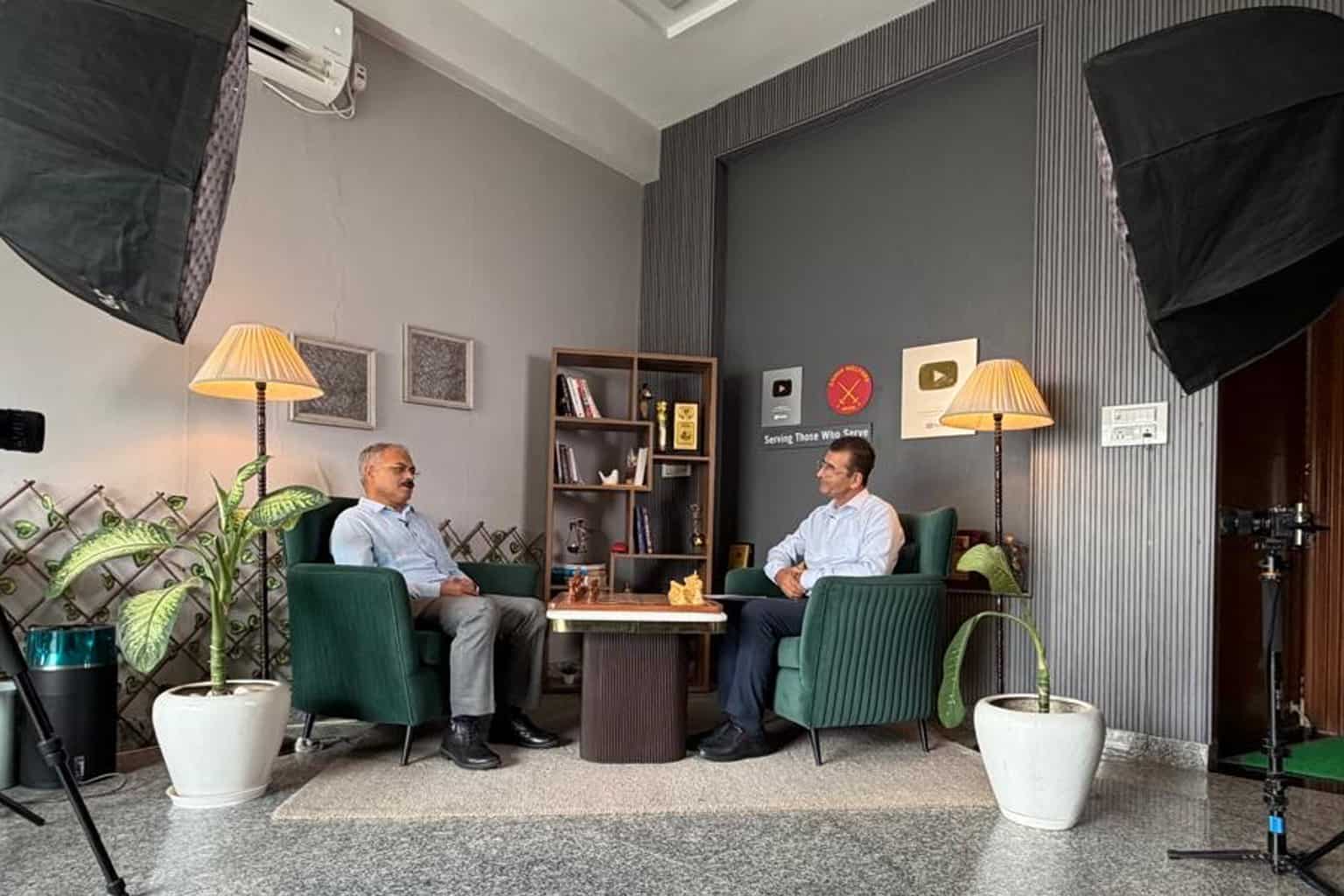
Brigadier Brijesh Pandey raised this important leadership question during his conversation with Sainik Welfare News. Drawing from his command experience, he explained how an excessive fear of mistakes can discourage officers, JCOs and NCOs from taking initiative.
His argument was not that military standards should be lowered or that negligence should be tolerated.
His central point was that leaders must distinguish between a genuine learning mistake and conduct that places people or missions at risk. When every minor error becomes a career threat, subordinates may stop thinking independently, avoid responsibility and wait for instructions from above.
That is where a Zero Error Syndrome can begin to weaken leadership development.
What is Zero Error Syndrome?
Zero Error Syndrome can be understood as an organisational mindset in which every mistake is treated as unacceptable, regardless of the circumstances in which it occurs.
When this mentality becomes excessive, people may start believing that:
- one wrong decision can damage their career;
- independent thinking is too risky;
- following instructions is safer than taking initiative;
- difficult information should be hidden;
- every decision should be referred upward; and
- failure will be blamed on the individual, even when the system contributed to it.
Such an environment may create short-term control, but it can damage long-term organisational strength.
An officer who is never allowed to decide independently may remain technically qualified but operationally hesitant. A JCO or NCO who is punished for every honest mistake may eventually stop suggesting better methods.
The problem is not the pursuit of excellence.
The problem begins when the fear of being wrong becomes stronger than the willingness to think, learn and lead.

Does opposing Zero Error Syndrome mean accepting mistakes?
No.
Brigadier Pandey’s message should not be interpreted as permission for carelessness.
Some military tasks genuinely require near-zero tolerance for error. These may include:
- live weapon handling;
- ammunition safety;
- aviation procedures;
- battlefield identification;
- firing authorisation;
- medical operations;
- sensitive communications; and
- nuclear, biological or chemical safety.
A preventable error in such areas may endanger soldiers, civilians or the mission itself.
The real question is whether the organisation applies the same fear-driven response to every training decision, planning error and supervised learning opportunity.
A genuine mistake made by a young officer while preparing a plan is not the same as negligence that places lives at risk.
The more balanced principle is:
Maintain uncompromising standards where safety and mission requirements demand them, while allowing controlled learning where future leaders are being developed.
What command challenge did Brigadier Pandey face?
Brigadier Pandey recalled a period when he was commanding a unit that formed part of a strike formation.
At the time, there was a serious shortage of officers.
The unit had only eight officers, including him. The second-most-senior officer had approximately six years of service and was given time to prepare for the Staff College examination.
This left Brigadier Pandey with six young officers, all with roughly three years of service or less.
The situation created a difficult leadership challenge.
The young officers did not yet have extensive experience. If every operational and administrative decision remained with the commanding officer, the unit would become heavily dependent on one person.
He therefore had two choices:
- personally control every important decision; or
- deliberately develop young officers capable of thinking and acting independently.
He chose the second option.
What did Brigadier Pandey tell the young officers?
Brigadier Pandey called the young officers and told them not to think of themselves only as lieutenants or captains.
He asked them to imagine that they were the chief executives of large organisations.
The comparison was intended to change their thinking.
Instead of approaching him for every decision, they were expected to:
- understand the task;
- assess the available resources;
- prepare a complete plan;
- decide how the task should be executed; and
- present their recommendation to the commanding officer.
The young officer was no longer expected to bring only a problem.
He had to bring a proposed solution.
This shifted the first responsibility for thinking from the senior commander to the subordinate leader.
Why is decentralised leadership important?
A highly centralised system may appear efficient because every decision is controlled from the top.
However, excessive centralisation can create several weaknesses:
- the commander becomes overloaded;
- junior leaders remain dependent;
- local decisions are delayed;
- initiative declines;
- opportunities may be missed; and
- the unit struggles when the senior commander is unavailable.
Decentralised leadership does not mean that the commander gives up control.
It means responsibility is distributed within a clear command framework.
The senior leader defines:
- the mission;
- the commander’s intent;
- the boundaries;
- the available resources;
- the non-negotiable principles; and
- the expected result.
The subordinate leader then decides how the objective can be achieved within those limits.
This increases the organisation’s total decision-making capacity.

How did Brigadier Pandey guide the officers without damaging their confidence?
The strongest part of Brigadier Pandey’s account is not merely that he delegated tasks.
It is how he corrected the young officers.
When an officer presented a plan, Brigadier Pandey would appreciate the effort and tell him that the plan was good. The Subedar Major would also be present during the discussion.
Once the young officer left, Brigadier Pandey would privately explain to the Subedar Major which parts required adjustment.
The plan might need changes in:
- sequencing;
- coordination;
- resource allocation;
- timings;
- positioning;
- risk management; or
- execution details.
The necessary improvements were then introduced quietly.
The young officer was not made to feel that the plan had been rejected or taken away from him.
The task was executed successfully, and the officer received praise.
Brigadier Pandey also encouraged senior officers above him to recognise the young officer’s contribution.
This created a powerful psychological result.
The subordinate felt that he had planned, executed and completed the task successfully.
That sense of ownership strengthened his confidence.
What was Brigadier Pandey’s confidence-building leadership model?
His method can be understood in five stages:
- Give the young officer a real task.
- Ask him to prepare his own plan.
- Appreciate his initiative and preserve ownership.
- Introduce essential corrections through discreet mentoring.
- Give the subordinate recognition after successful execution.
The commander remained responsible for the outcome, but the subordinate experienced the success.
This is different from a system in which the senior leader rewrites the entire plan, controls every step and later complains that junior officers lack confidence.
A leader cannot demand independent thinking while refusing to allow independent planning.

How did success change the unit?
Brigadier Pandey recalled that within three to four months, the confidence of his officers, JCOs and NCOs had increased significantly.
They had started experiencing success.
According to him, success can become one of the strongest positive forms of motivation.
Once a person experiences the satisfaction of solving a problem, making a decision and achieving a result, he develops the desire to do it again.
The cycle can be understood as:
Responsibility
→ Independent planning
→ Guided execution
→ Successful result
→ Recognition
→ Increased confidence
→ Readiness for greater responsibility
Success created a hunger for further success.
More importantly, the subordinates began to believe that their commander would stand behind them when they took a reasonable decision in good faith.
That confidence between leader and subordinate is vital.
A person is more likely to act decisively when he knows that:
- his senior understands the situation;
- a genuine mistake will be reviewed fairly;
- initiative will be supported;
- credit will not be taken away; and
- responsibility will not be transferred downward unfairly.
Why must senior leaders absorb genuine learning mistakes?
Brigadier Pandey argued that as officers rise in rank, they must develop the ability to accept and absorb the genuine mistakes of their subordinates.
This does not mean shielding misconduct.
It means accepting that junior leaders cannot grow unless they are allowed to exercise judgement.
Every meaningful delegation involves some degree of risk.
A subordinate may:
- choose a less efficient method;
- overlook a minor factor;
- misjudge a timing issue;
- require correction; or
- produce an outcome that is not perfect.
A senior leader must decide whether the error reflects:
- honest effort;
- lack of experience;
- insufficient guidance;
- repeated carelessness; or
- serious negligence.
A learning organisation cannot treat all these situations identically.
Not every mistake is the same
Rejecting Zero Error Syndrome does not mean that every mistake should be accepted.
A genuine learning error is different from repeated carelessness. Both are different from negligence that endangers personnel, civilians or an operation.
| Type of mistake | Typical situation | Appropriate response |
|---|---|---|
| Genuine learning mistake | Honest effort during planning, training or supervised responsibility | Review, guide and improve |
| Repeated careless mistake | Weak preparation, inattention or repetition of avoidable errors | Retraining and accountability |
| Safety or operational negligence | Disregard of procedures that endangers people or the mission | Strict corrective action |
Empowerment does not remove accountability.
It makes accountability more intelligent by matching the response to the nature of the mistake.
Punishing every error identically can make people defensive.
Ignoring negligence can make the organisation unsafe.
Strong leadership requires the judgement to distinguish between the two.

Can excessive fear create a cover-up culture?
An organisation that punishes every mistake harshly may unintentionally encourage people to hide problems.
When individuals believe that admitting an error will automatically damage their reputation or career, they may be tempted to:
- delay reporting;
- minimise the seriousness of an issue;
- shift responsibility;
- avoid written records;
- hide warning signs; or
- tell senior leaders only what they want to hear.
This can be dangerous in any organisation, but it is particularly serious in a military environment.
A small issue reported early may be corrected quickly.
The same issue hidden because of fear may later develop into a major failure.
A strong organisation does not celebrate mistakes. It creates a culture in which honest reporting is safer than concealment.
What did Brigadier Pandey say about SOPs?
Brigadier Pandey did not argue against Standard Operating Procedures.
He recognised that SOPs, guidelines and instructions are necessary.
They provide:
- safety standards;
- institutional experience;
- tested procedures;
- common understanding;
- minimum requirements; and
- a starting direction.
However, he also pointed out that conditions change over time.
Terrain changes. Technology changes. Threats change. Resources change. Enemy methods change.
An SOP should therefore not become an excuse to stop thinking.
His broad message was that an SOP provides direction when the decision-maker does not yet have a better method. It establishes the principle and gives the individual a framework.
But the method of execution may need to change according to the situation.
The principle must remain protected.
The method may be improved.
When should an SOP be adapted?
An SOP may require contextual adaptation when:
- terrain differs from the assumed environment;
- weather affects movement or communication;
- the available resources have changed;
- technology offers a safer method;
- the opponent has changed tactics;
- local civilian conditions require adjustment;
- timing has become critical; or
- the original procedure no longer addresses the actual problem.
Adaptation should not be arbitrary.
A commander must still understand:
- why the SOP exists;
- which parts are safety-critical;
- what authority permits deviation;
- what risks the new method creates; and
- how the decision will be reviewed.
Innovation without discipline can become recklessness.
Discipline without thought can become rigidity.
Effective leadership requires both.

Why did Brigadier Pandey call the Army a learning organisation?
Brigadier Pandey described the Army as one of the strongest examples of a learning organisation.
He referred to the process of soldierisation, in which one soldier learns from another.
This learning does not move only from senior to junior.
It can operate in several directions:
- an officer can learn from another officer;
- an officer can learn from a soldier;
- a soldier can learn from an officer; and
- one soldier can learn from another soldier.
Rank determines authority, but it does not mean that practical knowledge exists only at the top.
A soldier may possess deep experience of:
- terrain;
- weapon behaviour;
- equipment maintenance;
- local conditions;
- troop psychology;
- field improvisation; and
- recurring operational problems.
A young officer who listens can convert that practical experience into better planning.
Likewise, the officer contributes wider mission understanding, tactical direction and coordination.
A learning organisation becomes stronger when knowledge is allowed to travel in every direction.
What can defence aspirants learn from this account?
Defence aspirants often imagine leadership mainly as giving orders confidently.
Brigadier Pandey’s account shows that leadership also means creating other decision-makers.
A commander’s strength cannot be measured only by the number of decisions he takes personally.
It should also be measured by:
- how many subordinates he develops;
- how much responsibility he can delegate;
- whether junior leaders can act in his absence;
- whether mistakes are examined honestly;
- whether people receive credit for success; and
- whether the organisation learns from experience.
An officer who controls every task may appear efficient in the short term.
An officer who develops capable subordinates leaves behind a stronger unit.
What are the main leadership lessons?
The first lesson is that responsibility must be real.
A subordinate cannot develop leadership through observation alone. He needs opportunities to plan, decide and execute.
The second lesson is that correction should not always destroy ownership.
A commander can improve a plan while still allowing the junior officer to remain responsible for it.
The third lesson is that recognition matters.
Giving credit strengthens confidence and encourages further initiative.
The fourth lesson is that mistakes must be classified intelligently.
Learning errors, carelessness and negligence require different responses.
The fifth lesson is that SOPs should support judgement rather than replace it.
The sixth lesson is that commanders must create psychological safety without weakening discipline.
People should be able to report honest problems while remaining accountable for misconduct.
Does this represent an official Indian Army policy?
No.
The discussion is based on Brigadier Brijesh Pandey’s personal command experience and leadership assessment shared during his conversation with Sainik Welfare News.
It should not be presented as:
- a new Indian Army policy;
- an official doctrinal declaration;
- a formal change to military SOPs; or
- proof that every Army formation follows the same leadership culture.
The correct framing is:
Brigadier Brijesh Pandey explained, from his personal experience, why an excessive zero-error mindset can weaken initiative and why senior leaders should create controlled opportunities for subordinates to learn.
Final takeaway
Brigadier Brijesh Pandey’s account offers an important leadership lesson.
A commander does not strengthen an organisation by keeping every decision in his own hands.
He strengthens it by creating people who can think, decide and act responsibly.
During his unit command, Brigadier Pandey faced a shortage of experienced officers. Instead of centralising every task, he asked young officers to prepare their own plans.
He appreciated their initiative, quietly introduced necessary corrections and ensured that the subordinate received credit when the task succeeded.
Over time, the confidence of officers, JCOs and NCOs increased.
The lesson is not that military mistakes should be ignored.
The lesson is that leaders must distinguish between a genuine learning error and dangerous negligence.
They must protect standards without creating paralysis.
They must use SOPs without surrendering judgement.
They must hold people accountable without making them afraid to think.
A zero-error standard may protect a critical procedure.
But a zero-error mindset applied to every training decision can prevent the next generation of leaders from developing.
A strong commander does not create subordinates who wait for every instruction.
He develops leaders who understand the mission, accept responsibility and can make sound decisions when the situation changes.
Frequently asked questions
What is Zero Error Syndrome?
It is a mindset in which every mistake is treated as unacceptable, causing people to avoid initiative, refer decisions upward and fear professional consequences.
Was Brigadier Brijesh Pandey opposing military discipline?
No. His argument concerned excessive fear of genuine learning mistakes, not the removal of discipline or accountability.
Why did he decentralise decisions?
His unit had very few experienced officers. Developing young officers increased the unit’s overall decision-making capacity.
How did he build confidence among young officers?
He gave them real tasks, asked them to prepare plans, corrected important weaknesses discreetly and gave them recognition after successful execution.
Should every military error be accepted?
No. Honest learning mistakes, repeated carelessness and operational negligence require different responses.
What was his view on SOPs?
He viewed SOPs as necessary guides that provide principles and direction, but believed that methods may need adaptation when circumstances change.
Is this an official Indian Army statement?
No. It is based on Brigadier Pandey’s personal leadership experience shared during a Sainik Welfare News conversation.


Leave a Reply