

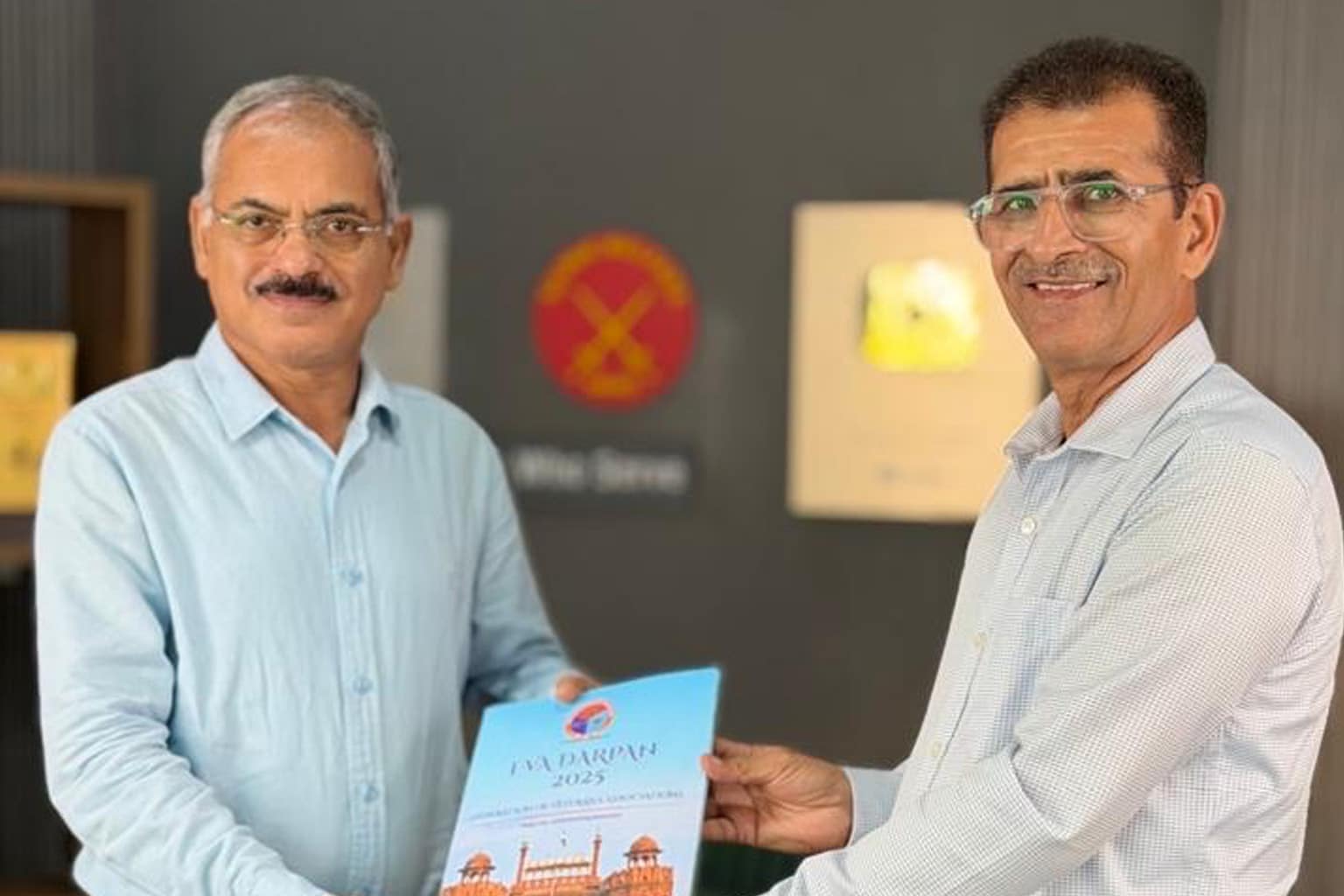
During a tense counter-insurgency operation in Jammu and Kashmir, an Army officer was moments away from firing at a terrorist commander who had escaped from a surrounded house.
Brigadier Brijesh Pandey stopped him.
At first, the decision appeared difficult to justify. The suspected commander had been identified, the house was surrounded, and the security forces had a clear operational opportunity.
Yet Brigadier Pandey was not looking only at the man escaping in front of him. He was thinking about a much larger objective: the possible surrender of an entire group of around eight terrorists.
His decision was questioned by senior officers. He had to explain why he had allowed an armed commander to escape and why the immediate neutralisation of one terrorist was not necessarily the best operational result.
Some time later, the same commander warned Brigadier Pandey about a developing threat to his life.
In the commander’s understanding, Brigadier Pandey had saved him during the house operation, and he had now returned that act by warning the officer.
The commander reportedly told him, in substance:
“You saved my life that day. I saved yours afterward. The account is now settled. We can talk as equals.”
The surrender negotiations survived.
Eventually, the group laid down its arms.
This was not a story of friendship between an Army officer and a terrorist. It was a story of strategic restraint, operational judgement, surrender psychology and leadership under extreme pressure.

Who is Brigadier Brijesh Pandey?
Brigadier Brijesh Pandey served for more than 15 years in Jammu and Kashmir.
During his conversation with Sainik Welfare News, he explained that approximately the first seven to eight years of this tenure were closely connected with kinetic operations.
His responsibilities were linked to both the Line of Control and counter-terrorism operations in the hinterland.
In such an environment, military commanders routinely face situations involving:
- terrorist movement;
- cordon-and-search operations;
- encounters;
- infiltration threats;
- surrender negotiations;
- civilian sensitivities;
- intelligence-based action; and
- rapidly changing operational conditions.
Brigadier Pandey described Jammu and Kashmir as an environment where every day could bring a new situation and every moment could demand a fresh response.
His account shows that counter-insurgency cannot be understood only through encounters and firing. It also involves patience, intelligence, local dynamics, psychology and judgement.
What are kinetic and non-kinetic counter-insurgency operations?
The incident becomes easier to understand when the distinction between kinetic and non-kinetic operations is made clear.
Kinetic operations involve the direct use, or immediate possibility, of military force.
They may include:
- cordon-and-search operations;
- armed encounters;
- interception;
- area domination;
- counter-terror action;
- terrorist neutralisation; and
- Line of Control operations.
Non-kinetic operations attempt to achieve security objectives without making armed force the primary tool.
They may involve:
- surrender negotiations;
- intelligence development;
- communication through intermediaries;
- psychological engagement;
- community outreach;
- rehabilitation efforts; and
- confidence-building measures.
The house operation described by Brigadier Pandey was a kinetic situation because the building had been surrounded and Army personnel were prepared for armed action.
However, the larger objective was non-kinetic: securing the surrender of the commander and his group.
That tension between immediate force and long-term surrender shaped the entire decision.

How did the surrender negotiations begin?
According to Brigadier Pandey, communication was already underway with a terrorist commander.
The commander had indicated that he was willing to surrender. More importantly, he said that his entire team, consisting of around eight people, could also lay down its arms.
For the security forces, this created a much larger opportunity than the elimination of one individual.
A group surrender could potentially:
- remove several armed individuals from violence;
- prevent future attacks;
- weaken a terrorist network;
- reduce the need for additional encounters;
- create an example for others considering surrender; and
- open the possibility of obtaining useful operational information.
The commander had therefore become more than an individual target.
He was also the central link in an effort to bring the rest of his group out of militancy.
What happened when the Army surrounded the house?
While the surrender discussions were continuing, the Army received information that the commander had come to his house.
A unit under the formation’s responsibility moved to the location and surrounded the building.
Brigadier Pandey’s headquarters was nearby, so he also reached the operational area.
The officer conducting the operation was positioned behind the house.
After some time, a door near the kitchen opened and a man jumped out.
Brigadier Pandey recognised him from the physical description already available. He realised that this was the same commander involved in the surrender negotiations.
The officer on the ground was about to fire.
Brigadier Pandey immediately stopped him.
The commander escaped.
Why did Brigadier Pandey stop the firing?
Brigadier Pandey did not describe the decision as an act of sympathy.
It was a calculated operational judgement.
If the commander was killed at that moment, the entire surrender initiative could collapse. The remaining group members might stop communicating, disperse, retaliate or continue their armed activities.
The commander’s survival kept the negotiation channel open.
The choice before Brigadier Pandey can be understood in two parts:
| Possible action | Immediate result | Possible long-term consequence |
|---|---|---|
| Allow the officer to fire | One terrorist commander may be neutralised | The surrender process could collapse |
| Stop the firing | The commander escapes immediate action | The possibility of group surrender remains alive |
Killing the commander could have produced an immediate tactical result.
Keeping him alive preserved the possibility of a larger strategic result.
Brigadier Pandey chose the second path.

Was allowing the commander to escape a mistake?
At that moment, nobody could guarantee that the decision would succeed.
The commander could have disappeared permanently. He could have returned to violence. The surrender negotiations could have failed.
That uncertainty placed Brigadier Pandey under considerable pressure.
His senior officers questioned why he had stopped the firing. He had to convince his brigade commander and other senior authorities that the real objective was not limited to one terrorist.
The larger target was the surrender of the whole group.
Until that surrender took place, the decision remained open to criticism.
This is an important military leadership lesson.
Decisions are often judged after the result becomes known. On the ground, however, commanders must act before they know whether their judgement will be proven correct.
Brigadier Pandey accepted that risk because he believed the larger objective was still achievable.
What risks did Brigadier Pandey accept?
The decision involved several serious risks.
Operational risk: The commander could have returned to violence or caused further harm.
Professional risk: Senior commanders could have viewed the decision as a failure during an active operation.
Reputational risk: Other officers might have believed that a legitimate target had been deliberately allowed to escape.
Moral risk: If the commander later harmed soldiers or civilians, the responsibility could have weighed heavily on the person who stopped the firing.
Strategic risk: The commander’s group could still refuse to surrender despite the opportunity given.
This is why the decision should not be described as easy or idealistic.
Brigadier Pandey accepted responsibility for an uncertain outcome because he believed it could produce a greater operational result.

How did the terrorist commander later warn Brigadier Pandey?
Some time after the house operation, another sensitive situation developed.
Brigadier Pandey recalled that the same commander conveyed a warning to him. He indicated that a threat was developing and advised the officer to leave the area.
The available account does not reveal the exact nature of the danger.
It does not establish:
- who was planning the threat;
- whether it involved an ambush;
- whether an attack was already prepared;
- where the incident took place; or
- how the warning was communicated.
These details should not be invented or dramatized.
The responsible conclusion is that the commander warned Brigadier Pandey about a possible danger and advised him to move away.
Why did the commander say that the account was settled?
During a later conversation, the commander referred directly to the two incidents.
In substance, he told Brigadier Pandey that the officer had saved his life during the house operation and that he had now returned the act by warning him.
In his view, the personal debt between them had ended.
They could now continue the surrender discussion without either side feeling that one owed the other.
This is the psychological centre of the story.
Brigadier Pandey had made the earlier decision for operational reasons. The commander interpreted it as a personal act that had allowed him to remain alive.
That perception created a sense of reciprocity.
It also helped preserve the limited trust needed for the surrender negotiations to continue.

Did Brigadier Pandey and the terrorist become friends?
There is no basis for describing their relationship as friendship.
They remained on opposite sides of an armed conflict.
Brigadier Pandey represented the Indian Army and was working to end terrorist violence. The other person was an armed commander involved in militancy.
What developed between them was limited operational trust within a surrender process.
That trust did not erase their opposing roles. It merely created enough space for communication to continue.
The incident should therefore not be romanticised.
The more accurate interpretation is:
A calculated act of restraint created a temporary basis for trust, which helped preserve an important surrender channel.
Why is human psychology important in counter-insurgency?
Counter-insurgency is fought through weapons and intelligence, but also through fear, perception, loyalty, pressure and trust.
Members of an armed group may respond differently to:
- the fear of death;
- fatigue;
- family influence;
- loss of leadership;
- local pressure;
- opportunities for surrender;
- assurances of fair treatment; and
- the conduct of security forces.
A commander considering surrender must decide whether the other side can be trusted enough to come out alive.
Brigadier Pandey’s intervention may have reinforced the belief that a genuine surrender channel existed.
The commander’s later warning suggests that he remembered the decision and treated it as a personal obligation.
This does not justify terrorism. It shows that understanding human behaviour can sometimes help move armed individuals away from violence.
What is the difference between tactical and strategic success?
The incident offers a clear example of the difference between an immediate operational result and a wider mission outcome.
A tactical success is a short-term achievement during a particular operation.
Neutralising the commander at the house could have been considered a tactical success.
A strategic success is a broader result that supports a larger security objective.
A group surrender could:
- remove multiple terrorists from the conflict;
- prevent future attacks;
- reduce the need for more operations;
- save soldiers and civilians from potential casualties; and
- weaken the local terrorist structure.
Brigadier Pandey gave priority to the strategic objective over the immediate tactical opportunity.
This does not mean that force should never be used.
It means that force must support the larger mission rather than become the mission itself.
Did the entire terrorist group surrender?
Brigadier Pandey stated that the group ultimately surrendered.
This outcome supported the operational logic behind his earlier decision.
However, the account does not reveal:
- the exact date of surrender;
- whether all eight members surrendered at the same time;
- the location of the surrender;
- what weapons were handed over;
- whether operational information was provided afterward;
- what legal process followed; or
- how much time passed between the house operation and the surrender.
These details should not be added without supporting evidence.
The confirmed point from Brigadier Pandey’s account is that the group eventually laid down its arms.
What does the story reveal about military leadership?
The incident shows that military leadership is not defined only by rank, courage or firepower.
It also requires:
- judgement under uncertainty;
- understanding of the larger mission;
- willingness to accept criticism;
- control over immediate reactions;
- confidence in an operational assessment;
- responsibility for consequences; and
- patience while pursuing a difficult result.
Stopping the firing was not the easiest option.
The easier choice would have been to allow the operation to continue and later justify the neutralisation of an armed commander.
Instead, Brigadier Pandey accepted criticism while waiting for a result that was not guaranteed.
That is what turns this incident from an unusual anecdote into a serious military leadership case study.
Does this story mean that restraint always works?
No.
Every counter-insurgency operation is different.
A terrorist may be:
- actively firing;
- threatening civilians;
- attempting to escape while armed;
- preparing an attack;
- refusing surrender; or
- creating an immediate danger to soldiers.
In such situations, military force may be necessary.
Brigadier Pandey’s decision cannot be treated as a universal rule.
It was based on the circumstances of a specific commander, an existing surrender discussion and a larger group objective.
The lesson is not that commanders should always avoid firing.
The lesson is that military leaders must understand when immediate action supports the mission and when it may destroy a more valuable opportunity.
What does the podcast confirm, and what remains undisclosed?
The first-person account provides the basic operational sequence, but several details remain unavailable.

The account confirms that:
- Brigadier Brijesh Pandey served more than 15 years in Jammu and Kashmir;
- surrender discussions were underway with a terrorist commander;
- a group of around eight members was involved;
- the commander escaped from the house;
- Brigadier Pandey stopped the officer from firing;
- senior commanders questioned the decision;
- the commander later warned him of danger; and
- the group ultimately surrendered.
The account does not disclose:
- the year of the incident;
- the exact district or village;
- the identity of the terrorist commander;
- the terrorist organisation;
- the Army unit involved;
- the names of other officers;
- the exact nature of the threat;
- the date and location of surrender;
- the weapons surrendered; or
- what happened to the group afterward.
These omissions may be connected with operational sensitivity.
They also mean that the story should not be expanded through assumptions.
Is this an officially documented Army operation?
The story is based on Brigadier Brijesh Pandey’s first-person account shared during a Sainik Welfare News podcast.
It should therefore be introduced using language such as:
Brigadier Brijesh Pandey recalled during the podcast that…
The available account should not be described as a declassified operational report, an official Army citation or a publicly released inquiry document.
This distinction does not reduce the value of his testimony.
It simply makes the source of the story transparent.
What can defence aspirants and young officers learn from this incident?
Defence aspirants often imagine military leadership mainly through courage in battle.
Courage is essential, but command also involves:
- choosing between competing objectives;
- understanding long-term consequences;
- managing subordinates during tense moments;
- explaining difficult decisions to superiors;
- protecting soldiers and civilians;
- using force purposefully; and
- identifying opportunities to end violence without unnecessary loss of life.
This story shows that an officer may sometimes be judged not by how quickly he orders firing, but by whether he understands the larger purpose of the operation.

The deeper meaning of the surrender.
The final surrender was the real operational result.
One commander had been allowed to escape an immediate firing situation. In return, the surrender process remained alive.
The commander later warned Brigadier Pandey of danger. In his understanding, the personal obligation between the two had been settled.
More importantly, the armed group eventually moved toward surrender.
The incident does not glorify the commander. It demonstrates the potential value of removing armed individuals from violence through surrender when operational circumstances permit.
A successful surrender can prevent future encounters, reduce casualties and limit fear among local civilians.
Final takeaway
Brigadier Brijesh Pandey’s account shows that counter-insurgency success cannot be measured only by the number of terrorists killed.
Sometimes the more difficult achievement is preventing the next encounter from taking place.
At a surrounded house in Jammu and Kashmir, Brigadier Pandey stopped an officer from firing at a terrorist commander. He did so because killing one individual could have destroyed the possibility of securing the surrender of an entire group.
The decision brought criticism and professional pressure. Its outcome was uncertain.
Later, the same commander warned Brigadier Pandey of danger and said that the personal account between them had been settled.
Eventually, the group surrendered.
This was not friendship across enemy lines.
It was a story of leadership, calculated restraint, surrender strategy and the role of human psychology in counter-insurgency.
Firepower can control a moment.
Judgement can determine whether the larger mission succeeds.
Frequently asked questions.
Why did Brigadier Brijesh Pandey stop the terrorist commander from being shot?
He believed that killing the commander could end the possibility of securing the surrender of the commander’s entire group, which reportedly consisted of around eight members.
How did the terrorist commander save Brigadier Pandey’s life?
According to Brigadier Pandey, the commander warned him that a danger was developing and advised him to leave the area.
Did the terrorist commander and Brigadier Pandey become friends?
No. The account describes limited operational trust during surrender negotiations, not friendship.
Did the whole group eventually surrender?
Brigadier Pandey stated that the group ultimately surrendered.
Where did the incident take place?
The account places the incident in Jammu and Kashmir but does not identify the exact district, village or location.
Which terrorist organisation was involved?
The organisation is not identified in the available account.
Is the story based on an official Army document?
The story is based on Brigadier Brijesh Pandey’s first-person account during a Sainik Welfare News podcast. A separate public operational document has not been cited.


Leave a Reply