

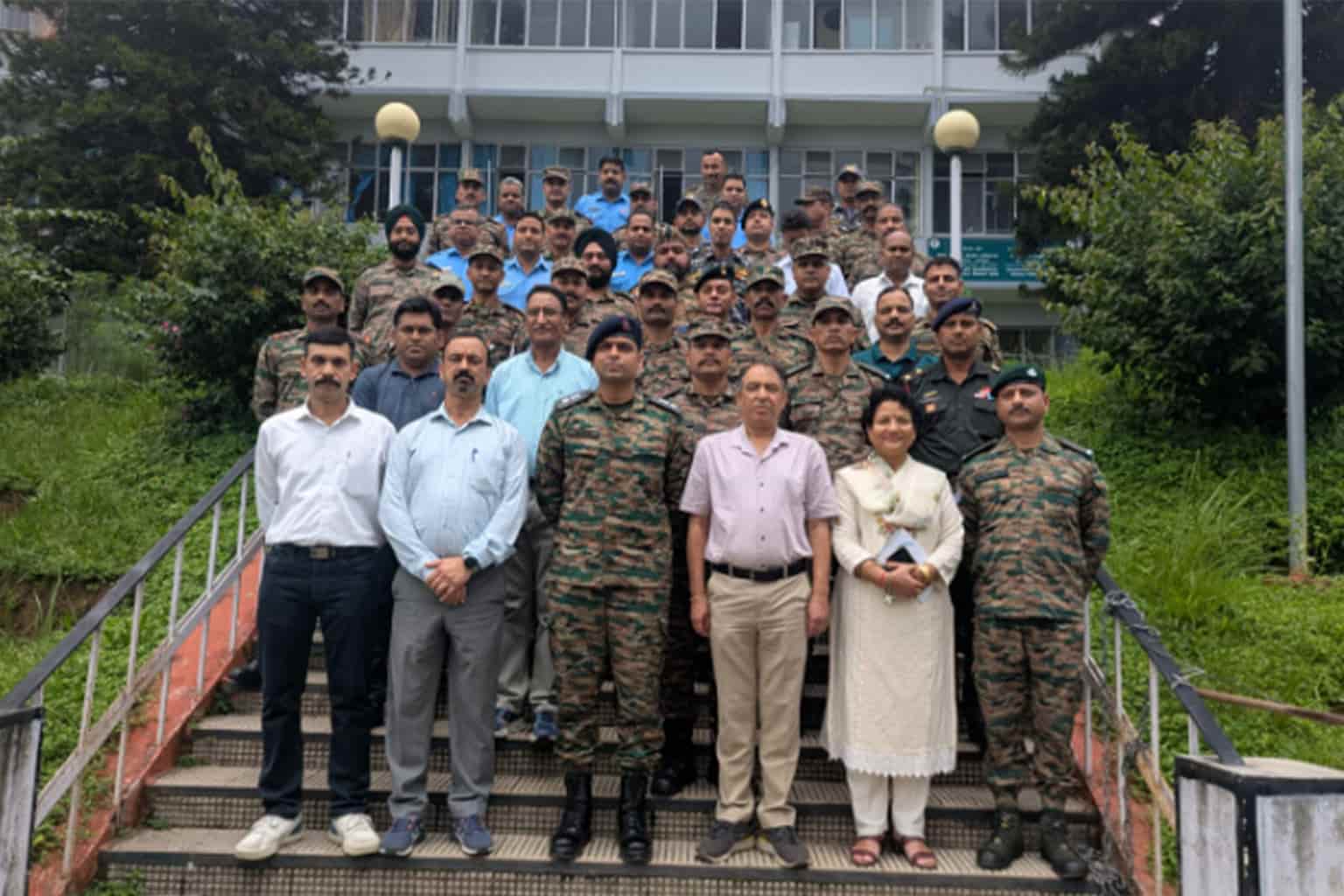
A new Directorate General of Resettlement (DGR) training programme has started for Indian Armed Forces personnel, focusing on practical skills that can support livelihood and second-career opportunities after military service.

On 10 August 2026, Chaudhary Sarwan Kumar Himachal Pradesh Krishi Vishvavidyalaya (CSKHPKV), Palampur, inaugurated its 8th 16-Week Long-Duration Training Course on Protected Cultivation and Value Addition of Vegetables & Horticultural Crops for Junior Commissioned Officers (JCOs) and equivalent ranks of the Armed Forces. The programme is sponsored by DGR, New Delhi.
A total of 42 serving personnel from the Army, Navy and Air Force are participating in the course, which will continue until 27 November 2026.

Who is attending the DGR training?
The current batch consists of personnel from all three Services:
| Service | Participants |
|---|---|
| Indian Army | 29 |
| Indian Navy | 5 |
| Indian Air Force | 8 |
| Total | 42 |
The programme has specifically been organised for JCOs and equivalent ranks.
This makes the course particularly relevant for personnel looking to build practical skills that can later be used in agriculture, horticulture, entrepreneurship or related livelihood activities.

What will personnel actually learn during these 16 weeks?
This is not a short awareness course.
The curriculum has been designed around scientific and practical training in protected cultivation and value addition of vegetables and horticultural crops.
Participants will receive training in:
- modern crop-production technologies;
- management of protected cultivation structures;
- nursery raising;
- high-value vegetable and horticultural crops;
- integrated pest and disease management;
- post-harvest handling;
- food processing and preservation;
- packaging;
- value addition of agricultural produce; and
- exposure to relevant agricultural enterprises.
The important point is the combination of production + protection + processing + value addition.
A participant is therefore not being trained merely to grow crops. The programme also introduces the stages that can help agricultural produce become a potentially marketable product.

Training will not remain limited to classrooms
One of the strongest features of the programme is its practical format.
According to the official PIB release, participants will undergo classroom lectures, practical sessions, field demonstrations, hands-on training and exposure visits during the 16-week course.
That matters because skills such as nursery management, protected cultivation or post-harvest handling cannot be learned effectively through theory alone.
The course is designed to expose participants to both the scientific principles and the way those principles are applied on the ground.

Why is DGR training important for serving personnel?
The Directorate General of Resettlement functions under the Department of Ex-Servicemen Welfare, Ministry of Defence, and one of its core roles is to help retiring Armed Forces personnel transition towards a second career in civilian life through skill development, employment and self-employment support.
That gives this Palampur course a wider purpose.
A soldier’s military career develops discipline, leadership and organisational ability. Resettlement training adds a different layer: civilian-market skills that can be used after leaving active service.
In this particular programme, agriculture and horticulture are being approached as skilled, technology-driven activities rather than simply traditional farming.

Why protected cultivation and value addition can be useful?
The course choice is important.
Protected cultivation involves producing crops under managed growing conditions, while value addition involves improving a product through activities such as processing, preservation and packaging.
For someone exploring agriculture as a livelihood after service, understanding only crop production may not be enough.
Knowledge of the complete chain—
production → crop protection → harvesting → processing → packaging → value addition
—can provide a much broader understanding of an agricultural enterprise.
This is exactly the range of skills included in the Palampur programme.
Who inaugurated the programme?
The course was inaugurated by Lt Col Aman from Holta Military Station on 10 August.
During the inauguration, the importance of practical knowledge and technical skills for productive livelihood opportunities was highlighted, while participants were encouraged to make full use of CSKHPKV’s expertise, facilities and practical exposure.
Is registration open for this course?
The official announcement does not say that fresh applications are currently open.
The programme has already commenced with 42 participating personnel, and the PIB release is an inauguration/update announcement rather than a recruitment or application notification.
Therefore, serving personnel should not treat this update as an “Apply Now” notice.
DGR separately publishes its approved Resettlement Training Courses for JCOs/OR and equivalent ranks, including the FY 2026–27 training calendar, through its official training section.

What should Armed Forces personnel take from this update?
The bigger message is that resettlement planning does not have to begin after retirement.
DGR’s official mandate includes pre- and post-retirement training, employment support and self-employment initiatives intended to help Armed Forces personnel move into civilian careers.
The Palampur programme demonstrates one such pathway: giving JCOs and equivalent personnel structured exposure to modern agriculture, horticulture and value-added farm enterprises before they enter the next phase of their working lives.
For personnel interested in this field, the useful action is not to apply to this already-running batch, but to keep checking DGR’s official training calendar for future courses and eligibility details.
Final takeaway
The DGR 16-Week Training Course 2026 at Palampur has brought together 42 personnel — 29 Army, 5 Navy and 8 Air Force — for practical training in protected cultivation and value addition of vegetable and horticultural crops. The programme began on 10 August and will continue until 27 November 2026.
What makes this update important is not merely the duration or participant count.
It shows how resettlement training can connect military personnel with practical civilian skills covering modern production, crop management, processing, packaging and agricultural enterprise exposure.
For personnel approaching their transition from uniform to civilian life, that is the real value of the programme: preparing for the next career before the present one ends.
- Press Information Bureau — 8th 16-Week Training Course for Indian Armed Forces Personnel, Palampur
This is the main official source for the current batch, dates, participant numbers and course content.
Open the PIB release - Directorate General Resettlement — Official Training Page
Useful for checking current and upcoming JCO/OR and equivalent-rank resettlement training courses.
Open DGR Training page - DGR — Training Updates / FY 2026–27 Course Information
This page carries current training calendars and updates for resettlement courses.
Open DGR Training Updates - Department of Ex-Servicemen Welfare — About DGR
Official Ministry of Defence source explaining that DGR facilitates resettlement through pre- and post-retirement training, re-employment and self-employment support.
Open DESW — About DGR - Directorate General Resettlement — About DGR
Official DGR page explaining its role in helping personnel acquire additional skills for second careers.
Open DGR official About page



Leave a Reply