

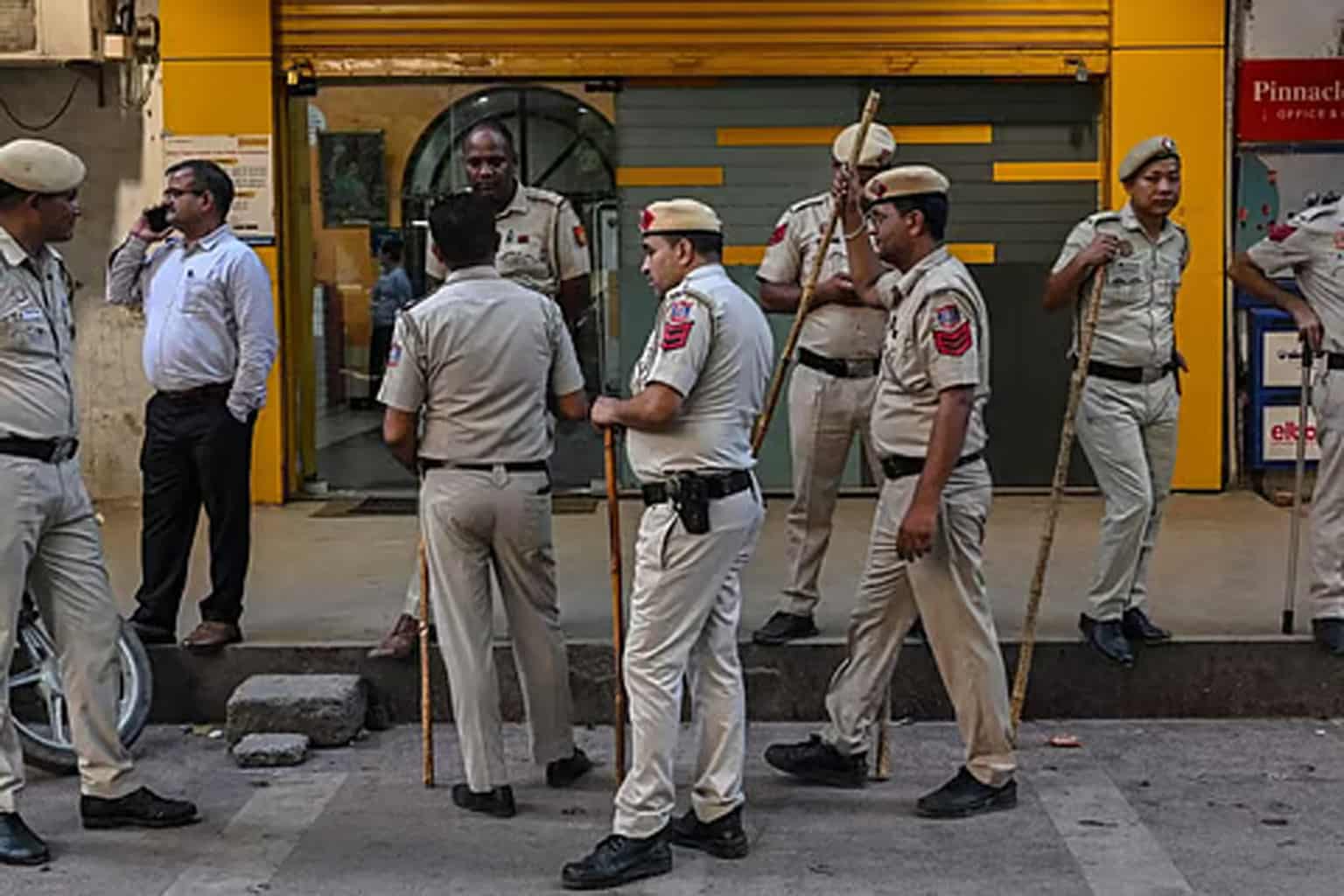
A serving Indian Air Force Wing Commander has been arrested and chargesheeted in an alleged espionage-related case involving sensitive defence information, bringing renewed attention to social-media honey traps, digital targeting and military counter-intelligence.
According to reports citing Delhi Police and the Indian Air Force, the officer was arrested on 30 May 2026 after the IAF’s own intelligence apparatus had reportedly kept him under surveillance. Delhi Police filed a chargesheet before the competent court on 30 July 2026. The officer has been booked under provisions of the Official Secrets Act and remains in judicial custody. The case is sub judice, which means all allegations remain subject to judicial scrutiny.
This case is therefore not simply a story about an alleged honey trap. It is also an important case study in social engineering, digital security and internal counter-intelligence.
Important: This article describes allegations reported by investigating authorities and media quoting official sources. The accused officer has not been declared guilty by a court.

What happened in the IAF Wing Commander honey-trap case?
According to Delhi Police sources and media reports, the officer allegedly came into contact with a woman through social media.
The interaction reportedly developed over time and progressed to video calls. Investigators allege that the woman later began seeking information connected with military movements, deployments and defence activities.
Authorities suspect that the woman was linked to Pakistani intelligence operatives. The precise nature of that relationship and the full extent of the alleged intelligence operation remain matters under investigation and judicial examination.
The officer’s identity has not been publicly disclosed in the principal reports because the matter is before the court.
What information is the officer accused of sharing?
Investigators allege that photographs, videos, confidential documents and sensitive defence-related information were shared through digital channels.
The publicly available reports do not disclose the full contents of the allegedly compromised material. Nor has the precise national-security impact been publicly established.
That distinction matters.
It would therefore be inaccurate to speculate about particular aircraft, weapons systems, missions or classified operational plans unless those facts are formally placed in the public record.

The second allegation: Another officer’s mobile phone
One of the more serious aspects of the case concerns an allegation involving another IAF officer’s device.
According to investigators cited by The New Indian Express, the Wing Commander allegedly persuaded a colleague to install a particular application on his mobile phone. Authorities are examining whether that application had spyware or remote-access capabilities that could potentially allow activities such as data extraction, location tracking or interception of communications.
The Times of India reports a stronger allegation from its sources: that the software was capable of covert remote access and data collection.
However, one distinction must remain clear:
Public reporting does not establish that another officer’s device was successfully compromised or that specific data was actually extracted from it.
The investigation is examining that question.
Why this allegation changes the seriousness of the case?
A traditional honey trap might focus on obtaining information from a single targeted individual.
The allegation involving another device raises a different concern:
Can one compromised person potentially become a route toward other personnel, devices or networks?
Investigators are reportedly examining precisely that possibility.
For military organisations, this is an important cyber-security lesson because security risk may extend beyond what one individual personally knows.
It can potentially involve:
- colleagues;
- communication networks;
- location information;
- contact lists;
- digital devices; and
- secondary targets.

IAF counter-intelligence detected the officer internally
This may be the most significant part of the story from an institutional perspective.
The Indian Air Force said that the officer had been under active surveillance before he was handed over to law-enforcement authorities.
An IAF spokesperson said the officer was detected through proactive measures and reiterated the force’s zero-tolerance approach toward such activities.
The New Indian Express reports that the Air Force’s intelligence apparatus had been watching the officer for several months after suspicions arose. His electronic devices and communications were reportedly examined internally before the matter moved to Delhi Police.
This means the case also demonstrates another side of military security:
internal detection and counter-intelligence can be as important as external cyber defence.
Case timeline
The publicly reported chronology currently looks like this:
| Stage | Reported development |
|---|---|
| Initial contact | Woman allegedly contacts officer through social media |
| Trust-building | Interaction reportedly progresses to video calls |
| IAF suspicion | Internal intelligence develops concerns |
| Surveillance | Officer reportedly placed under active surveillance |
| Law-enforcement action | Matter handed to Delhi Police |
| 30 May 2026 | Officer arrested |
| Investigation | Digital devices and communication trail examined |
| 30 July 2026 | Chargesheet filed |
| Present status | Case sub judice; allegations under judicial scrutiny |
The 30 May arrest and 30 July chargesheet dates are confirmed in reports quoting Delhi Police.

Investigators reportedly suspect that the woman involved may have been linked to a broader Pakistani intelligence network.
Authorities are examining:
- who the alleged handlers were;
- whether other defence personnel were approached;
- how much information may have been obtained; and
- whether the alleged operation extended beyond one individual.
But this remains an investigative line.
There is currently no publicly established judicial finding proving that a larger espionage network operated exactly as suspected.
That difference between investigative suspicion and proven fact must be maintained.
Why social media creates a different security challenge?
One of the lessons from such cases is that hostile intelligence activity does not necessarily begin with an obvious request for classified information.
It may begin with an ordinary:
- friend request;
- professional connection;
- conversation;
- shared interest;
- sympathetic interaction; or
- emotional relationship.
Only after familiarity develops may sensitive questions begin.
This process is commonly described as social engineering: exploiting human trust rather than attacking a computer system directly.
The reported facts in this case fit that broader risk pattern because investigators say the relationship began through social media and evolved before military information was allegedly requested.

Why even small pieces of information can matter?
Military information does not need to look like a classified document to have intelligence value.
Individually harmless-looking details can sometimes be combined to build a larger picture.
Examples might include:
- location;
- travel patterns;
- unit movements;
- dates;
- photographs;
- personnel relationships; or
- routine changes.
This does not mean every such detail is classified.
The security issue is that several fragments, when correlated, may reveal patterns that were not obvious individually.
That is why defence establishments impose strict rules regarding operational-area devices, digital communications and social-media behaviour.
In this case, The New Indian Express reports that mobile phones are prohibited in IAF operational areas, Air Headquarters and command headquarters, while personnel outside those restricted zones remain subject to service rules governing digital communication and social media.
What should serving personnel learn from this case?
The most useful takeaway is not simply “do not talk to strangers online.”
Modern social engineering is more sophisticated than that.
A practical security approach should include:
- Verify unfamiliar online contacts before developing trust.
- Never disclose operational or service-related information merely because it appears harmless.
- Avoid discussing movements, deployments or colleagues with unknown persons.
- Never install an application sent or recommended by an unverified contact.
- Be cautious when someone asks for photographs from restricted or service-related environments.
- Treat unusual requests involving another service member as an additional red flag.
- Report suspicious digital approaches through appropriate service/security channels rather than attempting to investigate them personally.
These are general security principles, not conclusions about the guilt of the officer in this particular case.
What this case does NOT establish?
For responsible reporting, five points should remain clear:
1. The Wing Commander has been accused and chargesheeted — not convicted.
2. The exact classified information allegedly compromised has not been fully disclosed publicly.
3. The exact damage, if any, to national security has not been publicly established.
4. The suspected wider Pakistani intelligence network remains part of the investigation.
5. Reporting about the application allegedly installed on another officer’s device does not by itself prove that the device was successfully compromised.

Why the case matters beyond one Wing Commander?
Focusing only on the accused officer would miss the larger defence-security lesson.
The incident highlights how modern intelligence threats can combine:
human psychology + social media + digital communication + malicious software + traditional espionage.
At the same time, the IAF’s reported internal surveillance demonstrates that military counter-intelligence is also adapting to these threats.
The eventual court proceedings will determine the legal responsibility of the accused.
But the security lesson already extends beyond the individual case:
Digital security is not only about protecting networks. It is also about protecting people from manipulation.
Final takeaway
The IAF Wing Commander honey-trap case 2026 has become a significant defence-security story because it combines alleged espionage, social-media targeting, sensitive information, a suspected malicious application and internal IAF counter-intelligence.
A serving Wing Commander was arrested on 30 May 2026, and Delhi Police filed a chargesheet on 30 July 2026. The IAF has said the officer was under active surveillance before being handed to law enforcement.
However, the case remains sub judice.
Therefore, the correct conclusion today is not that guilt has been established.
The real takeaway is that modern defence security increasingly requires vigilance against both technical attacks and human-targeted social engineering.
For serving personnel, veterans and defence families, that is the most important lesson from the case.
Sources:-
- The New Indian Express — IAF had Wing Commander under surveillance for months before arrest in honey-trap case
Read the full report - The Times of India — IAF Wing Commander honey-trapped by Pak operatives; arrested and charged for allegedly leaking defence information
Read the full report - The Economic Times — IAF Wing Commander honey-trapped by female Pakistani handler, arrested over alleged defence data leak
Read the full report - Additional New Indian Express report — IAF officer held for alleged military information leak after honey trap
This version directly reports the Delhi Police statement that the officer was arrested on 30 May 2026, booked under the Official Secrets Act, and chargesheeted on 30 July 2026.
Read the report


Leave a Reply