

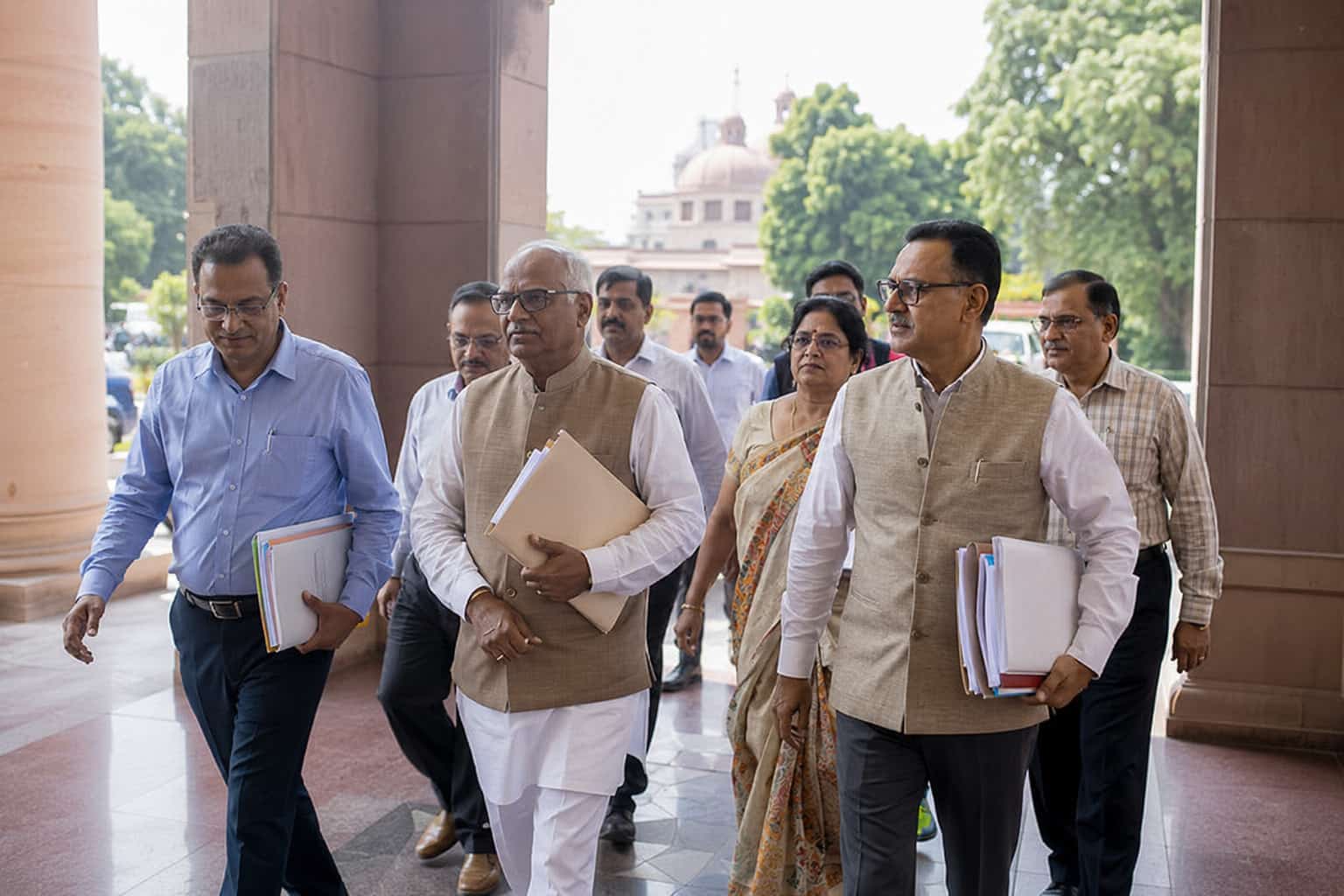
For lakhs of Central Government employees and pensioners, the 8th Central Pay Commission is not just another government process. It is connected with salary, pension, allowances, retirement security, family finances and the future structure of service benefits. Every Pay Commission becomes a moment when employees, pensioners, unions and associations try to place their concerns before the government in an organised manner.

That is why the latest official notice of the 8th Central Pay Commission matters. The Commission has announced that it will visit Lucknow, Uttar Pradesh on 22 and 23 June 2026. On paper, this may look like a simple travel notice. But for employees, pensioners, unions and associations belonging to Uttar Pradesh, this is a serious opportunity. It is not just about knowing that the Commission is visiting Lucknow. It is about understanding the process, deadline and documents required to seek an interaction.
According to the official notice dated 21 May 2026, the 8th Central Pay Commission will visit Lucknow on Monday and Tuesday, 22 and 23 June 2026. Interested stakeholders, including Central Government organisations, institutions, unions and associations, who want to interact with the Commission during the Lucknow visit have been asked to submit their appointment request through the NIC forms link mentioned in the notice on or before 10 June 2026.
This deadline is the most important part of the update.
The notice also says that the appointment request must be submitted along with the unique memo ID generated after submitting the memorandum on the Commission’s official website, 8cpc.gov.in. This means the Lucknow visit is not an open walk-in meeting where anyone can simply reach the venue and expect to meet the Commission. The process is structured. First, the stakeholder must submit a memorandum. Then a unique memo ID is generated. That memo ID becomes the proof that a formal submission has already been made. After that, the stakeholder can seek an appointment for interaction during the Lucknow visit.
This is why memo ID has become so important in the 8th CPC process.
For months, many employees and pensioners have been discussing fitment factor, minimum pay, pension revision, defence pay issues, allowances, promotion concerns, old anomalies and family-related benefits. But discussion alone is not enough. A demand becomes serious only when it is converted into a properly drafted memorandum and submitted through the official route. In the Lucknow notice, the Commission has clearly linked appointment requests with the unique memo ID. In simple words, the memo ID is not just a number. It is the key that shows the issue has entered the official consultation process.
This is the stage where casual conversation must become organised representation.
For Uttar Pradesh-based unions and associations, the Lucknow visit can be especially important. Uttar Pradesh has a large presence of Central Government employees, pensioners, defence pensioners, railway employees, postal employees, paramilitary-linked families, defence civilians and other Central Government-linked service communities. Many of their concerns may be common with employees across India, but some issues may have local or departmental importance. A state-level interaction allows organisations and associations to bring those issues forward in a more direct manner.
However, the notice also carries a very important restriction. The Lucknow visit is meant for stakeholders belonging to Uttar Pradesh. The notice clearly says that the Commission will hold separate meetings in cities in other States and Union Territories in due course. Therefore, stakeholders belonging to States or Union Territories other than Uttar Pradesh have been requested not to seek appointments during this visit.
This point must not be ignored.
Many employees and associations from neighbouring States may see the Lucknow notice and think they can also request a meeting there. But the official document makes the state restriction clear. This is a Uttar Pradesh-specific visit. Other States and Union Territories will get separate opportunities later, as per the Commission’s schedule. This makes the process more organised and prevents overcrowding or confusion during one visit.
The real message of the notice is simple: the 8th CPC consultation phase is becoming more structured, more state-wise and more proof-based.
This is important because there is a lot of misinformation around the 8th Pay Commission. Every few days, social media carries claims about fitment factor, salary hike, pension formula, DA merger, arrears, implementation date or expected recommendations. But the official process is different. The Commission will study memorandums, interact with stakeholders, examine demands and then prepare its recommendations. The Lucknow visit is part of that serious consultation process, not a final announcement on pay or pension.

Employees and pensioners should therefore understand the difference between a rumour and a process update. The Lucknow notice does not announce salary increase. It does not announce fitment factor. It does not announce pension revision. It announces a chance for eligible Uttar Pradesh-based stakeholders to seek appointment for interaction with the Commission, provided they follow the proper procedure before the deadline.
That is why this update is practical and urgent.
If an organisation, union or association in Uttar Pradesh wants to place its concerns before the 8th CPC during the Lucknow visit, it should not wait till the last week. It should check whether its memorandum has been submitted on the official Commission website. It should confirm that the unique memo ID has been generated. It should use the NIC forms link given in the notice to request an appointment. It should do this on or before 10 June 2026. Waiting till the last moment can create technical problems, documentation gaps or missed deadlines.
This is especially important for associations representing pensioners, defence personnel, ex-servicemen, railway employees, postal employees, central secretariat staff, defence civilians and other categories. Many issues require careful drafting. A memorandum should not be a random list of demands. It should include background, problem, comparison, justification, affected category and clear request. If the association is asking for change in pay structure, pension parity, allowance revision, hardship allowance, promotion benefit, medical benefit or anomaly removal, the submission should be supported with facts and examples.
A strong memorandum is not emotional only. It is emotional plus factual.
For example, pensioner associations may want to raise issues related to pension revision, restoration of old anomalies, commutation, medical benefits, DR, family pension and grievance redressal. Defence-related associations may want to discuss military service pay, disability pension concerns, rank-related parity, risk and hardship factors, field-area conditions, ex-servicemen welfare and anomalies affecting retired personnel. Railway and postal unions may have department-specific issues related to workload, classification, promotion, allowances and working conditions. Each organisation should focus on the issues that it can explain clearly.
The Lucknow visit should not be treated as a symbolic event. It should be treated as a chance to present structured concerns before the Commission.
Another important point is that the official notice says venue details and meeting schedule will be intimated subsequently. This means the final meeting place and timing are not yet part of the current notice. Stakeholders should not assume a venue on their own. After submitting the appointment request, they should wait for further communication from the Commission or official channel. Any fake venue message or unofficial schedule should be verified before action.
This is also where employees and pensioners should be careful about unofficial links. The appointment request should be submitted only through the NIC forms link mentioned in the official notice. The memorandum should be connected with the official 8th CPC website. Organisations should avoid forwarding sensitive details through random forms, unknown WhatsApp links or unofficial pages. When a process involves government submissions, appointment requests and memo IDs, accuracy and digital safety both matter.
The human side of this story is also important.
For a retired pensioner, 8th CPC is about whether pension will remain enough to manage household expenses and medical needs. For a serving employee, it is about salary structure, allowances, career growth and family security. For a defence family, it may be about risk, hardship, field service and post-retirement dignity. For unions and associations, it is about carrying the voice of thousands of members in a responsible manner.
That is why a memo ID may look like a small technical detail, but it represents something larger. It represents that the demand has been formally submitted. It shows that the stakeholder is not only talking, but participating in the official process. It converts a concern into a traceable submission.
For Uttar Pradesh stakeholders, the message is clear. If you want to interact with the Commission in Lucknow, the time to act is now. Do not wait for rumours. Do not wait for last-minute reminders. Do not assume that someone else will raise the same issue. Prepare the memorandum, submit it properly, keep the memo ID ready and request appointment before 10 June 2026.
For individual employees and pensioners, the direct appointment process may depend on whether they are part of an organisation, institution, union or association. The notice specifically mentions stakeholders such as Central Government organisations, institutions, unions and associations. Therefore, individual employees should coordinate with their recognised associations or unions if they want their issues to be represented in an organised way. This will also help avoid duplication and make the representation stronger.
The bigger takeaway is that the 8th CPC process is now moving from online submissions to physical stakeholder interactions in different locations. Lucknow is one such important location for Uttar Pradesh. Other States and Union Territories will have separate meetings later. This state-wise approach gives stakeholders a chance to present issues closer to their region, but only if they follow the official system.
This is why the Lucknow notice deserves attention.
It is not a final pay revision update, but it is a crucial consultation update. It is not a salary announcement, but it can influence the way demands are heard. It is not a walk-in invitation, but it gives eligible stakeholders a route to seek appointment. It is not for all States, but it is important for Uttar Pradesh.
For Sainik Welfare News readers, the message is simple and urgent: the 8th CPC Lucknow visit is an opportunity, but only for those who are prepared. The deadline is 10 June 2026. The visit dates are 22 and 23 June 2026. The key requirement is the unique memo ID generated after memorandum submission. The eligible stakeholders are Uttar Pradesh-based Central Government organisations, institutions, unions and associations.
In a Pay Commission process, timing matters. Documentation matters. Official route matters.
The Lucknow visit is a reminder that employees and pensioners should not only watch the 8th CPC news. They should participate through the proper process wherever eligible. Because when the Commission listens, the strongest voice will not be the loudest rumour. It will be the most organised, well-documented and timely representation.
Sources:-
https://8cpc.gov.in/
https://8cpc.gov.in/document/notice-regarding-8cpc-visit-to-lucknow-uttar-pradesh-22-23-june-2026/
https://cdnbbsr.s3waas.gov.in/s354b2b21af94108d83c2a909d5b0a6a50/uploads/2026/05/20260521886747762.pdf
https://innovateindia.mygov.in/8cpc-memorandum-submission/
https://www.staffnews.in/2026/05/8th-central-pay-commission-visit-to-lucknow.html



Leave a Reply