

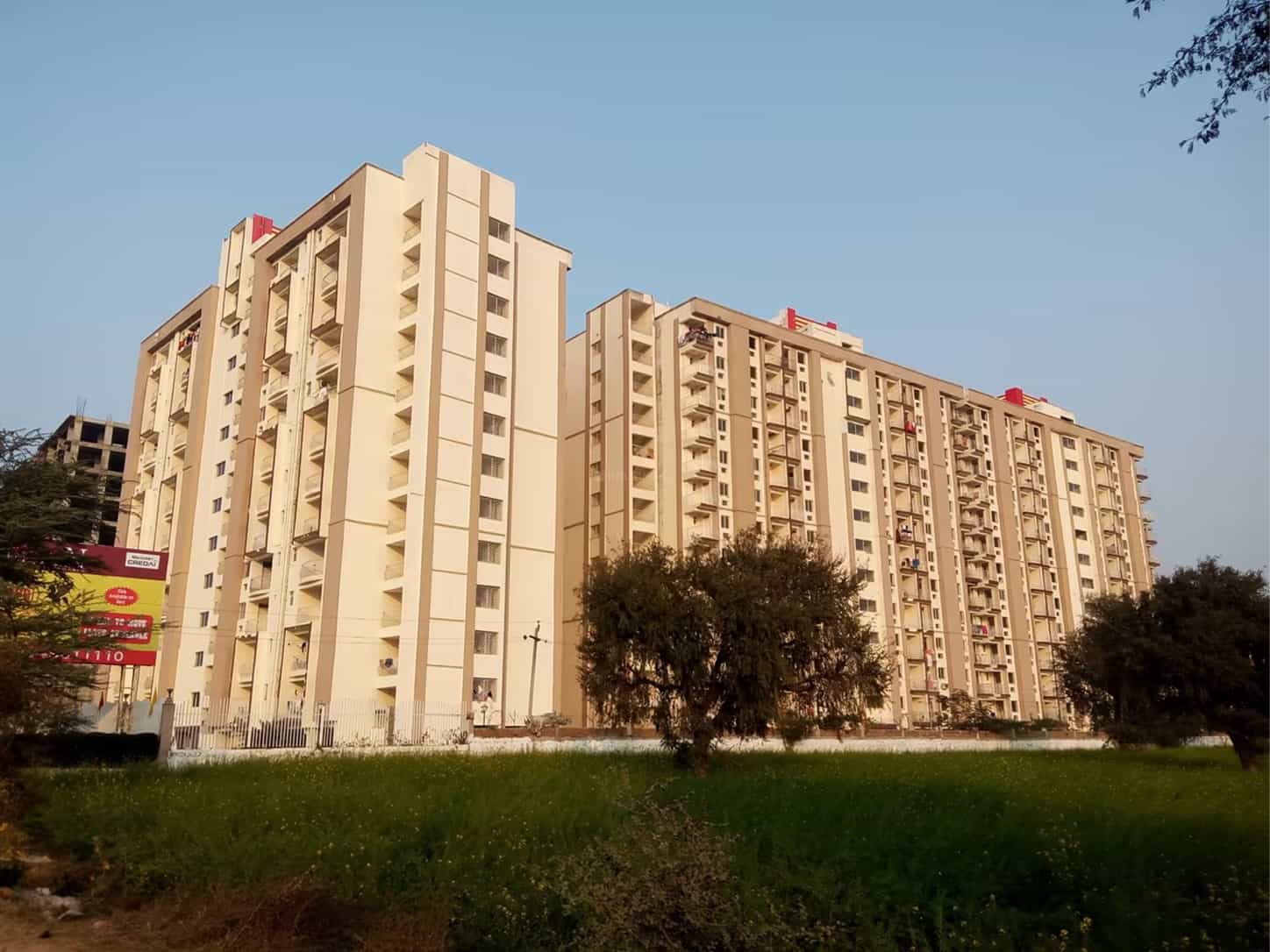
For a defence family, the idea of owning a home is never only about land, walls and rooms. It is about stability after years of postings, children’s education, retirement planning, family safety and the comfort of having one permanent address after a life spent moving from one station to another.

That is why the latest Army Welfare Housing Organisation demand survey for Neemrana City, Rajasthan is important for serving personnel, retired personnel, widows and eligible defence families. But this update must be understood carefully. This is not a final allotment announcement. This is not a confirmed possession-linked project launch. This is a demand survey being carried out by AWHO to understand whether enough eligible applicants are interested in a proposed plotted / group housing project at Neemrana City.
According to the AWHO document, the demand survey is for Army, Air Force and Naval personnel. The purpose is to assess demand from eligible serving and retired personnel, widows and parents of deceased personnel who are receiving family pension. The document also states that the project will be planned based on the response received.
This single line is the most important part of the notice. It means that AWHO is first trying to understand the demand before deciding the next stage. For applicants, this is an opportunity to show interest. But it should not be treated as guaranteed allotment.

This single line is the most important part of the notice. It means that AWHO is first trying to understand the demand before deciding the next stage. For applicants, this is an opportunity to show interest. But it should not be treated as guaranteed allotment.
Why Neemrana can interest defence families?
Neemrana has become a known location in Rajasthan because of its position on the Delhi-Jaipur corridor and its growing industrial and residential relevance. For families connected with Delhi-NCR, Rajasthan, Haryana and nearby regions, Neemrana can be seen as a possible long-term housing location.
For serving personnel, the attraction may be future settlement. For veterans, it may be a retirement base. For widows and family pensioner parents, it may be a secure housing option connected with a welfare organisation. For younger defence families, the interest may be in a planned home that can serve as a family asset over time.
But every family’s situation is different. A serving officer or soldier may look at connectivity and future value. A retired person may look at medical access, daily convenience and peaceful living. A widow may look at safety, documentation clarity and affordability. That is why a demand survey matters: it gives the organisation a sense of what the defence community actually wants.
Who can apply?
The AWHO document mentions that serving and retired Army, Air Force and Naval personnel are eligible to apply. It also includes widows and parents of deceased personnel who are receiving family pension.
This makes the notice wider than only serving Army personnel. It is relevant to the broader defence community, including Air Force and Naval personnel, and also to families of deceased personnel who fall under the stated eligibility condition.
The document further says that registrants and allottees of other AWHO projects can also apply as Priority II.

This is important because some families may already be connected with another AWHO project and may still be interested in Neemrana. However, the priority category must be understood properly before applying.
What options are mentioned in the application form?
The application form attached with the demand survey gives applicants two broad choices: plot requirement or dwelling unit requirement.
For plots, the form mentions these size ranges:
150 to 200 square metres
201 to 250 square metres
251 to 300 square metres
For dwelling units, the form mentions:
2 BHK
3 BHK
4 BHK
The applicant has to indicate preference in the form.
This is useful because AWHO is not only checking whether people are interested in Neemrana. It is also trying to understand what kind of housing demand exists: smaller plots, bigger plots, 2 BHK flats, 3 BHK homes or 4 BHK options.
For families, this choice should be practical. A plot gives flexibility, but it may require future construction planning, approvals, time and additional cost. A group housing unit may be easier for those who want a ready structured home, depending on the final project plan. Since this is still a demand survey, applicants should treat their preference as an indication of interest, not as a final confirmed allotment.
Commitment money: Why ₹25,000 matters?
The document says applicants have to submit the application form with ₹25,000 as Commitment Money by 30 June 2026. The amount has to be paid in favour of Army Welfare Housing Organization, payable at New Delhi, and it can also be paid through NEFT / RTGS / online payment mode using the bank details provided in the document.
This amount is not a small casual step. It shows serious interest. But applicants must understand what happens to this money.
The document says the Commitment Money will be adjusted against the registration amount when the demand survey is converted into annual registration.
It also says that if the project does not take off within one year, the money will be refunded without deductions, and simple interest will be paid on the commitment money after one year from the date of receipt of the application.
However, if an applicant withdraws prematurely before the launch of the scheme or before one year, the money will be refunded after deduction of 2% handling charges, and no interest will be paid.
This is a key point for families. Do not apply only because others are applying. Apply only after understanding the conditions, timeline and refund rules.
Why 30 June 2026 is the key date?
The last date mentioned in the demand survey document is 30 June 2026. Applications with commitment money have to be submitted by this date.
For interested applicants, this means there is a clear deadline. The documents should be prepared in time. Payment details should be recorded carefully. If using NEFT, RTGS or online transfer, the UTR number and date must be filled correctly in the application form.
Defence families should avoid last-minute confusion. Many applications become weak not because the applicant is ineligible, but because the form is incomplete, documents are missing or payment proof is not properly attached.
Documents and details required
The application form asks for several personal and service details, including rank, name, father or spouse name, arm or service, regiment or corps, present or last unit, date of birth, nationality, date of commission or enrolment, date of retirement, Aadhaar number, PAN number, address, email ID, contact number, choice of plot or dwelling unit, commitment money details, next of kin details and allottee details if the applicant is already an allottee.
For retired personnel, the form asks to attach a copy of PPO, if retired. For widows or parents applying, the date of death of husband or ward and death certificate are mentioned. The form also notes that a cancelled cheque and PAN card copy are mandatory attachments.
The form also has a space for photograph and countersignature by CO / OC Unit / ZSB / Station Headquarters / Class-I Gazetted Officer.
This means applicants should not treat it as a simple interest form. It is a formal demand survey application and needs proper documentation.
What this notice means and what it does not mean?
This notice means AWHO is checking demand for a possible Neemrana City plotted / group housing project.
It means eligible defence personnel and families can show interest by applying with the required commitment money.
It means the project planning will depend on the response received.
It does not mean final allotment has started.
It does not mean every applicant will definitely get a plot or flat.
It does not mean final layout, price, possession timeline or construction plan has been announced in this PDF.
It does not mean people should trust middlemen or unofficial promises.
This distinction is very important. A demand survey is a planning stage. It helps the organisation assess whether a project is viable and what type of housing demand exists.

What applicants should check before applying?
Before submitting the application, families should check whether they fall clearly under the eligibility category. They should also decide whether they are interested in a plot or a dwelling unit. They should keep the PPO, PAN card, cancelled cheque, service details, family documents and contact details ready.
Applicants should also keep proof of payment safely. If they are paying online, they must note the UTR number, bank branch and date correctly. If paying by demand draft, they should keep a copy or record of the DD.
They should also verify communication through official AWHO channels. The document mentions AWHO’s website, contact numbers and email for further details.
Why this update matters?
This is a practical welfare story for your audience because it directly concerns the housing interest of serving personnel, veterans, widows and family pensioner parents.
Many defence families are always searching for reliable housing opportunities connected with recognised welfare organisations. But at the same time, housing decisions require caution. A home is a large emotional and financial decision. Even a demand survey with ₹25,000 commitment money should be understood properly.
For Sainik Welfare News readers, the role of this article is not to create hype. The role is to explain the notice clearly, highlight the deadline, simplify eligibility and warn readers against misunderstanding the demand survey as a confirmed allotment scheme.
Final takeaway
The AWHO Neemrana City demand survey is an important opportunity for eligible defence families to register interest in a proposed plotted / group housing project in Rajasthan. The deadline is 30 June 2026, and applicants have to submit the application form with ₹25,000 Commitment Money.
But the most important point is this: this is a demand survey, not a final housing allotment. The project planning will depend on the response received. Therefore, interested families should read the document carefully, prepare the required papers, understand refund conditions and apply only through the proper official process.
For many defence families, a home is a dream built over years of service and sacrifice. This survey may become the first step towards a possible housing opportunity at Neemrana, but that first step should be taken with clarity, documents and full awareness.



Leave a Reply