

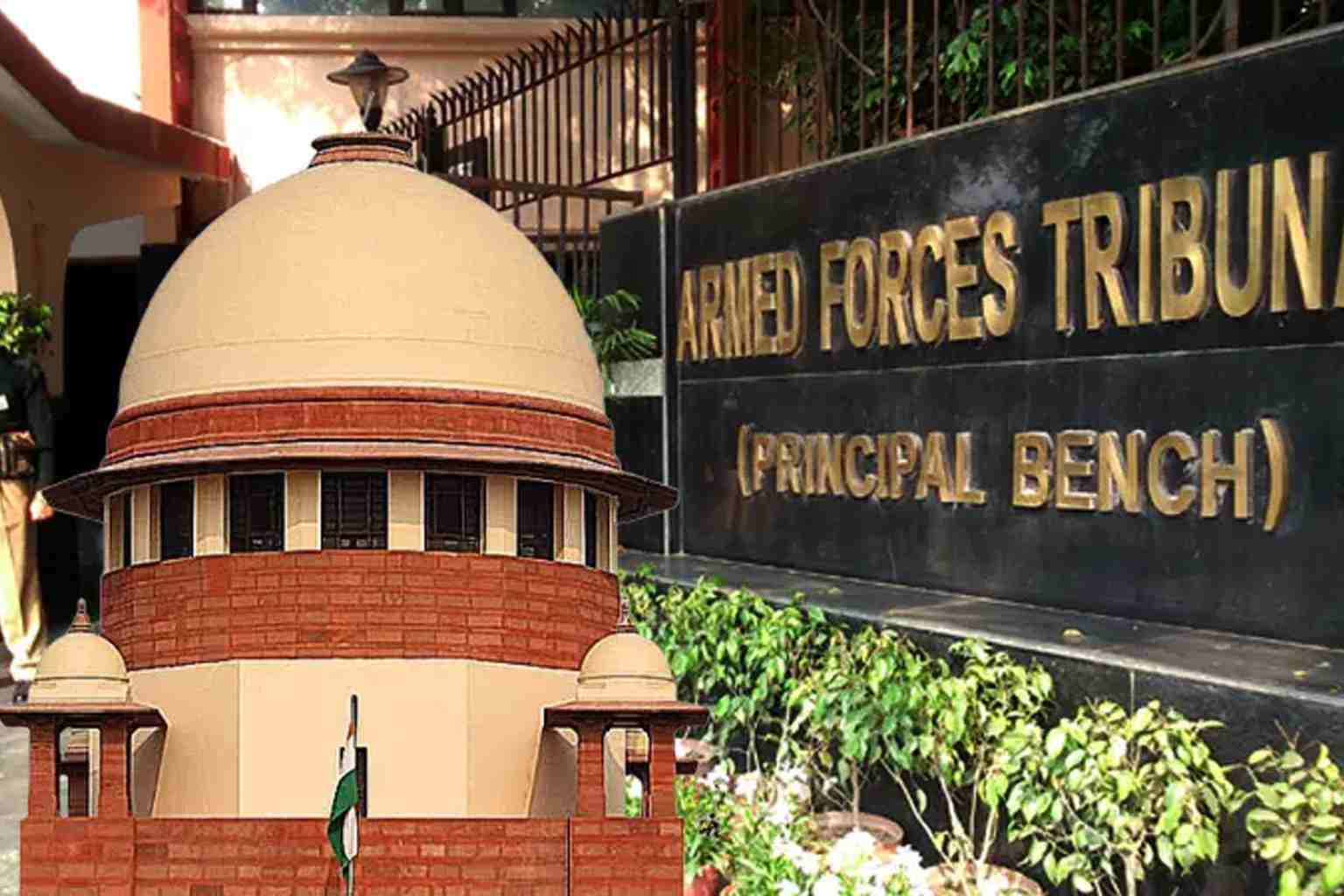
Lance Naik Manish Shukla, who joined the Indian Army on 15 March 2003, challenged his premature discharge from service before the Armed Forces Tribunal, Regional Bench Lucknow.

The central dispute was simple but serious: Was Shukla voluntarily discharged at his own request, or was the discharge obtained through pressure and an irregular procedure?
On 5 March 2021, the AFT allowed OA No. 151 of 2017, quashed his discharge order dated 30 September 2013 and granted consequential service, financial and pensionary benefits.

How did the dispute begin?
Shukla had been granted 15 days of casual leave from 15 to 29 September 2013.
According to his case before the Tribunal, a dispute involving his child and the child of a senior NCO occurred before he went on leave. A few days later, he was asked to return to the unit.
Shukla alleged that unit personnel subsequently came to his home, brought him back to the unit, placed him in the Quarter Guard and obtained signatures on discharge papers under pressure.
The Army gave a different version.
It argued that Shukla had already requested premature discharge before proceeding on leave and had been given time to consult his family and reconsider his decision. The respondents maintained that he ultimately returned voluntarily and was discharged at his own request.

What rule was used for the discharge?
The Army relied on Army Rule 13(3) III(iv), which deals with discharge at an individual’s own request before completion of the terms of engagement.
That made one question critical:
Was the request genuinely voluntary and was the prescribed procedure properly followed?
The Tribunal examined the surrounding circumstances instead of relying only on the wording of the discharge order.
Why did the AFT doubt the discharge process?
The Tribunal identified several circumstances that raised serious questions.
The alleged discharge application produced in the case was undated, even though the respondents claimed it had been submitted on 10 September 2013.
The Bench also questioned why unit personnel needed to visit Shukla during a short 15-day leave if he had been sent home specifically to reconsider his discharge request.
Another important issue was timing. His leave was to continue until 29 September, but the premature discharge was reportedly sanctioned before the leave period ended.
The Tribunal also found inconsistencies regarding the discharge drill and the movement between Nasirabad and Kamptee, raising doubts over whether the prescribed discharge process could have been completed in the manner claimed.

What did the Tribunal decide?
The AFT concluded that due process and the prescribed discharge procedure had not been followed.
It therefore quashed the discharge order dated 30 September 2013.
More importantly, the Tribunal did not stop at cancelling the discharge.
It directed that Shukla be notionally reinstated and treated as continuing in service until he became eligible for service pension.
The order also granted consequential financial benefits, including applicable Basic Pay, Rank Pay, Military Service Pay and Dearness Allowance, along with terminal and pensionary benefits.
The Tribunal further awarded 8% interest on arrears from the date of discharge and directed compliance within four months from production of the certified copy.

Why is “notional reinstatement” important?
The judgment should not simply be described as an order directing the Army to physically take Shukla back into regular duty.
The more accurate position is that the Tribunal reconstructed his service position notionally, allowing him to receive the service, financial and pension consequences that would follow from the discharge being treated as invalid.
This distinction is important because Shukla had already spent several years outside service by the time the case was decided.
What does this judgment mean for other soldiers?
The judgment does not mean every premature discharge is illegal.
Nor does it mean every signed discharge application will be treated as coerced.
Its broader significance is that a discharge described as being “at own request” can still be examined against:
- the original application,
- the chronology of events,
- the soldier’s actual conduct,
- movement and discharge records,
- the authority approving the discharge, and
- compliance with prescribed procedure.
A signed document does not automatically end the legal inquiry if the surrounding record creates serious doubt about whether the decision was genuinely voluntary.

Conclusion
The Manish Shukla case became important because the AFT looked beyond the simple description of the discharge as being “at own request.”
The Tribunal examined the timing, documents and discharge procedure and found that the process did not withstand scrutiny.
As a result, the 30 September 2013 discharge was quashed, Shukla received notional service continuity up to pension eligibility, consequential financial and pensionary benefits and interest on arrears.
The wider lesson is clear:
When an administrative action ends a soldier’s career, valid paperwork alone is not enough—the consent, chronology and prescribed procedure must also be legally sustainable.
Sources
Armed Forces Tribunal, Regional Bench Lucknow — Manish Shukla v. Union of India, OA No. 151 of 2017, decided 5 March 2021
Bar & Bench — reporting on the AFT judgment
The Times of India — contemporaneous reporting on the case and relief
Army Rules, 1954 — Rule 13 discharge framework



Leave a Reply