

When we talk about national security, most people immediately think of borders, soldiers, weapons, intelligence operations and military preparedness. But modern security is no longer limited to battlefields. It also includes banks, airports, railways, power plants, communication networks, public institutions and critical civilian infrastructure.

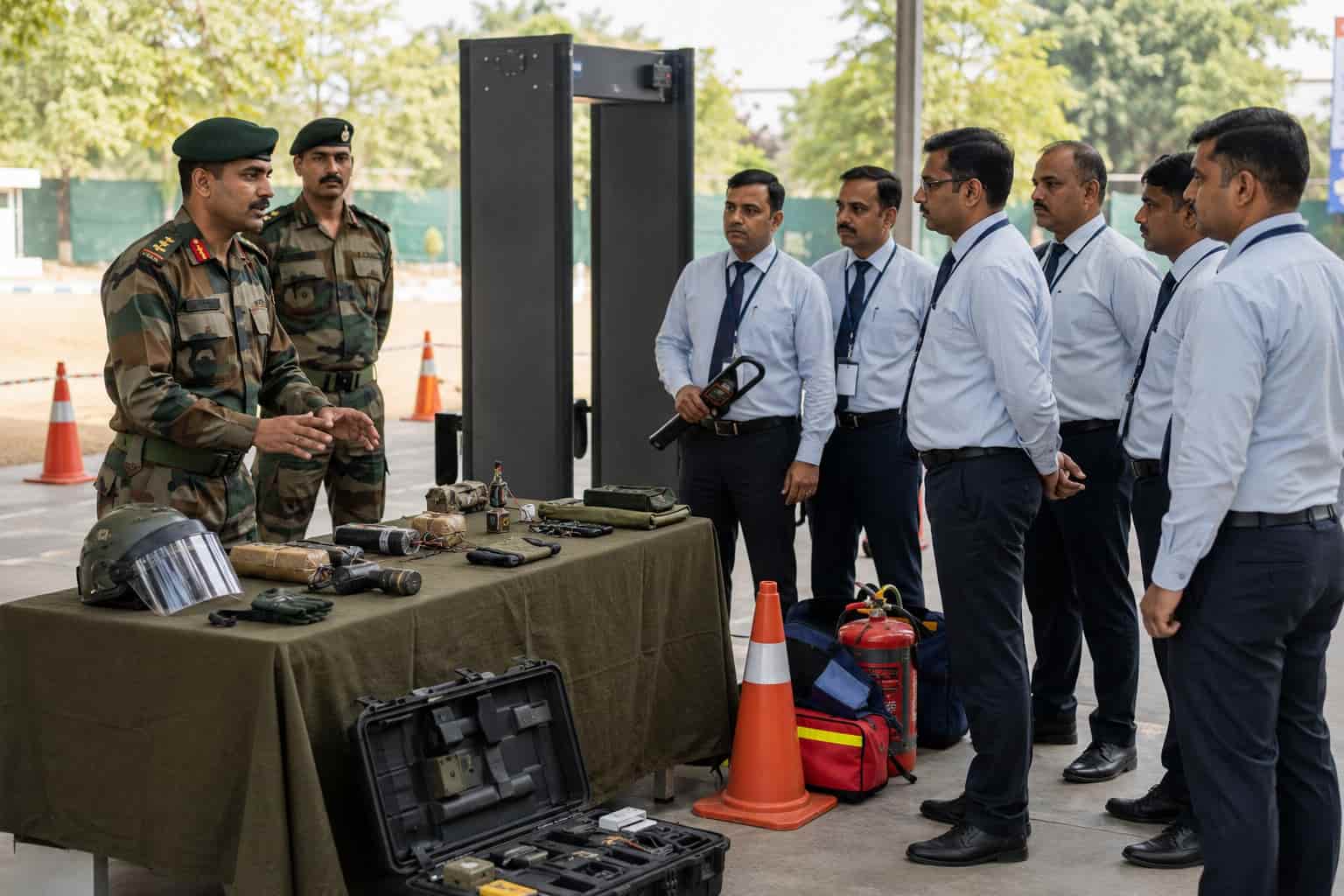
That is why the Indian Army’s specialised training programme for Reserve Bank of India security managers is an important story. According to reports, the College of Military Engineering, Pune, conducted a counter-IED and disaster management capsule course for RBI security managers. The programme focused on practical exposure to improvised explosive device threats, search and detection methods, rendering-safe procedures, drone-related awareness and disaster-response coordination.
At first glance, this may look like a routine training update. But in reality, it reflects a deeper shift in India’s security thinking. Institutions like the Reserve Bank of India are not ordinary offices. They are part of the country’s financial backbone. The safety of such institutions is linked not only to people inside the premises, but also to public confidence, institutional continuity and national stability.
Counter-IED training matters because improvised explosive devices are among the most unpredictable security threats. They can be simple or complex, visible or hidden, remotely triggered or timed. Security personnel who are the first to notice something suspicious must know what to do, what not to touch, whom to alert and how to protect people before specialised bomb-disposal teams arrive.
This is where training becomes more important than equipment alone. A CCTV camera can record movement, a scanner can detect suspicious material, and a security checkpoint can control entry. But when an actual threat appears, human judgement becomes decisive. A trained security manager can recognise warning signs, isolate the area, prevent panic and activate the correct response chain.
For RBI security teams, such exposure can be valuable because their work environment is sensitive. Financial institutions deal with restricted zones, public interface areas, secure movement, document protection, cash-related security and emergency preparedness. Even if the probability of a major incident is low, the impact of one security failure can be very high.
The Army’s role in this training also matters. The Indian Army has long experience in dealing with explosive threats, field engineering, route security, mine awareness, operational safety and disaster response. Army institutions like the College of Military Engineering bring technical discipline and practical field experience into such programmes. This helps civilian security managers understand threats not only in theory, but through real-world response logic.
The counter-IED part of the programme is especially relevant in today’s environment. Security threats are no longer always conventional. Suspicious packages, vehicle-based threats, drone-related risks, unattended objects, false alarms and coordinated disruptions can all create pressure on security teams. The first few minutes of response are often the most important. Wrong handling can increase danger, while correct isolation and reporting can save lives.

Disaster-response training is equally important. Security teams are often the first organised responders before police, fire services, medical teams or disaster-management agencies fully take charge. In an emergency, they must help evacuate people, maintain access routes, support crowd control, assist vulnerable individuals and keep communication lines open.
This is why counter-IED and disaster-response training should not be seen as separate subjects. In a real emergency, both can overlap. An explosion, suspicious device, fire, structural damage or crowd panic may require simultaneous action. A security manager must understand how to protect life first, preserve the scene, support investigation and ensure continuity of operations.
For ordinary citizens, this story also carries a message. Security is not only about dramatic action after an incident. It is about preparation before anything happens. Preparedness may not always look exciting, but it is what reduces damage when a crisis comes. A well-trained security team can prevent confusion, delay escalation and help agencies coordinate faster.
The training of RBI security managers also shows the importance of inter-agency cooperation. In today’s security environment, no single organisation can work in isolation. The Army, police, paramilitary forces, disaster-response agencies, financial institutions and civil administration all need shared understanding. When people from different systems train together, coordination becomes smoother during real emergencies.
This type of training also helps build a common security language. For example, what should be treated as a suspicious object? Who gives the first alert? How should an area be cordoned off? When should evacuation be ordered? How should evidence be protected? Which agency takes over and when? These answers must be clear before a crisis, not debated during one.
There is another important point. Security managers in civilian institutions are not expected to become bomb-disposal experts. Their role is different. They need awareness, early detection ability, disciplined response and coordination skills. The objective is not to make them handle explosives, but to ensure they do not make mistakes that can increase risk.
This distinction is important for public understanding. Counter-IED awareness does not mean every guard or manager will defuse a device. It means they will be better prepared to identify suspicious indicators, secure the area, inform the right authorities and protect people until specialised teams arrive.
For the Indian Army, such programmes also strengthen its contribution to national resilience. The Army is usually seen through the lens of combat, borders and operations. But its expertise in engineering, disaster relief, logistics, rescue, emergency planning and crisis response is equally valuable. India has seen this during natural disasters, floods, rescue operations and large-scale emergency support.
The Ministry of Defence has also highlighted the Army’s role in wider disaster-response readiness, including multi-agency humanitarian assistance and disaster relief exercises such as Sanyukt Vimochan 2024. Such exercises show that disaster readiness is not only a military requirement, but a national requirement involving multiple agencies.
The RBI training story should therefore be viewed as part of a larger preparedness culture. As India’s economy grows and its public institutions become more complex, security planning must also become more professional. Critical institutions cannot depend only on physical guards and routine checks. They need trained people, tested procedures, emergency drills and coordination with expert agencies.
For Sainik Welfare News readers, the takeaway is clear. The Indian Army’s training of RBI security managers is not just a small institutional update. It is a reminder that national security also depends on prepared civilian systems. A secure country is not built only at the border. It is also built inside banks, public offices, transport hubs, cities and critical infrastructure.
The real importance of this programme lies in its practical value. It prepares security managers to think clearly under pressure, recognise threats early, coordinate with the right agencies and protect lives during emergencies. In a time when threats can be unconventional and fast-moving, such training is not optional. It is part of responsible national preparedness.



Leave a Reply