

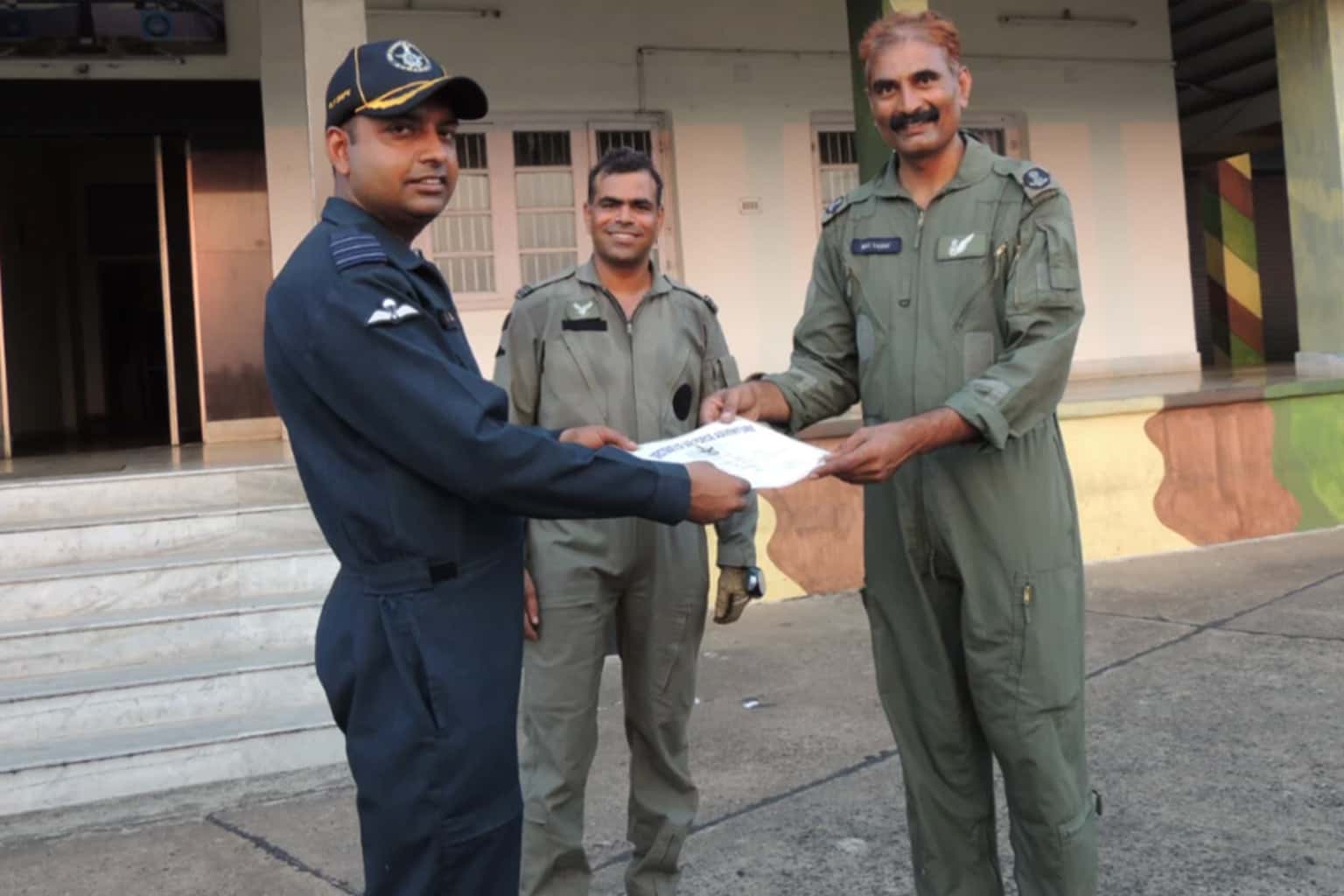
Joining the Indian Air Force is not only about wearing a blue uniform. It is about entering a life where discipline, technology, courage and responsibility come together every day.
For many defence aspirants, the Air Force looks glamorous from outside. Aircraft, air bases, flying displays, parachute jumps and operational deployments create a powerful image. But behind that image lies a demanding life where every decision, every technical check and every moment of calm under pressure can matter.
The Air Force does not only create pilots. It creates engineers, technical officers, administrators, logisticians, instructors, communicators, leaders and professionals who support national security in different ways.
That is why the journey of an Air Warrior offers lessons not only for defence aspirants, but also for students, parents, serving personnel, veterans and young professionals.
From engineering to the Indian Air Force
Many Air Force journeys begin with curiosity.
An engineering student may first be attracted by aircraft, machines, technology or the disciplined environment around a military station. Over time, that curiosity can turn into a serious desire to serve.
The Air Force is a natural attraction for technically minded youth because it combines national service with advanced machines, weapon platforms, aircraft systems, communication networks, missile systems, radars and maintenance responsibility.
But technical knowledge alone is not enough.
The armed forces look for the complete personality. A candidate must have confidence, awareness, responsibility, teamwork, emotional balance and leadership potential. This is where the Services Selection Board becomes important.
SSB is not about acting like an officer
One of the biggest mistakes defence aspirants make is believing that SSB can be cleared by copying answers or creating a temporary personality.
SSB is not a drama stage.
It is designed to observe long-term traits. Officer Like Qualities cannot be created in five days. They are built through family values, responsibility, communication, social confidence, practical intelligence, honesty and the ability to work with others.
Coaching can help a candidate understand the process. It can explain what happens in screening, psychology tests, GTO tasks and interview. But coaching cannot replace originality.
A candidate who only memorises responses may appear prepared, but not necessarily suitable. A candidate who remains natural, responsible and balanced has a better chance of showing real potential.
The most important SSB lesson is simple: do not try to become a fake version of an officer. Build the habits of an officer.
Why originality matters in SSB?
Originality matters because the armed forces need people who can think.
An officer will not always get perfect conditions. He may face confusion, pressure, limited information and sudden responsibility. In such situations, copied answers and rehearsed behaviour do not help.
The SSB process tries to see whether a candidate can remain practical, cooperative and honest under observation. It is not looking for perfection. It is looking for trainability and officer potential.
Parents and aspirants should understand this clearly. SSB preparation should not become artificial pressure. It should help the candidate become more aware, confident, responsible and expressive.
Aspirants should focus on reading, physical fitness, current affairs, communication, group behaviour, problem-solving and real-life responsibility. These things build personality in a natural way.
Para jumping and the real meaning of courage
Military training often teaches one lesson again and again: fear is natural, but action must continue.
Para jumping is a strong example. Jumping from a helicopter or aircraft is not only a physical act. It is a mental test. The first jump brings fear, hesitation and uncertainty. But training teaches the person to trust the process.
Trust the equipment.
Trust the instructor.
Trust the drill.
Trust the preparation.
Courage does not mean that fear disappears. Courage means the person acts correctly even when fear is present.
This lesson is useful for every young person. Life will bring moments where there is no complete comfort. Whether in SSB, academy training, military duty or civilian career, the ability to act despite fear becomes a major strength.

Technical officers are the backbone of modern air power
A common public misunderstanding is that the Air Force is only about fighter pilots. Pilots are critical, but modern air power depends on a much larger team.
Aircraft cannot fly safely without engineers and technicians. Missile systems cannot work without technical checks. Radars, communication systems, avionics, weapons, fuel systems and ground equipment need trained professionals.
An Air Force engineer carries silent but serious responsibility.
A technical failure can affect a mission. A small mistake in maintenance can create risk. A delay in repair can affect operational availability. That is why the technical branch of the Indian Air Force is central to readiness.
Modern warfare is becoming more technology-driven. Drones, electronic warfare, precision weapons, sensors, data systems and networked platforms are changing the battlefield. In such a world, technical officers and engineering teams are not support staff in a casual sense. They are part of the operational backbone.
Crisis handling during military technical tasks
Military technical responsibility becomes most visible during crisis situations.
Imagine a sensitive weapon system being transported for testing. Imagine a vehicle getting stuck during loading. Imagine pressure from time, safety, coordination and operational requirements.
In such moments, panic is dangerous.
The team must remain calm, assess the situation, coordinate with supporting agencies, follow safety drills and solve the problem without creating further risk.
This is where military training shows its value. It teaches people to act with calmness when the situation is not normal. It teaches coordination between services. It teaches that technical resourcefulness is also a form of courage.
For defence aspirants, this is an important lesson. Military life is not only about physical bravery. It is also about professional competence.
Communication is also a military skill
An officer must know how to speak clearly.
Whether during SSB, technical briefings, public events, flying displays, training instructions or post-retirement career transition, communication matters.
Air Force officers may have to explain complex systems in simple language. They may have to coordinate with different teams. They may have to brief seniors, guide juniors, address public audiences or represent the service at major events.
Clear communication builds trust.
This is especially important for technical officers. A person may understand machines deeply, but if he cannot explain a problem or solution clearly, his effectiveness reduces.
Defence aspirants should therefore work on communication from an early stage. Reading, speaking, observing and expressing thoughts clearly are not optional skills. They are leadership skills.
Operation Parakram and the meaning of readiness
Military life also includes long periods of deployment, waiting and preparedness.
Operations and large-scale deployments are not always dramatic every moment. Much of military readiness is about discipline during uncertainty. Personnel must remain prepared even when action does not happen immediately.
This teaches patience.
It teaches routine under pressure.
It teaches the value of systems, checklists, teamwork and morale.
For civilians, readiness may look like nothing is happening. But in the military, readiness itself is a task. A unit that waits correctly, maintains equipment, watches signals and stays alert is already performing a national duty.
What veterans can teach after retirement?
Retirement from the armed forces does not end the value of military experience.
Veterans carry leadership, discipline, technical knowledge, crisis handling, teamwork and decision-making ability. But many veterans face one challenge after retirement: translating military experience into civilian language.
A corporate employer may not immediately understand military terms. The veteran must explain his experience in a way the civilian world understands.
Command becomes team leadership.
Technical maintenance becomes asset management.
Operational planning becomes project execution.
Crisis handling becomes risk management.
Training juniors becomes people development.
Discipline becomes reliability.
This translation is important for second-career success.
Veterans should not underestimate their experience. They should learn to present it clearly.
Lessons for defence aspirants and youth
The Indian Air Force journey teaches several practical lessons.
First, originality matters more than artificial preparation.
Second, fear is natural, but courage is trained.
Third, technology is central to modern defence.
Fourth, communication is part of leadership.
Fifth, calm decision-making matters during crisis.
Sixth, military experience has value even after retirement.
For defence aspirants, the message is clear: do not focus only on selection. Focus on becoming worthy of selection. Build habits, build responsibility, build physical fitness, build communication and build real confidence.
For parents, the message is equally important. Support the aspirant, but do not create artificial pressure. The armed forces need natural, balanced and responsible personalities.
For veterans, the message is hopeful. The uniform may retire, but the value of service continues.
Final takeaway
Indian Air Force life is a journey of discipline, technology, courage and responsibility.
It teaches a person to think under pressure, trust training, respect systems, communicate clearly and adapt to new phases of life. From SSB preparation to para jumping, from technical duties to operational deployment, from Air Force service to veteran career transition, every stage carries a lesson.
The larger lesson is simple.
The armed forces do not only prepare people for war. They prepare people for life.
A true Air Warrior carries the values of service, discipline and responsibility long after leaving uniform.
Sources:-
All Updates:
https://sainikwelfarenews.in/
Sponsorships:
media@talenenterprises.in
About Chief Editor:
https://captlokendra.com/


Leave a Reply