

Future wars will not be fought only with tanks, aircraft, missiles and guns.
They will also be fought through secure chips, protected data, sovereign software, encrypted networks and reliable digital infrastructure.
That is why the latest Defence Information Technology Consultative Committee meeting deserves attention. At first glance, it may look like a technical meeting. But in reality, it points towards a larger shift in India’s defence readiness — from platform-based strength to technology-backed military power.

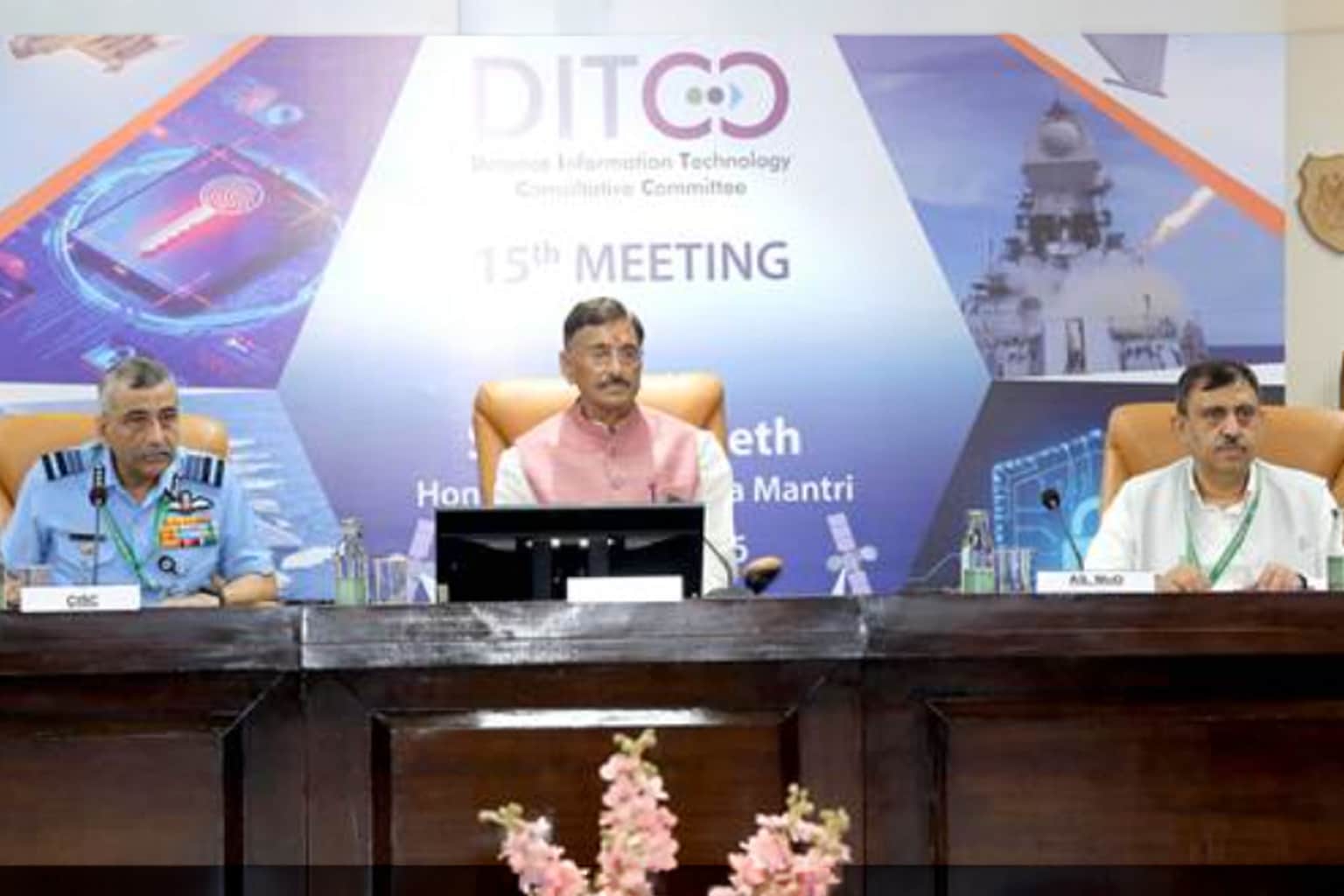
According to the official PIB release, Raksha Rajya Mantri Shri Sanjay Seth chaired the 15th Defence Information Technology Consultative Committee meeting in New Delhi on 23 June 2026. The meeting was conducted by Headquarter Integrated Defence Staff and focused on Aatma-Nirbharta in IT and time-bound adoption of cutting-edge digital enablers.
Why this meeting matters?
For a normal reader, terms like chips, databases, operating systems and data centres may sound like civilian technology issues.
But for defence forces, these are now strategic assets.
Modern military operations depend on sensors, communication networks, drones, radars, surveillance systems, command centres, battlefield management platforms, cyber security systems and real-time information flow.
If these systems are not secure, the weapon platform alone is not enough.
A powerful missile needs guidance.
A drone needs navigation and data links.
A command centre needs secure servers.
A battlefield commander needs trusted information.
A communication network needs protection from intrusion.
This is why defence IT has become part of national security.
The new battlefield is digital
The idea of warfare has changed.
Earlier, military strength was mostly measured by visible assets — how many tanks, how many aircraft, how many ships, how many guns.
Those assets are still important. But today, the invisible layer behind them has become equally important.
That invisible layer includes:
Secure operating systems
Trusted databases
Encrypted communication
Indigenous chip capability
Cyber-resilient networks
Military-grade data centres
Artificial intelligence-enabled systems
Protection against electronic and cyber attacks
If this invisible layer is weak, even strong platforms can become vulnerable.
That is why the Defence IT meeting is important for Army, Navy and Air Force readiness.
Indigenous chips: Why they matter for defence?
The official release mentions deliberation on indigenisation of advanced chip manufacturing.
This is a major point.
Chips are the brain of modern systems. They are used in communication equipment, radar systems, drones, missiles, aircraft, satellites, sensors, electronic warfare platforms and command-control systems.
If a country depends too heavily on imported chips for critical systems, it may face supply-chain risk during crisis or conflict.
In defence, supply-chain security is not only an economic issue. It is an operational issue.
If a critical component is delayed, restricted or compromised, defence preparedness may be affected.
That is why indigenous chip capability matters. It gives the country greater control, better security and more confidence in long-term military technology planning.
Sovereign operating system: More than software
The meeting also discussed development of a sovereign operating system.
This may sound like a technical phrase, but its meaning is serious.
An operating system controls how a machine works. In defence systems, software controls communication, data processing, access, authentication, display, control and decision-support functions.
If the software layer is dependent on foreign systems or unknown code, there can be risks.
A sovereign operating system does not simply mean national pride. It means stronger control over source code, security architecture, updates, access rules and vulnerability management.
For defence services, this can help reduce exposure to external dependency and strengthen cyber resilience.
Why a sovereign database is important?
The official update also mentions a sovereign database.
In defence, data is not just information. It can be operational intelligence, deployment records, logistics data, sensor feeds, communication logs, equipment status, medical records, personnel movement, map layers and mission-related inputs.
If such data is stored, processed or accessed through insecure systems, the risk becomes serious.
A sovereign database can help ensure that critical defence information remains under trusted national control, with better governance, security and accountability.
In simple words, future defence power will depend not only on how much data we collect, but also on how securely we store and use it.
Defence data centres: The backbone behind operations
The meeting also discussed strategic siting of data centres for defence needs.
This is one of the most important points in the release.
A data centre is not just a building full of servers. For defence, it can become the backbone of command, control, communication, intelligence, cyber operations and digital continuity.
Strategic siting means deciding where such infrastructure should be located so that it remains secure, resilient and useful during crisis.
Defence data centres must be protected from:
Cyber attacks
Power failures
Physical threats
Natural disasters
Communication disruption
Data theft
Operational overload
In a conflict situation, data infrastructure must continue working when pressure is highest. That is why defence data centres are now part of national security planning.
Why all three services were involved?
The official PIB release says the meeting was attended by officers of HQ IDS, Army, Navy, Air Force, DRDO, Ministry of Electronics and Information Technology, academia and industry.
This is significant.
Future defence technology cannot be built by one service alone.
The Army needs secure ground communication, battlefield networks, surveillance support and logistics digitisation.
The Navy needs maritime domain awareness, secure ship systems, underwater data processing, fleet communication and networked operations.
The Air Force needs radar data, aircraft systems, air defence networks, mission planning tools and secure command systems.
DRDO brings research and development. MeitY brings electronics and IT ecosystem linkages. Industry and academia bring innovation, manufacturing and specialised knowledge.
When all these stakeholders come together, the defence technology ecosystem becomes stronger.
Aatma-Nirbharta in IT: Why it is different from normal self-reliance?
Aatma-Nirbharta in defence IT is not only about making hardware in India.
It is about building trust into the system.
A weapon may be manufactured domestically, but if its core chip, operating system, database or software layer remains externally dependent, the system may still carry risk.
True self-reliance means control over critical layers.
This includes design, manufacturing, testing, certification, cybersecurity, maintenance and upgrade pathways.
For the Armed Forces, self-reliance must finally translate into reliability during operations.

What the committee clearance means?
The PIB release states that the Committee gave clearance to projects expected to bring far-reaching benefits for Defence Forces and national technological development.
This is important, but it should not be misunderstood.
It does not mean that a new chip plant has been immediately launched.
It does not mean that a sovereign OS is already deployed across the Armed Forces.
It does not mean that new defence data centres have already become operational.
It means that these areas have moved through an important consultative and decision-making stage.
For public understanding, this should be seen as a policy and project-direction update, not as a final implementation announcement.
Why this topic matters for soldiers and defence families
Some may ask: how does this affect a soldier on the ground?
The answer is simple.
The soldier of the future will operate in a battlefield where information, communication and digital systems will guide many decisions.
He may depend on encrypted radios, drone feeds, digital maps, surveillance inputs, GPS-linked systems, electronic sensors and command networks.
If those systems are secure and reliable, operational confidence improves.
If those systems are compromised, delayed or dependent on uncertain supply chains, field effectiveness can suffer.
So this is not only an IT story. It is also a soldier-readiness story.
Future warfare needs secure foundations
Modern warfare is becoming faster, more connected and more technology-dependent.
A country may have strong platforms, but without secure digital foundations, those platforms cannot perform at full strength.
The Defence IT meeting shows that India is paying attention to that foundation.
Chips give systems intelligence.
Operating systems give machines control.
Databases give information structure.
Data centres give continuity.
Cybersecurity gives protection.
Indigenous capability gives confidence.
Together, these form the silent backbone of future military power.
What should not be exaggerated?
This update should be reported carefully.
Do not write that India has already deployed a sovereign military operating system.
Do not write that all defence chips will now be made in India immediately.
Do not write that a new cyber command has been announced.
Do not write that this is a welfare scheme for soldiers or veterans.
The official update is about a high-level defence IT meeting, policy deliberation and project clearance in important technology areas.
That is powerful enough. It does not need exaggeration.
Final view
The 15th Defence Information Technology Consultative Committee meeting is a clear signal that India’s defence preparedness is moving deeper into the digital age.
The battlefield is no longer only about visible firepower. It is also about secure chips, trusted software, protected databases and resilient data infrastructure.
For the Army, Navy and Air Force, this digital backbone will become more important with every passing year.
A tank may dominate ground.
An aircraft may control air.
A warship may secure the sea.
But behind all of them, secure technology will decide speed, accuracy, coordination and survival.
That is why this update matters.
Future wars will be won not only by weapons, but by the systems that make those weapons smarter, safer and more reliable.
Official Source
PIB / Ministry of Defence official release:
https://www.pib.gov.in/PressReleasePage.aspx?PRID=2277006&lang=1®=3
Supporting Sources
Aeromag Asia report:
https://www.aeromagasia.com/news/uav/defence-it-consultative-committee-meeting-aatmanirbhar-bharat
Defence Standard report:
https://defencestandard.com/defence-ministry-approves-it-self-reliance-projects-for-armed-forces/



Leave a Reply