

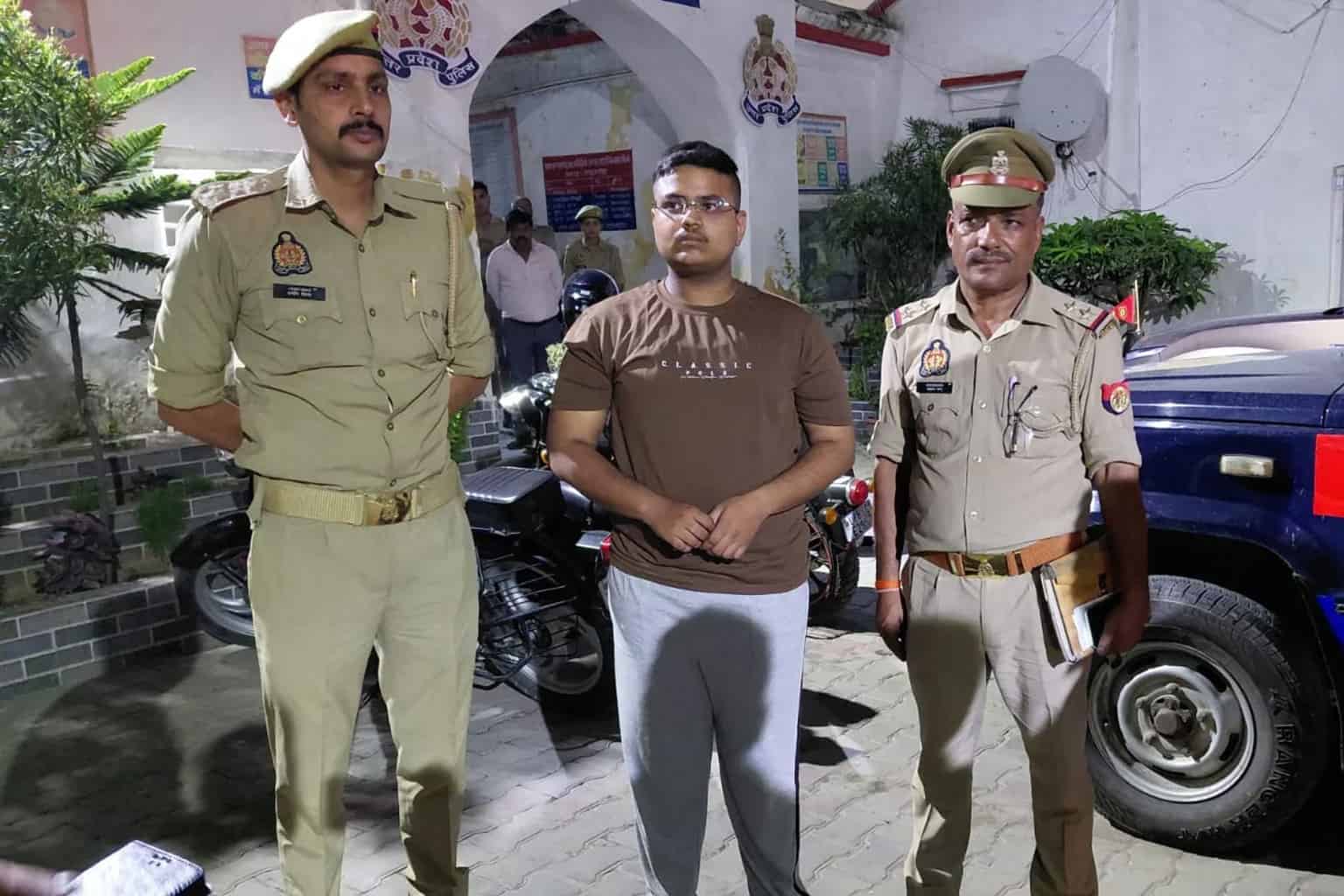
A 21-year-old man was reportedly caught in Shahjahanpur for allegedly posing as an Army Brigadier. Here is what media reports say, what is still not officially confirmed, and why this case is important for defence aspirants and Army families.
What happened in Shahjahanpur?
A shocking Army impersonation case from Shahjahanpur has drawn national attention after a 21-year-old man, identified in media reports as Aryan Verma, was reportedly caught for allegedly posing as an Indian Army Brigadier.
The case is not just about one young man wearing a uniform. It is about the misuse of Army rank, military-style identity, vehicle insignia and public trust. Reports say the accused allegedly moved around in a Tata Harrier/SUV with a star plate, Army-style flag, driver and two black-dressed men who were projected as security personnel.
For civilians, such a display may look convincing. But for those who have lived the uniform, small details often tell the real story.
That is where local ex-servicemen became important.
How did ex-servicemen expose the alleged fake Brigadier?
According to media reports, the suspect did not get exposed by accident. Army authorities and local veterans had reportedly been watching his movement for some time. Suspicion grew because the image he was presenting did not match the reality of Army rank, age, service profile and protocol.
Reports suggest that a trap was laid in Shahjahanpur. The accused was allegedly invited to an event linked with a motivational or public interaction setting. When he arrived with full rank-style display, Army-linked personnel and ex-servicemen reportedly confronted the situation and the alleged impersonation came to light.
This is the most powerful part of the story.
A fake uniform may impress ordinary people for a while, but it is difficult to fool soldiers who have spent decades understanding rank, bearing, protocol, badges, movement and military conduct.
Why the Brigadier rank angle made this case serious?
A Brigadier is a very senior rank in the Indian Army. It is not a rank that appears suddenly at the age of 21. It comes after years of commissioned service, command responsibility, field experience and promotions through a formal military structure.
That is why the alleged use of a Brigadier’s uniform, star plate and Army-style identity is not a small matter. It can mislead civilians, influence young defence aspirants, create false authority and damage the dignity attached to the uniform.
In a country where people deeply respect the Armed Forces, a person wearing an Army uniform automatically receives trust. That trust must never be misused.
What items were reportedly found?
Media reports have mentioned several items allegedly linked with the accused and his setup. These include a Brigadier-style uniform, a star-plated SUV, Army-style flag, forged or fake identity card, air or dummy pistol, Army Medical Corps-related insignia, regimental cane, peak cap and a government-style ID reportedly carried by the driver.
Reports also say that two men in black dress were allegedly projected as NSG commandos. Some reports describe them as hired bouncers or associates.
These details are important because the case was not just about wearing a uniform. It allegedly involved creating a complete senior officer-like appearance around the accused.

Is there any official Army or police press release?
At the time of checking, this case is strongly reported by multiple media organisations, but a public official press release from PIB, Ministry of Defence, Indian Army/ADGPI or UP Police was not found.
This is why the story should be written carefully.
Correct words are: alleged, reportedly, accused, media reports say, investigation is underway.
Avoid final words like: proved guilty, confirmed racket, official Army confirmation, criminal mastermind, unless an official document or court record supports that wording.
For Sainik Welfare News readers, this distinction is important. A responsible defence story should protect public awareness without turning allegations into final judgment.
What is still not clear?
Several important questions still need official clarity.
Was money collected from anyone?
Were Army aspirants or families misled with recruitment promises?
What exact legal sections were applied in the police case?
Did the driver and the two black-dressed men know the full truth?
Where were the alleged fake ID, seal or military-style items prepared?
Was the vehicle owned by the accused or someone else?
Was there a wider network behind the impersonation?
Until these questions are answered through official investigation or police/court records, the motive should not be declared as final.
Why this case matters for defence aspirants?
The most vulnerable audience in such cases is often defence aspirants and their families. Many young candidates dream of joining the Indian Army, Navy or Air Force. Their families trust uniforms, ranks and people who claim to have Army connections.
That trust can be misused if society does not verify suspicious claims.
No genuine Army selection can be bought through private contacts. No person should be trusted simply because he wears a uniform, uses a star plate, carries an ID card or speaks confidently about recruitment. Defence aspirants must rely only on official recruitment channels, official websites and recognised communication from the Armed Forces.
This case is a reminder that blind respect can become dangerous if it is not supported by verification.
What should citizens learn?
The lesson is not to disrespect the uniform. The lesson is to respect it enough to protect it from misuse.
If someone claims to be a senior Army officer but behaves unusually, moves with private-style security, makes recruitment promises, asks for money, shows suspicious documents or creates pressure through rank display, citizens should verify the claim through proper channels.
Ex-servicemen networks can also play a valuable role. Retired soldiers understand uniforms, ranks and Army culture. Their vigilance can help protect both civilians and the reputation of the Armed Forces.
Final takeaway
The Shahjahanpur fake Brigadier case is not just a strange incident. It is a public awareness story about Army identity, defence recruitment trust and the alertness of ex-servicemen.
As per media reports, a 21-year-old man allegedly created the appearance of a senior Army officer using uniform, vehicle insignia, security-style cover and military-looking items. But the act reportedly failed when people who understood the uniform from inside began asking the right questions.
For Sainik Welfare News readers, the message is simple.
Respect the uniform, but verify suspicious claims.
Respect the rank, but do not trust display without authenticity.
Support defence aspirants, but warn them against shortcuts and false promises.
A real soldier earns the uniform through service.
A fake display can never carry the weight of real duty.
Sources:-
- India Today
https://www.indiatoday.in/india/story/shahjahanpur-arrest-21-year-old-held-for-posing-as-senior-indian-army-officer-2926059-2026-06-13 - Times of India
https://timesofindia.indiatimes.com/city/lucknow/woh-con-tha-army-veterans-nab-21-year-old-brigadier/articleshow/131691648.cms - NDTV
https://www.ndtv.com/india-news/aryan-verma-21-year-old-fake-army-brigadier-with-air-pistol-nsg-cover-arrested-in-up-11631399 - Hindustan Times
https://www.hindustantimes.com/india-news/a-forged-army-id-a-dummy-pistol-and-2-bouncers-how-fake-brigadier-aryan-verma-tricked-people-101781353372998.html - Hindustan Times – sting operation angle
https://www.hindustantimes.com/india-news/fake-event-invite-for-speech-how-army-nabbed-aryan-verma-shahjahanpur-fake-brigadier-sting-operation-101781317817413.html - Daily Pioneer
https://dailypioneer.com/news/21-year-old-caught-impersonating-as-brigadier - SSBCrack
https://www.ssbcrack.com/2026/06/21-year-old-fake-brigadier-caught-in-army-cantonment.html
Defence-audience supporting source; use after mainstream sources, not as the primary source.


Leave a Reply