

In the jungles and semi-mountainous terrain of Meghalaya, soldiers from 13 countries did something more meaningful than attending a formal military event.
They trained together.
They moved through difficult ground together. They practised drills together. They understood each other’s methods, discipline and response systems. And in that process, Exercise PRAGATI 2026 became more than a defence exercise. It became a message of trust, cooperation and India’s growing role as a regional military partner.

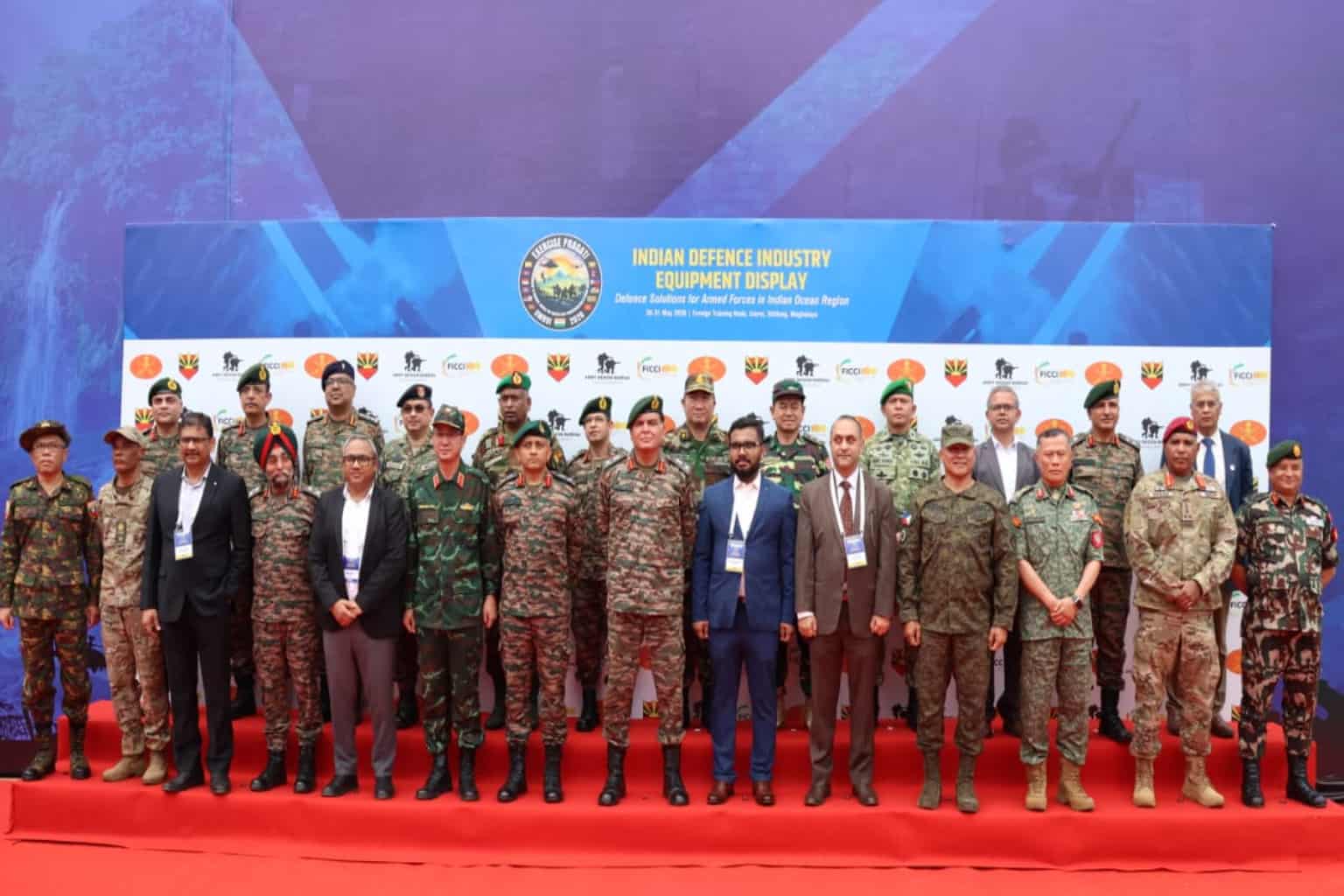
The maiden edition of Multilateral Exercise PRAGATI 2026 concluded at Umroi Military Station in Meghalaya with a 72-hour validation exercise. According to the official Ministry of Defence release, the exercise brought together more than 400 troops from India and 12 friendly foreign countries: Bhutan, Cambodia, Malaysia, Maldives, Myanmar, Nepal, Philippines, Seychelles, Sri Lanka, Vietnam, Indonesia and Laos.
At first glance, this may sound like a normal military training update. But this story has a much deeper meaning.
PRAGATI stands for Partnership of Regional Armies for Growth and Transformation in the Indian Ocean Region. The name itself tells us the purpose. This was not just about firing drills or field exercises. It was about creating a common platform where regional armies could train together, share experiences, understand each other and prepare for common security challenges.
For India, this is important because the security environment around the Indian Ocean Region is changing rapidly. Countries today do not face only traditional battlefield threats. They also face terrorism, disasters, illegal movement, information warfare, cyber threats, transnational crime, instability and non-traditional security challenges. In such a world, armies must know how to work with friendly forces.
This is where Exercise PRAGATI 2026 becomes significant.
The exercise focused on counter-terrorism operations in semi-mountainous and jungle terrain. This is not an easy training environment. Jungle and hill areas demand stamina, patience, field awareness, coordination and calm decision-making. Soldiers cannot simply depend on theory in such terrain. They must learn how to move, observe, communicate, react and protect each other under pressure.
The training covered rock craft, ambush and counter-ambush drills, slithering, jungle lane shooting, room and bus intervention, IED detection, casualty evacuation and other specialised skills. For defence aspirants, these words are not just technical terms. They show the kind of practical soldiering that modern armies must master.
A room intervention drill teaches how to respond in close-quarter situations. IED detection teaches caution and survival. Casualty evacuation reminds every soldier that saving lives is also part of combat responsibility. Jungle lane shooting tests reaction, alertness and accuracy in a realistic environment. Ambush and counter-ambush drills train soldiers to think quickly when plans suddenly change.
This is why such exercises matter.
A soldier does not become ready only by wearing a uniform. Readiness is built through repeated training, difficult conditions, mistakes corrected in time and confidence built slowly on the ground. When soldiers from different countries train together, they also learn how other armies think and operate.
The official release mentions that mixed teams comprising personnel from participating nations trained together. This is an important detail. It means soldiers were not only watching each other from a distance. They were working together, learning together and building trust at the soldier level.
Trust between armies is not created only in conference rooms. It is created when soldiers share difficult training days, communicate despite different backgrounds and learn to depend on each other during field exercises.

A key highlight of PRAGATI 2026 was the camaraderie and soldierly bonding among participants. The personnel “roughed it out” together through demanding training conditions. This simple idea gives the story its human side. Behind every multilateral exercise are soldiers who may speak different languages, come from different cultures and wear different uniforms, but understand the same values of discipline, courage and service.
The exercise also had a strong senior leadership presence. Six Vice Chiefs and over 40 senior military officials from participating countries attended the event. Lieutenant General Dhiraj Seth, Vice Chief of the Army Staff, hosted the dignitaries from all participating countries. This shows that PRAGATI 2026 was not treated as a small routine drill. It was a serious military-to-military engagement with regional importance.
Another important part of the exercise was defence diplomacy.
On the sidelines, the Vice Chief of the Army Staff held bilateral meetings with representatives of participating countries to further defence cooperation. Such meetings are important because military partnerships are built both on the training ground and across the discussion table. When senior officers meet face to face, they can discuss cooperation, training needs, shared concerns and future engagement.
But PRAGATI 2026 was not only about soldiers and commanders.
It also had a major Atmanirbhar Bharat angle.
As part of the exercise, the Indian Army, in collaboration with FICCI, organised a defence equipment display for partner nations. The Army Design Bureau and FICCI helped showcase indigenous defence equipment and niche technologies developed by the Indian defence industry. The Indian Army also displayed select new-generation equipment currently in service.
This is a very important part of the story.
India was not only hosting friendly armies for training. India was also showing that its defence industry is developing new systems, technologies and equipment that can interest partner countries. The official release says this initiative highlighted India’s growing indigenous defence design, development and manufacturing capability under Atmanirbhar Bharat. It also provided a platform for promoting defence exports through industry engagement, collaboration and knowledge exchange.
This makes Exercise PRAGATI 2026 bigger than a field exercise.
It becomes a platform where India demonstrated three things at once: military training capability, regional leadership and indigenous defence technology.
For Sainik Welfare News readers, the key point is simple. Exercise PRAGATI 2026 shows that modern defence influence is not built only through weapons or speeches. It is built when soldiers train together, commanders communicate directly, countries share best practices and India presents itself as a reliable military and defence technology partner.
It is also important to understand what this exercise was not.
It was not a military alliance. It was not a war signal against any country. It was not a combat deployment. It was a multilateral training exercise focused on interoperability, counter-terrorism preparedness, regional cooperation, mutual trust and common security challenges.
This distinction matters because defence news should be understood responsibly. A strong military exercise does not always mean confrontation. Sometimes it means preparation, partnership and prevention.
For defence aspirants, this exercise gives a powerful lesson. The future soldier and officer must understand more than weapons and drills. He must understand joint training, international cooperation, technology, culture, terrain, teamwork and operational adaptability. Modern military leadership is not only about command. It is also about cooperation.
For India, Exercise PRAGATI 2026 lays the foundation for future editions. The maiden edition has already shown that India can bring friendly regional armies together on one platform, conduct demanding training, host senior military leaders, build soldier-level bonding and showcase indigenous defence capability.
That is why this story should not be treated as just another exercise conclusion.
It is a story of soldiers training in tough terrain. It is a story of regional armies learning from each other. It is a story of India’s defence diplomacy. It is a story of Atmanirbhar Bharat reaching a military audience beyond India.
In Umroi, Meghalaya, the message was clear: India is not only strengthening its own armed forces, it is also helping build trusted regional partnerships through training, professionalism and indigenous defence capability.
Sources:-
Official PIB source:
Multilateral Exercise PRAGATI 2026 concludes at Umroi, Meghalaya
https://www.pib.gov.in/PressReleasePage.aspx?PRID=2266978&lang=1®=3
Times of India supporting source:
13 nations, one mission: Indian Army wraps up Exercise PRAGATI 2026
https://timesofindia.indiatimes.com/defence/news/13-nations-one-mission-indian-army-wraps-up-exercise-pragati-2026/articleshow/131407502.cms
Economic Times supporting source:
13 nations, 400 personnel take part in Exercise PRAGATI 2026 in Meghalaya
https://m.economictimes.com/news/defence/13-nations-400-personnel-take-part-in-exercise-pragati-2026-in-meghalaya/articleshow/131411926.cms
Economic Times background source:
Multilateral military exercise PRAGATI 2026 commences in Meghalaya
https://m.economictimes.com/news/defence/multilateral-military-exercise-pragati-2026-commences-in-meghalaya/articleshow/131226911.cms


Leave a Reply