

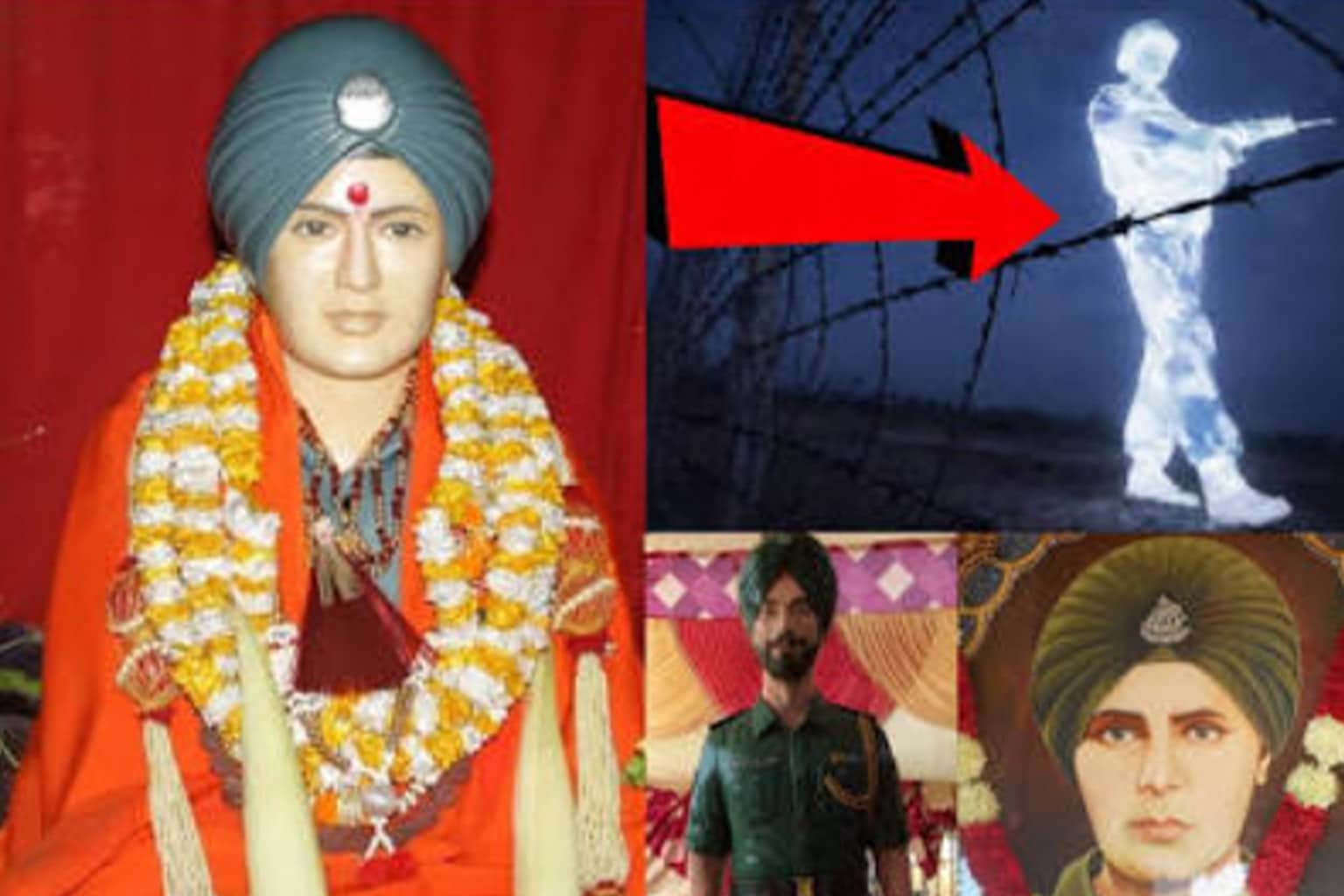
More than five decades after his death, Baba Harbhajan Singh remains one of the most respected names associated with the Indian Army’s eastern frontier.
To some visitors, his shrine in Sikkim is a memorial to a young soldier who died while serving in difficult mountain terrain. To many soldiers and devotees, he is also an unseen guardian who continues to watch over the border.
The Government of Sikkim describes him as a legendary figure in Indian military folklore whose legacy inspires devotion, discipline and patriotism among both Armed Forces personnel and civilians.
His story, however, contains two distinct layers: documented military history and deeply respected military belief. Understanding the difference makes his legacy even more meaningful.

What happened to Baba Harbhajan Singh in 1968?
Reports state that Harbhajan Singh was escorting a mule column carrying supplies through difficult mountain terrain on 4 October 1968.
During the movement, he reportedly slipped and fell into a fast-flowing stream or nullah. He was swept away and died while on duty. Older reports place the route between Tukla and Deng Chukla, although spellings and minor location details vary across accounts.
This was not described as a battlefield death during the 1962 India-China War or the 1967 Nathu La clashes. His death occurred in 1968 during a military movement in the Sikkim sector.
That distinction is important because many social-media posts incorrectly connect his death with a major battle.
How did Harbhajan Singh become known as “Baba”?
The transformation of Sepoy Harbhajan Singh into “Baba” developed through remembrance, military tradition and oral accounts shared by soldiers serving in the region.
Life at a remote high-altitude post can involve:
- extreme cold;
- difficult terrain;
- long periods away from family;
- limited civilian access;
- isolation;
- continuous operational alertness.
In such conditions, the memory of a fallen soldier can become part of a unit’s emotional and regimental identity.
Over time, soldiers reportedly began to believe that Harbhajan Singh remained present in spirit and continued to protect those deployed near the frontier. Older journalistic accounts document how his memorial gradually developed into a shrine combining military remembrance, faith and folklore.
What do soldiers traditionally believe?
Several stories associated with Baba Harbhajan Singh have been passed down through generations.
According to military folklore, he:
- appeared in the dreams of soldiers;
- warned troops about possible danger;
- continued to patrol the frontier symbolically;
- protected soldiers serving in the region;
- expected discipline and cleanliness around military posts.
Some accounts also claim that his bed appeared disturbed, his boots became muddy and his uniform showed signs of use.
These stories hold deep emotional and spiritual value for many believers. However, publicly available official records do not independently establish every individual supernatural claim.
The safest and most respectful description is:
Soldiers posted in the region have traditionally believed that Baba Harbhajan Singh continues to protect the frontier.

Why are there two Baba Harbhajan Singh temples?
Visitors often become confused when they hear about the Old Baba Mandir and the New Baba Mandir.
An official Government of Sikkim release confirms the existence of old and new temples associated with Baba Harbhajan Singh at Thegu and Kupup, situated at approximately 14,000 feet.
Old Baba Mandir
The older shrine is traditionally associated with the original military location, bunker and the early development of the belief surrounding Baba Harbhajan Singh.
It carries greater historical and military significance, but access can be more difficult and dependent on route, weather and security conditions.
New Baba Mandir
The newer memorial is more accessible and is commonly included in tourist journeys towards Tsomgo Lake and Nathu La.
It has become a place where soldiers, veterans, local residents and tourists pay tribute to Baba Harbhajan Singh.
Old Baba Mandir vs New Baba Mandir
| Point | Old Baba Mandir | New Baba Mandir |
|---|---|---|
| Primary character | Historical and military association | Memorial and pilgrimage site |
| Connection | Linked with early shrine and bunker traditions | Developed for more accessible visits |
| Accessibility | More route-dependent | More commonly visited |
| Visitors | Mainly military and informed travellers | Soldiers, civilians and tourists |
| Travel caution | Access may depend on local restrictions | Permit and weather rules may apply |
Current road access, permit requirements and photography restrictions should always be checked through official Sikkim authorities before travelling.

Was Baba Harbhajan Singh promoted after his death?
Many articles claim that he continued receiving promotions after his death and eventually became a Captain.
The strongest publicly accessible official reference is the PIB release that calls him “Sepoy (Honorary Captain) Baba Harbhajan Singh.”
However, this wording should not automatically be used to confirm every related claim circulating online.
A complete publicly accessible military order detailing:
- each reported promotion;
- continued salary payments;
- pension arrangements;
- notional retirement;
- or posthumous service status
is difficult to locate.
The accurate statement is:
The Government of India has officially referred to him as Sepoy (Honorary Captain) Baba Harbhajan Singh, but every popular administrative claim associated with his posthumous service is not publicly documented.
Was he really sent on annual leave?
One of the most famous stories says that Baba Harbhajan Singh’s belongings were sent to Punjab every year during an annual leave period.
Older reports describe traditions involving:
- his personal belongings;
- an Army escort;
- a reserved railway berth;
- a ceremonial journey towards his home;
- soldiers contributing support for his family.
These practices have been widely described in journalistic and popular accounts. However, the complete official documentary record confirming how long each custom continued is not easily available in the public domain.
The practice should therefore be described as a reported military tradition, not as a currently operational entitlement.
Did Chinese officers keep a chair for him?
Another popular claim says that an empty chair was kept for Baba Harbhajan Singh during meetings between Indian and Chinese military officers.
The story is repeated frequently in documentaries and social-media posts, but no publicly available primary diplomatic record or official border-meeting document establishing the claim was located.
It should be presented as:
A popular story connected with the Baba Harbhajan Singh legend.
It should not be written as a confirmed diplomatic practice.
Why is the Nathu La region strategically important?
Nathu La lies in a high-altitude region along the India-China frontier in Sikkim. The area combines difficult weather, sensitive border geography and important military history.
The Government of Sikkim describes Baba Harbhajan Singh’s shrine as a high-altitude site along the India-China border and a symbol of the Indian Army’s spirit and commitment.
The region is also associated with the 1967 Nathu La and Cho La clashes. However, those battles must not be mixed with Baba Harbhajan Singh’s 1968 death.
Understanding the geography helps explain why his story became so powerful. The shrine stands in a region where soldiers serve in severe weather, thin air and isolated terrain while remaining alert along an important international frontier.

Do not confuse Baba Harbhajan Singh with Major Harbhajan Singh
Two Indian Army soldiers with the same name are frequently mixed together online.
Baba Harbhajan Singh
- Sepoy associated with 23 Punjab
- Died on 4 October 1968
- Connected with the Baba Mandir tradition
- Remembered through military folklore
Major Harbhajan Singh
- Officer associated with 18 Rajput
- Fought during the 1967 Nathu La clashes
- Died in action on 11 September 1967
- Remembered for battlefield gallantry
They were two different soldiers, serving in different units and connected with different events.
Why does his legacy remain powerful?
Baba Harbhajan Singh’s story is not important only because of supernatural claims.
His legacy represents:
- remembrance of a young soldier;
- respect for those serving in extreme conditions;
- the emotional bond between soldiers;
- the strength of regimental tradition;
- faith during dangerous and isolated postings;
- the connection between civilians and the Armed Forces.
In September 2025, the Governor and Chief Minister of Sikkim visited the shrine and paid tribute. The state government described the site as spiritually significant and as a symbol of the Indian Army’s commitment.
This shows that his memory continues to extend beyond a single unit or military generation.
Frequently asked questions
Who was Baba Harbhajan Singh?
He was an Indian Army soldier associated with the 23rd Battalion of the Punjab Regiment who died while serving in Sikkim in 1968.
When did Baba Harbhajan Singh die?
Official Sikkim Tourism information records his death date as 4 October 1968.
How did he die?
Reports state that he fell into a fast-flowing mountain stream while escorting a military mule column carrying supplies.
Where is Baba Harbhajan Singh Temple?
The memorials are located in East Sikkim in the high-altitude region associated with Nathu La, Thegu, Kupup and Jelep La.
Are there two Baba Mandirs?
Yes. The Government of Sikkim has officially referred to old and new Baba Harbhajan Singh temples at Thegu and Kupup.
Does Baba Harbhajan Singh still guard the border?
This is a belief preserved through military folklore. It is respected by many soldiers and devotees but cannot be treated as a historically verifiable event.
Was Baba Harbhajan Singh an Honorary Captain?
A Ministry of Defence PIB release refers to him as Sepoy (Honorary Captain) Baba Harbhajan Singh.
Was he killed during the 1967 Nathu La battle?
No. He should not be confused with Major Harbhajan Singh of 18 Rajput, who died during the 1967 clashes.
Conclusion
Baba Harbhajan Singh’s legacy cannot be understood only as a ghost-soldier story.
At its heart is the memory of a young Army soldier who died while serving in one of India’s most demanding border regions.
The beliefs that developed around him reflect the emotional strength of military brotherhood, the loneliness of high-altitude deployment and the refusal of soldiers to forget a fallen comrade.
Some parts of his story are supported by government and historical records. Others belong to military folklore and personal faith.
Both deserve to be presented carefully.
The most balanced conclusion is:
Baba Harbhajan Singh remains a symbol of sacrifice in documented history and a guardian of the frontier in the faith of generations.
Sources:-
- PIB, Ministry of Defence — Official reference to “Sepoy (Honorary Captain) Baba Harbhajan Singh”
Open PIB source - Sikkim Tourism — Birth date, death date and Baba Harbhajan Singh Memorial Temple
Open Sikkim Tourism source - Incredible India, Ministry of Tourism — Service, memorial and beliefs surrounding the shrine
Open Incredible India source - Government of Sikkim — Governor and Chief Minister’s tribute at the shrine
Open Government of Sikkim source - Government of Sikkim — Official mention of Old and New Baba Mandirs at Thegu and Kupup
Open Government of Sikkim source
Historical and supporting sources
- India Today — Detailed historical report on his service, death and military traditions
Open India Today report - The Tribune — Difference between Baba Harbhajan Singh and Major Harbhajan Singh
Open The Tribune article - **Himal.com/news/musings/the-two-harbhajans-of-nathu-la-539569/)
- ** Southasian — Long-form account of the soldier, shrine and military folklore**
Open Himal Southasian article - The Economic Times — Older account of the shrine and traditions
Open Economic Times article - Sikkim Tourism — Official tourism page mentioning Old Baba Mandir
[Open Sikkim Tourism reference](https://sikkimtourism.gov.in/Public/TravellerEssent stablishmentid=NR20A063&packageid=109)



Leave a Reply