

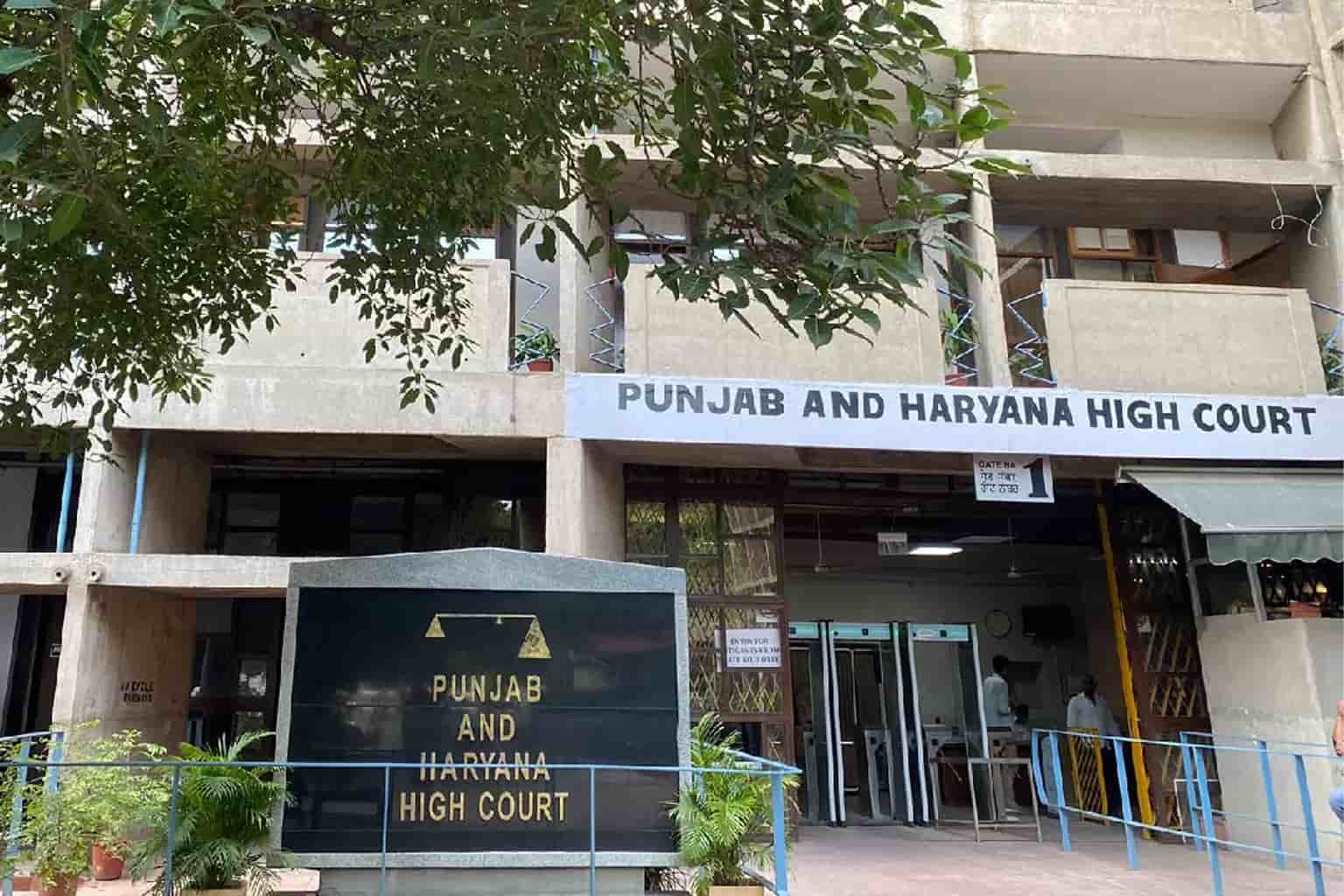
The Punjab and Haryana High Court has upheld pensionary relief for the family of a former Army soldier who was invalided out after about seven years of service, rejecting the Union of India’s challenge based primarily on the absence of 10 years of qualifying service, a decades-long delay in raising the claim, and the Government’s 2019 cut-off condition.
In Union of India and Others v. Sep Hakam Singh (Since Deceased) through Widow Balbir Kaur and Another, CWP-28471-2026, decided on 3 September 2026, the Division Bench of Justice Harsimran Singh Sethi and Justice Minderjeet Yadav declined to interfere with an earlier Armed Forces Tribunal order granting invalid pension for Hakam Singh’s lifetime and ordinary family pension thereafter to his widow.

Who was Sep Hakam Singh?
According to the High Court judgment, Hakam Singh was enrolled in the Indian Army on 18 August 1971. He was invalided out of service in 1978 under Rule 13(3), Item III(v) of the Army Rules, 1954.
At the time, he had served for roughly seven years—well short of the 10-year qualifying-service period that was historically associated with invalid pension under the applicable pension regulations.
The Government told the Court that Hakam Singh had received Invalid Gratuity and Death-cum-Retirement Gratuity when he left service. His claim for a recurring invalid pension, however, later became the subject of litigation.
What did the Armed Forces Tribunal grant?
The Armed Forces Tribunal, Regional Bench Chandigarh, passed its order on 20 February 2025.
That order granted the benefit of invalid pension for the period relating to Hakam Singh during his lifetime, followed by ordinary family pension for his widow Balbir Kaur.
The Union of India challenged this relief before the Punjab and Haryana High Court, leading to the September 2026 judgment.

Why did the Government oppose the pension claim?
The Union of India raised several objections before the High Court.
One major argument was that Hakam Singh had not completed the minimum 10 years of qualifying service.
The Government also pointed out that his old service and medical records had been destroyed in 2008 after expiry of the prescribed retention period. It argued that surviving material was therefore insufficient to establish details such as the nature and percentage of disability and its relationship with military service.
A further objection was that the claim had been raised after a delay of about 42 years.
The Union also relied on the Government’s 16 July 2020 invalid-pension policy, which originally stated that the relaxation from the 10-year requirement would apply to Armed Forces personnel who were in service on or after 4 January 2019.

Is 10 years of service always necessary for invalid pension?
This is the most important legal point in the case.
The High Court relied on the Supreme Court’s decision in Union of India v. P.A. Thomas, decided on 14 March 2019.
The Court noted that the Supreme Court had considered amendments to Rules 38 and 49 of the CCS (Pension) Rules and the subsequent Government clarification concerning invalid pension. The principle relied upon by the High Court was that an eligible person invalided from service on medical grounds should not lose invalid pension merely because he or she had been unable to complete 10 years of qualifying service.
Applying that principle, the Punjab and Haryana High Court rejected the Union’s argument that Hakam Singh’s approximately seven years of service, by itself, was enough to defeat the claim.
This does not mean that seven years—or any other short period of service—automatically creates an entitlement to invalid pension. The other applicable eligibility requirements still have to be satisfied.

What happened to the 4 January 2019 cut-off?
The Government’s official DESW pension material continues to record that the 16 July 2020 letter removed the minimum 10-year service requirement for specified Armed Forces invalid-pension cases, while describing the benefit as applicable to personnel who were in service on or after 4 January 2019.
But the Punjab and Haryana High Court had already examined this restriction in Union of India v. Ex AC UT Sandeep Kumar, decided on 7 January 2025.
In that case, the Court set aside the cut-off condition contained in the policy and upheld invalid-pension relief in a pre-2019 invalidation case.
The Hakam Singh Bench relied on that earlier decision and held that the Government could not defeat the claim merely because Hakam Singh had been invalided from service long before 4 January 2019.
Why did a 42-year delay not end the case?
The Union also argued that the Original Application had been filed after an extraordinary delay of approximately 42 years.
The High Court relied on the Supreme Court’s decision in M.L. Patil v. State of Goa, which treated pension as giving rise to a recurring or continuing cause of action.
On that basis, the Court held that the pension claim could not be rejected merely because of the passage of time.
This point should also be understood carefully.
The judgment does not establish that every decades-old service dispute will automatically be reopened. Rather, in this case, the delay objection did not defeat the continuing pension claim in light of the precedent relied upon by the Court.
What about the destroyed medical and service records?
This was another significant issue.
The Union stated that the relevant records had been destroyed in 2008 after the prescribed retention period expired. According to the Government, this made it difficult to establish crucial medical details from the 1978 invalidation.
The High Court nevertheless found no basis to interfere with the AFT’s order after considering the arguments and the legal precedents placed before it. It recorded that no perversity in the Tribunal’s decision had been demonstrated. The writ petition was therefore dismissed.
The judgment should not be read as a general rule that missing records are irrelevant in pension cases. Documentary evidence can remain extremely important, and the effect of unavailable records will depend on the facts and applicable legal framework of each case.
Invalid pension and disability pension are not the same thing
This distinction is especially important for veterans and families.
Invalid pension concerns pensionary protection when a person is invalided out because a bodily or mental infirmity permanently incapacitates him or her from the relevant service, subject to the governing rules.
Disability pension, on the other hand, involves a separate framework in which issues such as whether the disability is attributable to or aggravated by military service, the percentage of disability and other service conditions can become relevant.
The two expressions should therefore not be used interchangeably.

What exactly did the High Court decide?
The High Court did not create a new pension scheme.
It examined whether there was any legal basis to interfere with the AFT’s order in Hakam Singh’s case.
After considering the Supreme Court’s ruling on the 10-year requirement, the continuing nature of pension claims and its own earlier decision concerning the 4 January 2019 cut-off, the Bench found no ground to disturb the Tribunal’s order.
The Union of India’s writ petition was consequently dismissed on 3 September 2026.
What this judgment does not mean
The case does not mean that every Armed Forces person discharged before completing 10 years of service will automatically receive invalid pension.
It also does not mean that every 30- or 40-year-old pension claim will succeed irrespective of its facts.
The judgment is significant because it reinforces that a claim cannot be rejected mechanically only because the person had less than 10 years of qualifying service, because the case predates 4 January 2019, or merely because considerable time has passed, where the governing judicial principles support the claim.
What veterans and widows should check in a similar case?
Anyone examining an old invalid-pension case should first identify the exact discharge or invaliding provision, period of qualifying service, medical-board or invaliding-board documents, discharge book, pension/gratuity papers, PPO if any, earlier rejection orders and correspondence with military pension authorities.
The Hakam Singh judgment is important, but entitlement in another case will still depend upon the applicable pension regulations, medical and service facts, previous orders and judicial precedents.
For families dealing with very old cases, the judgment also shows why surviving service records, gratuity documents, discharge papers and previous representations can become particularly valuable where the original departmental records are no longer available.
Sources
Punjab & Haryana High Court — Union of India and Others v. Sep Hakam Singh through Widow Balbir Kaur, CWP-28471-2026, decided 3 September 2026
Read the full judgment
Department of Ex-Servicemen Welfare — Official Invalid Pension policy information
DESW Types of Pensions
Department of Ex-Servicemen Welfare — 16 July 2020 pension circular listing
DESW Pension Circulars
Punjab & Haryana High Court — Union of India v. Ex AC UT Sandeep Kumar, decided 7 January 2025
Read the Sandeep Kumar judgment
Indian Express — Report on Hakam Singh pension case
Read the report



Leave a Reply