

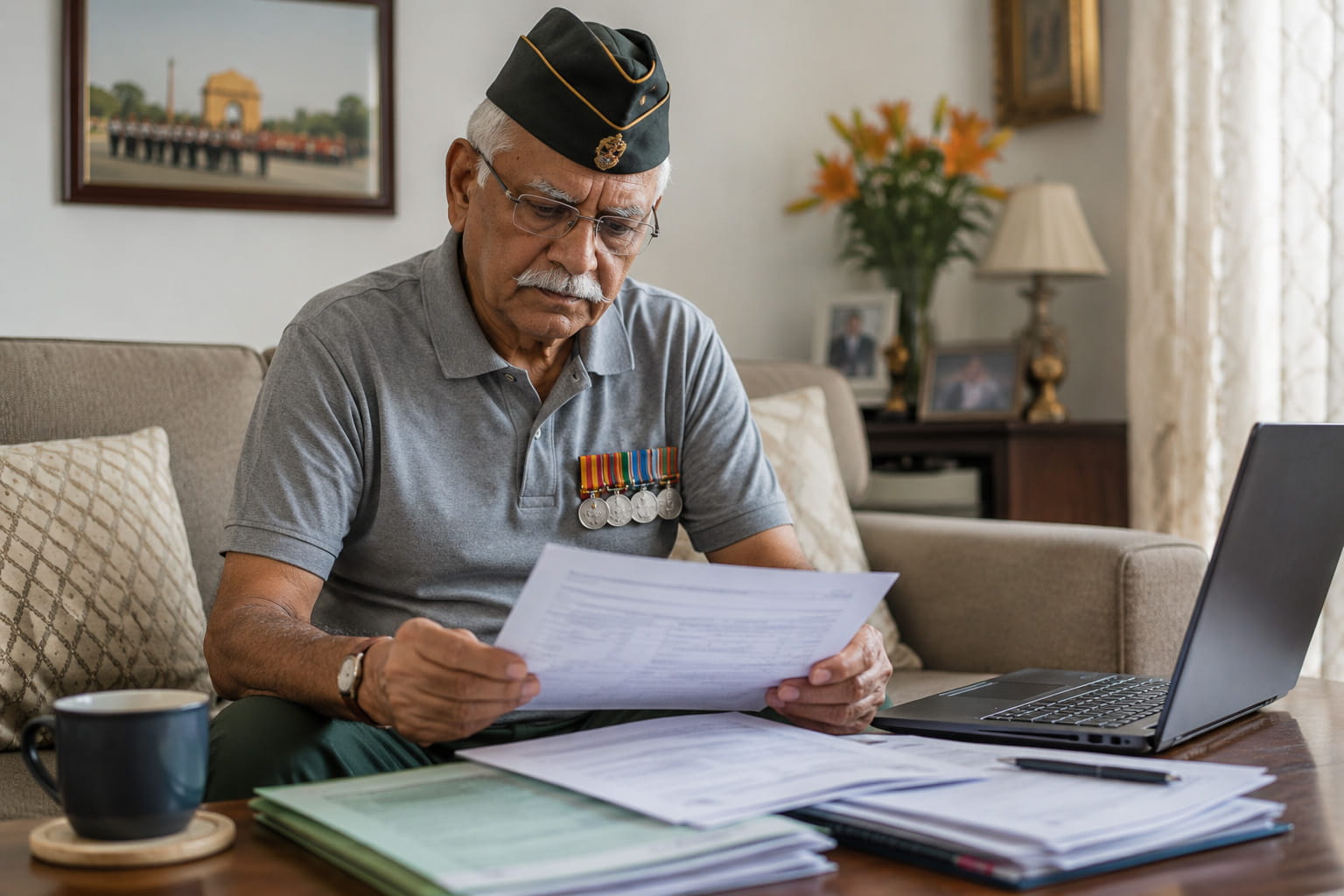
For many defence pensioners, a pension grievance is not just a file moving from one office to another. It is years of waiting, repeated follow-ups, confusion over documents, and anxiety for the family.
That is why one recent Pension Adalat case deserves attention.

According to an official PIB release, disability pension arrears of ₹46.38 lakh were released to an Indian Army personnel, along with commencement of monthly pension. This case was highlighted as one of the success stories of the 16th Pension Adalat conducted by the Department of Pension and Pensioners’ Welfare.
At first glance, this may look like one individual case. But for defence pensioners, disabled veterans, family pensioners and serving personnel nearing retirement, this case carries a larger message.
The message is simple: if pension entitlement, arrears or monthly pension has been delayed, the matter should not be ignored. A pension grievance can remain pending for years if it is not tracked properly, but formal grievance channels can make a difference when documents, entitlement and follow-up are handled correctly.
The 16th Pension Adalat was chaired by Dr. Jitendra Singh on 13 May 2026. As per the official release, 985 pension grievance cases from 37 Ministries and Departments were taken up. These were cases pending for more than 45 days as on 15 April 2026. Out of these, 728 cases were resolved on the spot, which means nearly 74% of cases saw immediate redressal during the Adalat process.
Later, a follow-up meeting with stakeholders, including banks, was held on 27 May 2026. After this follow-up, the overall redressal reached 85%, according to the PIB release.
Among the success stories listed in the release, the ₹46.38 lakh disability pension arrears case stands out because it is directly linked to an Indian Army personnel. The release clearly mentions payment of disability pension arrears of ₹46.38 lakh and commencement of monthly pension.
This is important because disability pension cases are often sensitive. They may involve medical records, service conditions, disability assessment, entitlement rules, arrears calculation, revision of pension, and sometimes long delays in final settlement. For the affected personnel and family, the delay is not only financial. It also creates emotional pressure.
A defence pension is not charity. It is an earned entitlement based on service, rules and eligibility. When disability pension is involved, the matter becomes even more serious because the individual may already be dealing with health limitations, reduced earning capacity or long-term medical needs.
This is why the case should be seen as an awareness signal for the larger defence community.
Many pensioners and families face common problems. Sometimes monthly pension does not commence on time. Sometimes arrears are not calculated correctly. Sometimes disability pension is sanctioned but the arrears remain pending. Sometimes a case is delayed because one office says the matter is with another office. In other cases, pensioners do not know which grievance platform to use or what supporting documents to attach.

The lesson from this Pension Adalat update is that pensioners must remain alert and organised.
Every defence pensioner should keep copies of the Pension Payment Order, corrigendum PPOs, discharge or retirement documents, disability-related medical records where applicable, bank pension details, SPARSH details where applicable, previous correspondence, grievance numbers, and any official replies received from authorities. These papers become important when a grievance has to be pursued.
Another important lesson is that families should also understand pension documentation. In many homes, only the pensioner knows where the papers are kept and what the issue is. But when family pension, arrears or disability benefits are involved, the spouse and children should also know the basic documents and pension channels. The same PIB release also mentions other family pension and disability pension-related success stories, which shows that families are also deeply affected by pension delays.
For example, the release mentions monthly family pension and arrears of ₹21.91 lakh granted to the spouse of an Indian Army veteran who was medically boarded out of service. It also mentions ₹17 lakh disability pension arrears in a case where disability was aggravated due to stress and strain of service. Another case involved ₹13.17 lakh family pension arrears to the spouse of an Army personnel, along with commencement of monthly pension.
These examples show that pension grievances are not small administrative issues. They directly affect the financial security of retired personnel and their families.
However, readers should also understand one important point. The ₹46.38 lakh amount should not be treated as a general amount payable in every disability pension case. Pension arrears depend on several factors, including the date from which entitlement is accepted, disability percentage, applicable pension rules, rank, qualifying service, revisions, and past payments already made. Every case is different.
So the real takeaway is not that every pensioner will receive ₹46.38 lakh. The real takeaway is that if there is a genuine pending entitlement, the pensioner should not leave the matter unattended.
For defence pensioners, Pension Adalat is one of the important grievance redressal mechanisms. It brings together departments, pension authorities, banks and other stakeholders so that long-pending matters can be reviewed and resolved. The 16th Pension Adalat data shows that when cases are taken up in a structured manner, a large number of grievances can be resolved.
This is also why pensioners should not wait silently for years. If monthly pension has not started, if arrears are pending, if disability pension has not been implemented, or if family pension has not commenced after the death of a pensioner, the family should take timely action. They should first check the official records, approach the concerned pension authority or bank, and then use official grievance channels where required.
The defence community should also treat this update as a reminder to help pensioners who are not comfortable with online systems. Many elderly veterans and widows may not know how to check status, upload documents or track a grievance. A small amount of guidance from family members, veteran organisations or informed community members can make a major difference.
This case is also important for younger serving personnel. Pension awareness should not begin only after retirement. Personnel should maintain service records carefully, understand medical board documents where applicable, and ensure that family members know basic pension details. Proper documentation today can prevent hardship tomorrow.
For Sainik Welfare News readers, the ₹46.38 lakh disability pension arrears case is not just a headline. It is a reminder that pension rights must be understood, tracked and followed through. The government’s official update shows that long-pending pension cases can be resolved when they reach the right forum with proper attention.
The larger message is clear.
A defence pensioner should never treat a delayed pension or arrear as a minor issue. For a soldier, pension is linked to service, dignity and family security. For a disabled personnel, it can also be linked to long-term care and financial stability.
The Pension Adalat success story should give hope, but it should also create awareness. Keep documents ready. Track your case. Do not ignore arrears. Help elderly pensioners and families understand their rights. And when a genuine grievance remains unresolved, use the official grievance redressal route.
Because sometimes, one pending file may represent years of service, years of waiting and the rightful support a defence family deserves.
Sources:-
https://www.pib.gov.in/PressReleasePage.aspx?
PRID=2266772https://www.scobserver.in/supreme-court-observer-law-reports-scolr/union-of-india-v-sgt-girish-kumar-limitation-for-entitlement-to-disability-pension/



Leave a Reply