

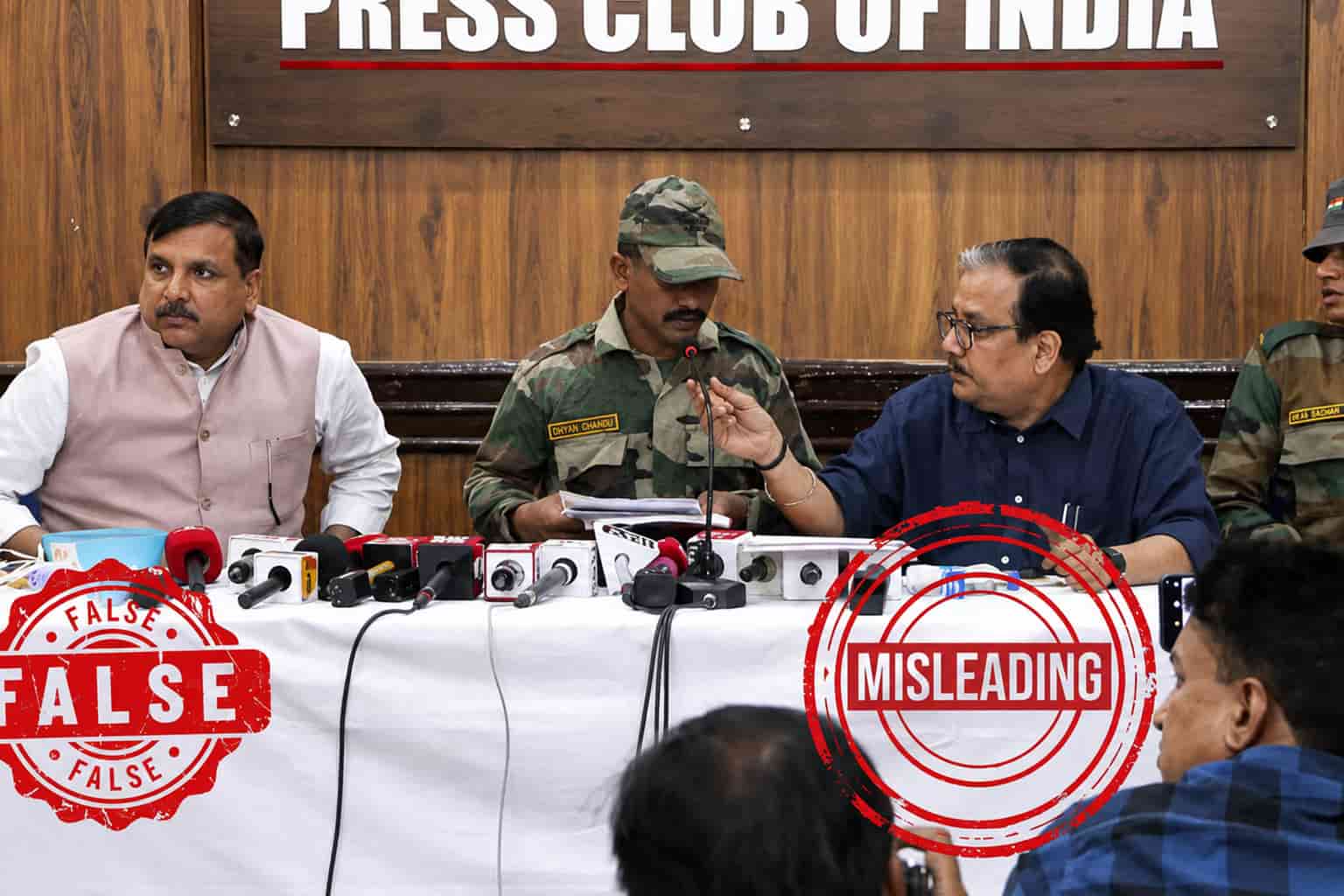
In today’s digital world, a short video can travel faster than facts. A few emotional lines, a dramatic press conference, a clip taken out of context or a strong allegation can quickly create anger, confusion and distrust. But when the subject is the Indian Army, the responsibility of every citizen becomes even greater.

A recent clarification linked with ADGPI, the official public information handle of the Indian Army, has again reminded citizens to be careful about fake, malicious and misleading narratives being circulated on social media. The issue is not only about one viral video. The bigger concern is how sensitive Army-related matters can be presented without full context and then circulated as unquestioned truth.
For a country like India, where millions of people emotionally connect with the armed forces, misinformation can cause serious damage. It can mislead ordinary citizens, hurt the trust between the public and the institution, and create unnecessary controversy around sensitive military matters.
This is why the message is simple: before forwarding any Army-related video, pause, verify and check the official clarification.
Why this issue matters?
The Indian Army is not just another institution. It represents national security, discipline, sacrifice and service. Every day, soldiers stand on borders, operate in difficult terrain, face harsh weather and carry the responsibility of protecting the nation. Because of that emotional respect, any video or claim related to the Army naturally attracts public attention.
But the same emotional connection can also be misused.
When a video is circulated with allegations against the Army, many viewers react immediately. Some believe it because the person speaking sounds confident. Some share it because it appears emotional. Some forward it because it looks like an “inside story”. But a viral clip is not the same as verified information.
In such cases, context matters.
If a person making allegations has a disciplinary background, if the Army has already issued an official clarification, or if the matter is connected with previous misconduct or service-related action, then sharing the video without that background becomes misleading.
That is why ADGPI’s clarification is important.
What ADGPI’s clarification means?
According to the Army’s public clarification, certain individuals involved in circulating narratives have been linked with serious disciplinary background. The Army has stated that some individuals were dismissed from service on grounds of indiscipline and unsoldierly conduct, while another person was described as a deserter facing disciplinary proceedings.
This context is important for the public.
The issue is not that citizens cannot ask questions. In a democracy, questions can be asked. But when a video is circulated as if the persons speaking are neutral or credible voices, while their disciplinary background is not mentioned, the audience may form a wrong impression.
That is why the word “misleading” becomes important.
A video can be misleading even when it contains real people speaking. The misleading part may be the missing background, selective presentation or attempt to create emotional reaction without showing the full context.
Why the viral video link should not be shared?
In cases of misinformation, many people make one common mistake. They warn others about a video but also share the same video link. This can unintentionally help the video reach more people.
That is why, in this case, the responsible approach is not to share the viral video link. The purpose should not be to amplify disputed content. The purpose should be to share the official clarification and encourage people to verify the facts.
This is a very important digital responsibility.
When we share a disputed video, even with a warning, we may still increase its views, engagement and reach. Social media algorithms do not always understand intention. They often reward activity. So, if citizens keep sharing the same misleading video, the false or incomplete narrative may spread even faster.
The better approach is:
Do not share the disputed clip.
Share official clarification.
Explain the missing context.
Ask people to verify before forwarding.
This is how responsible digital behaviour works.
What is actually fake or misleading here?
The word “fake” should be used carefully. It is not always correct to say that every sentence in a viral video is fake unless there is official evidence on each specific claim. But we can clearly explain what makes such content misleading.
First, the video may present the individuals as ordinary soldiers or genuine victims without disclosing their disciplinary background.
Second, it may show only allegations against the Army while hiding the official position of the Army.
Third, it may ignore earlier clarifications issued by ADGPI.
Fourth, it may create a one-sided emotional narrative around a sensitive defence issue.
Fifth, it may encourage citizens to believe serious claims without official verification.
So the safer and more accurate explanation is:
According to ADGPI, the circulating narrative is fake, malicious or misleading because it is being shared without the full official context about the individuals involved and their service background.
This line is balanced, factual and legally safer.

Why citizens must verify Army-related claims?
Army-related misinformation is not like ordinary gossip. It can affect public trust, morale and national security conversations. When false or incomplete claims are shared repeatedly, they can create confusion in society.
For example, a person watching a viral clip may not know whether the individual in the video was dismissed, under inquiry, facing charges or involved in previous disciplinary issues. Without that context, the audience may treat the claim as a verified insider statement.
This is dangerous.
Citizens should check whether the information is coming from:
Official Army channels
ADGPI
Ministry of Defence
PIB
credible and responsible news organisations
court documents, where applicable
official press notes or verified statements
If the only source is a viral video or a forwarded WhatsApp message, then it should not be treated as confirmed truth.
The emotional trap of misinformation
Misinformation often works because it touches emotion. It may use anger, sympathy, patriotism, fear or distrust. A person may appear emotional in a video, and viewers may feel that the story must be true. But emotion is not evidence.
In defence-related matters, this emotional trap becomes even stronger because people deeply respect soldiers. If someone says he is speaking for soldiers, many people immediately pay attention. But respect for soldiers also means protecting the truth.
Real support for the Army is not blind forwarding. Real support is responsible sharing.
If a claim is genuine, it should stand the test of facts. If a claim is disputed, it should be checked. If the Army has issued an official clarification, that clarification must be considered before forming an opinion.
Why official context protects the public?
Official clarification helps citizens understand what is missing from viral content. It may not answer every question in public detail, especially in sensitive military matters, but it gives a verified starting point.
When ADGPI warns people about fake or malicious narratives, citizens should take it seriously. This does not mean people should stop thinking critically. It means they should avoid becoming part of misinformation chains.
A responsible citizen can ask:
Who is making the claim?
What is their background?
Has the Army responded?
Is there an official document?
Is the video edited?
Is the claim old or new?
Is the clip being used to create anger?
Is there a verified source?
These questions can stop misinformation from spreading.
How media pages and content creators should handle such videos?
For defence news platforms, YouTube channels and social media pages, this issue needs extra caution. If a disputed Army-related video is used for content, it should not be presented in a sensational way.
A responsible report should:
mention that ADGPI has issued a clarification
avoid sharing the viral video link
avoid calling unverified allegations as facts
avoid personal attacks
explain the official context
tell viewers to check official channels
use neutral words like “alleged”, “claimed”, “according to ADGPI”, “official clarification says”
This builds credibility.
For platforms like Sainik Welfare News, the best approach is to protect the audience from misinformation while maintaining respect for the Army and fairness in reporting.
What citizens should do before forwarding any defence video?
Before sharing any Army-related clip, every citizen should follow a simple checklist.
Check whether the video is from an official source.
Search whether ADGPI or MoD has issued a clarification.
Do not trust cropped clips or emotional speeches alone.
Avoid forwarding videos that may damage institutional trust without verification.
Do not share content just because it supports your opinion.
If the video is disputed, share the official clarification instead.
This small discipline can prevent large misinformation damage.
Why responsible sharing is also national service?
Not everyone can wear the uniform. Not everyone can stand on the border. But every citizen can protect national interest by not spreading false information.
In the age of social media, misinformation is also a challenge. A fake or misleading narrative can create distrust without firing a single bullet. That is why information discipline matters.
When citizens verify before sharing, they support truth.
When they avoid forwarding disputed videos, they reduce misinformation.
When they share official clarification, they help others understand the context.
This is also a form of responsible citizenship.
Conclusion
The recent ADGPI clarification is a reminder that viral Army-related videos should not be accepted blindly. A video may create emotion, but official context creates clarity. When the Army describes certain narratives as fake, malicious or misleading, citizens must pause and verify before sharing.
The purpose is not to silence questions. The purpose is to stop misinformation from spreading without context.
In sensitive defence matters, half-information can create full confusion. That is why the viral video link should not be amplified. Instead, people should be directed towards official Army clarification and verified sources.
For every citizen, the message is simple:
Do not forward first and verify later. Verify first, then decide whether it deserves to be shared.
In matters related to the Indian Army, responsible sharing is not just good social media behaviour. It is a duty towards truth, national trust and the dignity of those who serve the nation.
Sources :-
https://x.com/adgpi/status/2057755128439226794
https://x.com/adgpi/status/1835925182004805838?s=20



Leave a Reply