

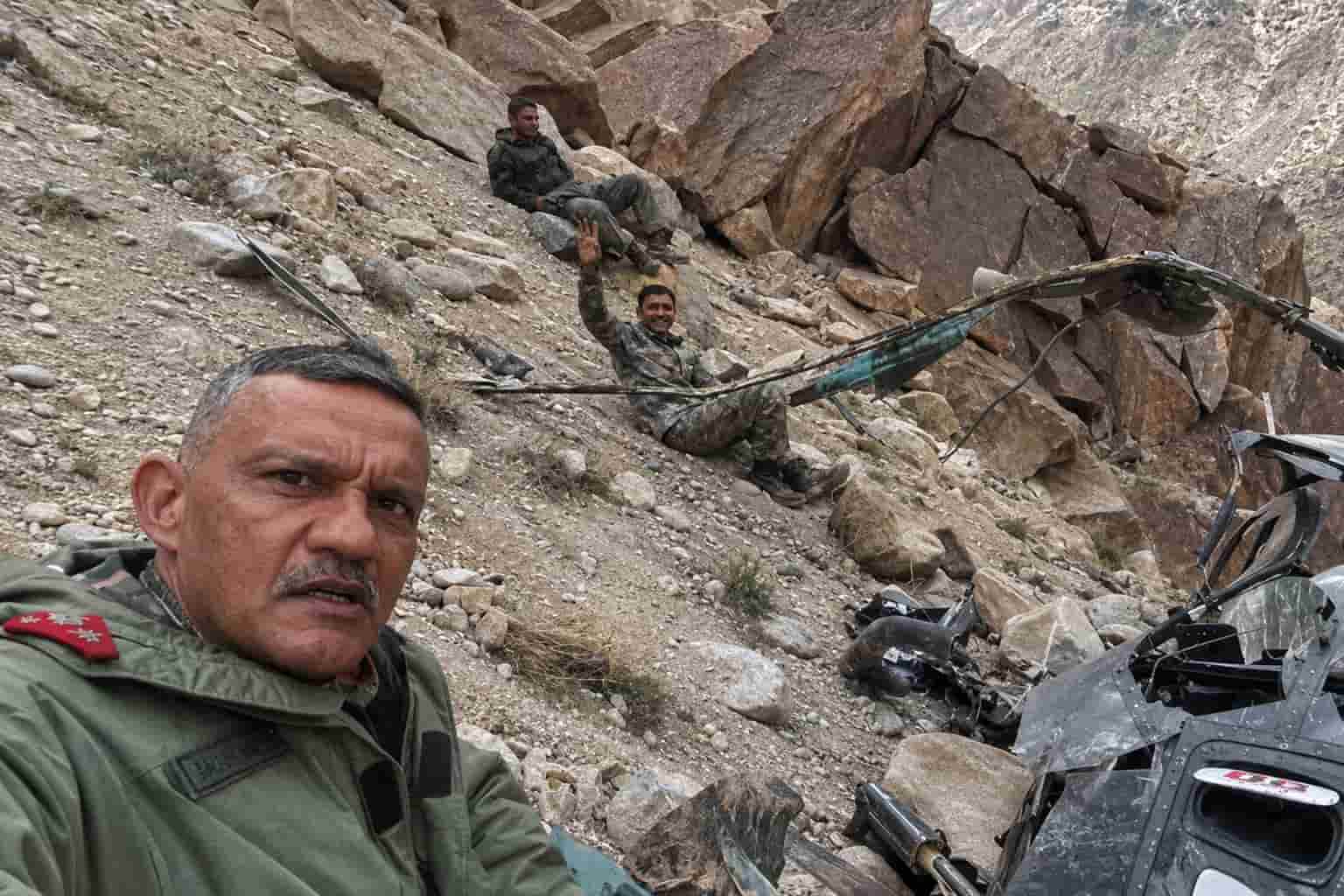
The recent crash of an Indian Army Cheetah helicopter near Tangtse in Ladakh has once again brought attention to one of the most difficult and sensitive areas of military aviation: flying light helicopters in high-altitude border regions.

According to media reports, three Indian Army officers, including a senior commander, survived after a single-engine Cheetah helicopter crashed near Tangtse, southeast of Leh. The helicopter was reportedly being flown by two Army pilots, and all three personnel on board escaped with minor injuries. A Court of Inquiry has been initiated to determine the exact cause of the accident.
This is a matter of relief because there was no loss of life. But it is also a matter of concern because the crash has again raised questions about the ageing Cheetah helicopter fleet, high-altitude flying risks, and the long-awaited replacement of old light helicopters with modern platforms such as the Light Utility Helicopter, or LUH.
For the public, a helicopter crash may look like a sudden accident. But for soldiers and Army aviation personnel, especially in Ladakh, such incidents are linked to a much larger reality. The Himalayas are among the toughest flying environments in the world. High altitude, thin air, unpredictable winds, extreme cold, narrow valleys and limited landing zones make every sortie demanding.
What happened in Ladakh?
Reports say the incident took place in the Tangste area of Ladakh, close to the sensitive high-altitude region around Leh. Three Army personnel were on board the Cheetah helicopter, and all survived with minor injuries. Further details about the cause were not initially disclosed, and the Army ordered an inquiry.
Some reports also mentioned that the helicopter was carrying a senior Army commander. The presence of senior officers on board shows that such aircraft are not only used for routine movement, but also for operational visits, reconnaissance support, forward-area access and urgent mobility in difficult terrain.
At this stage, it is important to avoid speculation. The cause of any military aviation accident can involve many factors: weather, terrain, technical condition, engine performance, landing zone conditions, pilot workload or mission pressure. Only the Court of Inquiry can establish what actually happened.
So the responsible line is clear: the crash has raised attention on the ageing helicopter fleet, but the exact cause must come from the official inquiry.
Why Cheetah helicopters matter to the Army?
The Cheetah helicopter has served the Indian armed forces for decades. It is a light helicopter known for operating in difficult terrain and high-altitude areas. In places like Ladakh, Siachen and forward Himalayan regions, light helicopters play a role that cannot be easily replaced by road movement.
They help in movement of personnel, casualty evacuation, reconnaissance, communication support, carriage of small loads and access to remote posts. In many forward areas, road connectivity may be limited, seasonal or vulnerable to weather disruptions. In such conditions, aviation becomes a lifeline.
For soldiers deployed in isolated posts, a light helicopter is not just a machine. It can mean medical help, urgent evacuation, fresh supplies, command access and reassurance that the system can reach them even in difficult terrain.
This is why Army aviation is so important in the Himalayas.
The ageing fleet concern
The concern is not new. India’s Cheetah and Chetak fleets have been in service for a very long time. Over the years, defence experts and military watchers have repeatedly discussed the need to replace these older helicopters with modern light utility platforms.
The Economic Times reported that the Ladakh crash has again brought the focus back on the ageing Cheetah fleet, its safety record and the replacement plan involving HAL’s Light Utility Helicopter.
This does not mean every old helicopter is unsafe. Military aircraft are maintained under strict technical checks and procedures. But age brings challenges. Older fleets require more maintenance attention, spare support, inspection cycles and careful monitoring. In high-altitude zones, the margin for error becomes even smaller.
For Army pilots, flying in Ladakh is already demanding. If the platform is old, the need for modernisation becomes even more urgent.
Why high-altitude flying is different?
A helicopter does not behave the same way in the plains and in the mountains. At high altitude, air is thinner. Thin air affects lift, engine performance and payload capacity. Weather can change quickly. Valleys can produce tricky wind patterns. Landing areas may be uneven, dusty, snow-covered or surrounded by ridgelines.
In Ladakh, the challenge is not only altitude. It is also terrain. A pilot may have to operate between mountains, over narrow approaches, with limited room for correction. The helicopter may have to carry out missions in remote locations where immediate technical support is not always available.
That is why the quality of the platform matters. Modern helicopters with better engines, avionics, safety systems and high-altitude performance can improve mission confidence.

Why LUH replacement is important?
The Light Utility Helicopter developed by Hindustan Aeronautics Limited has been discussed as a replacement platform for ageing Cheetah and Chetak helicopters. The LUH is intended for utility roles, including high-altitude operations. The idea is to gradually replace older light helicopters with a modern, indigenous platform better suited for current requirements.
This replacement is not only about buying a new aircraft. It is about reducing risk, improving availability and giving Army aviation a platform that can serve future operational needs.
A modern light helicopter can help in several ways:
It can provide better performance in difficult terrain.
It can improve pilot situational awareness through modern avionics.
It can reduce dependence on very old airframes.
It can improve maintainability and long-term fleet planning.
It can support operations in border areas more effectively.
For a soldier in a forward post, the helicopter is part of the support chain. If the helicopter fleet becomes more capable, the soldier’s support system becomes stronger.
Why the story matters for soldiers?
This is not only an aviation story. It is a soldier-support story.
A post in the mountains depends on timely supplies. A casualty evacuation depends on aircraft availability. Senior commanders need to visit forward areas. Technical teams need to move quickly. In winter or during a crisis, every support system is tested.
When the aircraft used for these missions are old, the burden on pilots, technicians and units increases. Army aviation personnel continue to do their duty in tough conditions, but modern equipment can reduce unnecessary risk.
This is why the Cheetah crash should not be seen only as a one-day incident. It should be seen as a reminder that the men who fly and maintain these helicopters also need modern tools.
Court of Inquiry: Why it matters?
After any military aviation accident, a Court of Inquiry is important. It examines the facts, reconstructs events and identifies possible causes. It may look into technical factors, human factors, environmental conditions, maintenance records, mission profile and operational circumstances.
The inquiry is necessary because assumptions can be dangerous. If the cause is technical, it must be identified. If weather played a role, lessons must be drawn. If procedures need improvement, they must be updated. If fleet-related concerns are found, they must be addressed.
Public discussion should therefore remain responsible. The crash has raised legitimate questions, but the final cause should be left to the inquiry.
Modernisation should not wait for tragedy
The most important lesson is that modernisation must be proactive. The armed forces should not have to wait for accidents to renew attention on old platforms.
India operates in a very demanding security environment. The Army’s aviation wing supports troops in high-altitude areas, forward posts, counter-insurgency zones and difficult terrain. The platforms used by these pilots must match the seriousness of the mission.
When a helicopter is used in the Himalayas, it is not doing an ordinary transport job. It is operating in one of the harshest theatres in the world. That mission deserves modern, reliable and well-supported equipment.
Public debate should stay balanced
There are two mistakes to avoid.
The first mistake is to blame the crash immediately on the age of the helicopter without waiting for the inquiry.
The second mistake is to ignore the larger pattern of concern around ageing light helicopter fleets.
Both extremes are wrong. The balanced position is this: the exact cause must be officially determined, but the incident has again highlighted why replacing old Cheetah and Chetak helicopters is an urgent military modernisation requirement.
What this means for Army aviation?
Army aviation is becoming more important, not less. Future operations will require fast mobility, surveillance, casualty evacuation, logistics support and quick command movement. Helicopters will continue to play a key role in high-altitude and border areas.
Modern aircraft, better sensors, safer systems, improved engines and stronger maintenance ecosystems will matter. So will pilot training, technical manpower and spare support.
The Cheetah fleet served India for decades. Its contribution should be respected. But respect for an old platform does not mean delaying replacement. A soldier may respect an old rifle, vehicle or aircraft, but the battlefield still demands the best possible equipment.
Conclusion
The Cheetah helicopter crash near Tangtse in Ladakh ended without fatalities, and that is a major relief. Three Army personnel survived with minor injuries, and a Court of Inquiry is examining the cause.
But the incident should not be forgotten as just another accident. It has again brought attention to the risks of operating ageing light helicopters in high-altitude regions and the need to speed up replacement with modern platforms such as the LUH.
For the Indian Army, helicopters in Ladakh are not a luxury. They are a lifeline. They support soldiers, connect remote areas, help commanders reach forward locations and provide emergency mobility. That is why the modernisation of Army aviation is not only about machines. It is about safety, readiness and support for the soldier on the ground.
The final cause of this crash must come from the inquiry. But the larger message is already clear: India’s high-altitude soldiers and Army aviation crews need modern, reliable and safer light helicopters as soon as possible.



Leave a Reply