

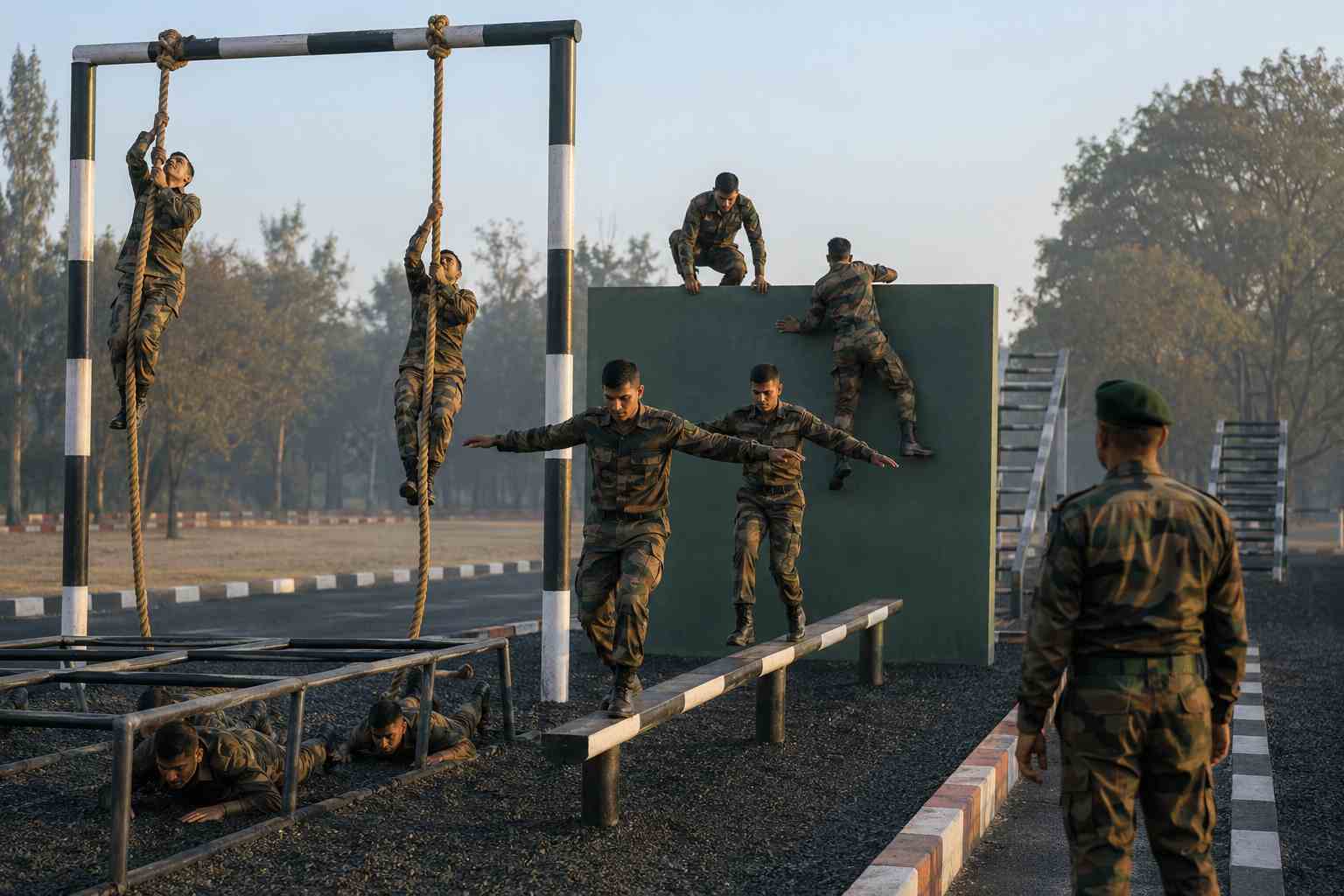
The Indian Army’s new all-weather synthetic obstacle course is not just a sports facility. It is a sign that soldier training is becoming more realistic, structured and future-ready. In a time when defence headlines are often dominated by drones, missiles, rifles, electronic warfare and AI, this update brings attention back to the most important part of military power: the soldier.

Reports say the Indian Army has opened a modern all-weather synthetic obstacle course to improve combat readiness and ensure regular physical training even in difficult weather. The purpose is simple but important. A soldier cannot train only when the weather is suitable. Operational fitness has to be maintained throughout the year.
This matters because battlefield conditions are never comfortable. A soldier may have to move through rain, mud, heat, cold, darkness, rough ground, urban obstacles or high-stress environments. If training is interrupted every time conditions change, real preparedness suffers. An all-weather obstacle course helps reduce that gap.
The facility reportedly uses synthetic materials that improve durability, safety and usability across different environmental conditions. That means the course can support sustained training with less dependency on perfect ground conditions. For troops, this can make physical preparation more consistent and controlled.
A related Pune report said the synthetic military obstacle course at the Army Institute of Physical Training was inaugurated as part of Southern Command’s effort to build a fitter, tougher and battle-ready force. It also mentioned night-training capability and realistic, high-intensity training under varied operational conditions.
For the common reader, the question is: why does an obstacle course matter so much?
The answer is that obstacle training is not only about running, jumping or climbing. It develops courage, coordination, balance, grip strength, agility, speed, decision-making and confidence under pressure. These qualities are directly linked to soldier performance in the field.
A soldier may need to cross a wall, move through a narrow passage, crawl under barriers, climb ropes, balance on uneven surfaces or carry equipment while moving fast. These are not gym exercises. These are field skills. Obstacle training turns physical fitness into battlefield usefulness.
This is why modern training infrastructure matters. Traditional obstacle courses are valuable, but weather, ground wear, mud, injury risk and maintenance issues can affect training quality. A synthetic all-weather course can make the training environment more reliable, especially for repeated use by large numbers of troops.
It also helps instructors measure performance better. When the training surface and obstacles remain consistent, it becomes easier to assess progress, correct technique and reduce avoidable injuries. For an Army that trains thousands of personnel, standardisation matters.
The night-training capability is another important point. Many real operations do not happen in bright daylight. Soldiers must be comfortable moving in low visibility, under fatigue and with limited time. A training course that supports night practice helps build confidence for realistic field conditions.
This update should also be seen in the context of modern warfare. Today’s soldier may operate with drones, night-vision devices, advanced communication systems and precision weapons, but he still has to move, observe, react and survive on the ground. Technology can support him, but it cannot replace physical toughness.
In fact, technology makes soldier fitness even more important in some cases. Modern operations can require carrying additional equipment such as body armour, communication gear, batteries, optics and specialised devices. The soldier must be fit enough to use these tools without losing mobility.

For young defence aspirants, this is a clear message. The Army is not only looking for candidates who can clear a written exam. It needs people who can build stamina, discipline and mental resilience. Whether someone is preparing for Agniveer, NDA, CDS or any other entry, physical preparation cannot be ignored.
Obstacle training also teaches teamwork. In many military tasks, a soldier does not move alone. He helps others climb, cross, balance and recover. This builds trust. In combat, trust between soldiers can become as important as equipment.
The all-weather course also reflects a larger training philosophy: prepare soldiers in conditions closer to operational reality. A force cannot wait for war to discover its weaknesses. Training must expose soldiers to stress, fatigue and difficult movement before they face real danger.
For commanders, such facilities help maintain unit fitness across seasons. During monsoon, extreme heat or poor ground conditions, outdoor training can become inconsistent. Better infrastructure helps keep schedules more dependable and ensures that combat readiness is not seasonal.
At the same time, an obstacle course alone does not create a battle-ready soldier. It must be part of a larger system that includes endurance training, strength training, tactical drills, firing practice, fieldcraft, map reading, combat first aid, mental conditioning and leadership development.
This is why the new facility should be appreciated as one piece of a bigger readiness puzzle. It strengthens the physical training ecosystem. It gives soldiers and instructors a better platform. But the real results will come from regular use, good supervision, safe training design and disciplined execution.
For veterans, this update may also feel familiar. Every soldier remembers obstacle training because it tests both body and mind. The wall looks high until you cross it. The rope looks difficult until you climb it. The trench looks intimidating until you jump it. These small victories build confidence that later helps in tougher situations.
For Sainik Welfare News readers, the larger takeaway is simple: military modernisation is not only about buying weapons. It is also about building better training grounds, better physical standards and better confidence among troops.
The Indian Army’s all-weather synthetic obstacle course shows that training infrastructure is being upgraded with practical needs in mind. It supports consistent practice, safer movement, realistic challenges and year-round readiness.
In the end, the soldier remains the centre of every operation. Machines can assist, drones can observe, weapons can strike, but courage, stamina and discipline still come from human training. That is why this obstacle course matters. It is not just about crossing barriers on a training ground. It is about preparing soldiers to cross real barriers in service of the nation.



Leave a Reply