

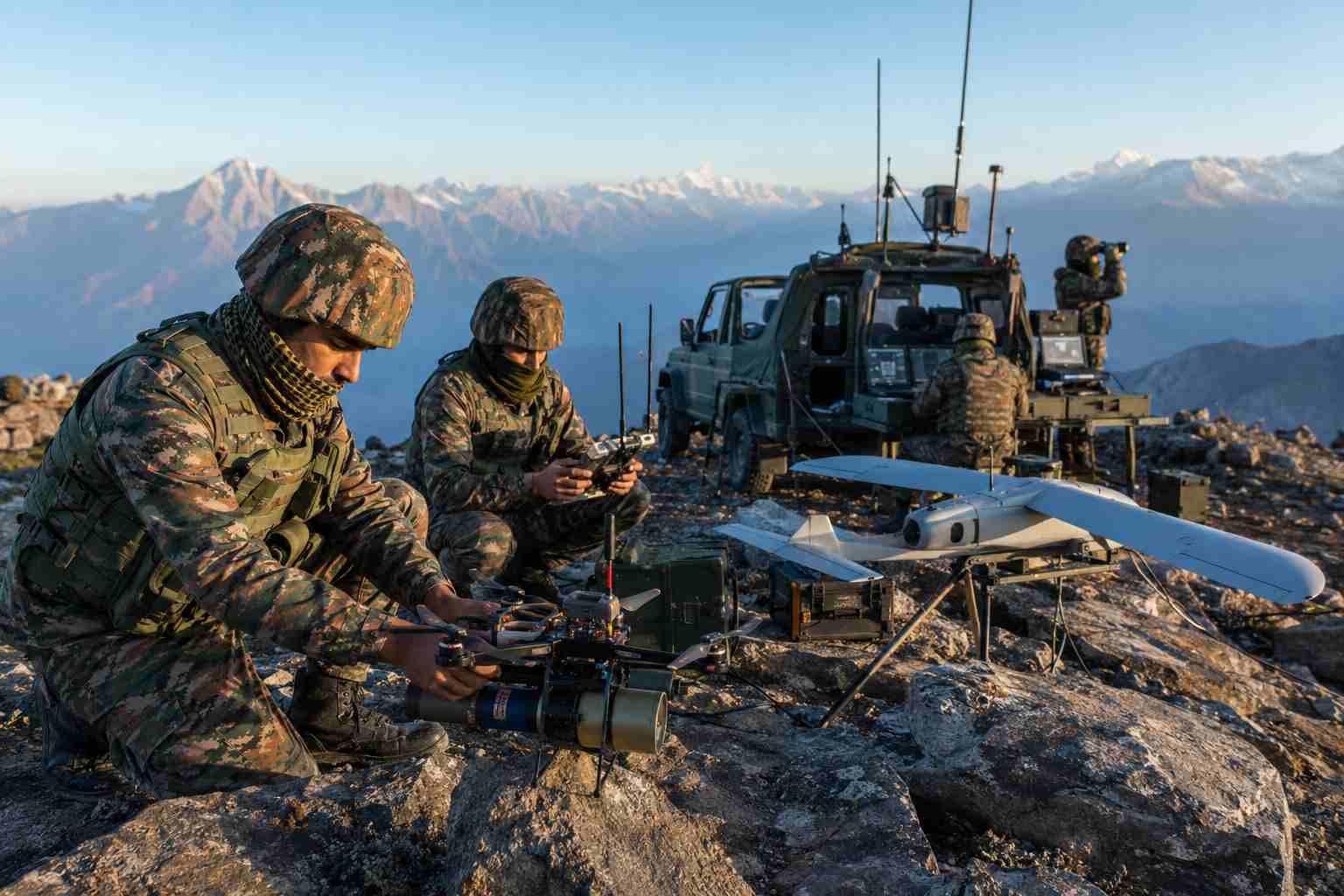
The Indian Army’s battlefield is changing. Future wars will not be fought only with tanks, artillery, rifles and missiles. They will also be fought with drones, precision munitions, electronic warfare systems, sensors, data links and small unmanned platforms that can strike accurately without putting soldiers directly in danger.

That is why the latest induction of indigenous FPV kamikaze drones and UAV-launched precision munitions is an important update. Reports say the Indian Army has received two new combat systems under Emergency Procurement EP-6: the UAV-Launched Precision Guided Munition, ULPGM, and the AGNIKAA VTOL-1 FPV Kamikaze Drone. These systems were handed over in Hyderabad after successful high-altitude, electronic warfare and precision-guided munition firing trials.
For a common reader, the most important question is simple: why do these systems matter?
The answer lies in the changing nature of modern conflict. Today, a small drone can locate a target, guide a strike, observe enemy movement and even act as a weapon itself. This has changed battlefield thinking across the world. Instead of depending only on large platforms, armies now need smaller, mobile, accurate and quickly deployable systems that can support soldiers in real time.
The first system, ULPGM, is a UAV-launched precision guided munition. In simple words, it is a guided weapon that can be launched from an unmanned aerial vehicle. This allows a drone to do more than surveillance. It can also carry out a precision strike against selected targets. That means commanders can use unmanned platforms to strike with accuracy while reducing direct exposure of troops.
The second system, AGNIKAA VTOL-1, is described in reports as a First-Person View kamikaze drone with vertical take-off and landing capability. FPV means the operator gets a direct visual feed from the drone, helping guide it toward a target with better control. VTOL means the drone can take off and land vertically, which is useful in difficult terrain where runway-style launch areas may not be available.
This is especially important for India because the Army operates in varied terrain. From high-altitude areas to deserts, plains, forests and built-up areas, the battlefield is not always friendly to large platforms. A drone that can operate from confined spaces or rugged terrain gives soldiers more flexibility.
The high-altitude trial detail is also significant. India’s northern borders and mountain sectors demand equipment that can perform in difficult conditions. Thin air, cold weather, rough terrain and limited infrastructure create serious challenges. If a system is tested in such conditions, it gives confidence that it can support troops in real operational environments.
Electronic warfare trials are equally important. In modern battlefields, drones may face jamming, signal interference and hostile electronic countermeasures. A drone that works well only in peaceful conditions is not enough. It must function in contested environments where the enemy may try to disrupt communication and navigation. Reports mention that the systems were tested in electronic warfare conditions, which makes the development more relevant for future conflict.
Kamikaze drones are also called loitering munitions in many contexts. They can wait, search or be guided toward a target and then strike by destroying themselves. This gives the Army a low-cost precision strike option against suitable targets. The purpose is not to replace traditional firepower, but to add another layer of battlefield capability.
For infantry and field formations, such systems can be valuable. A forward unit may need to neutralise a threat without waiting for large artillery or aircraft support. A small precision platform can reduce response time. It can also help in target confirmation, surveillance and controlled strike.
This also connects with the global lesson from recent conflicts. Drones are no longer only support tools. They have become central to battlefield tactics. They are used for reconnaissance, artillery correction, target identification, precision strikes and psychological pressure. Armies that adapt faster to drone warfare gain an operational advantage.
For India, the indigenous angle is very important. The systems are being reported as indigenous combat platforms, and this supports the larger push toward Atmanirbhar Bharat in defence. Indigenous development means the country can improve, produce, maintain and upgrade systems with greater control. It also reduces dependence on foreign suppliers in sensitive military areas.

The role of Indian private defence industry is also growing. Reports connect these systems with Adani Defence and Aerospace and DRDO collaboration, showing how industry and defence research are working together to build modern combat platforms. This trend is important because future warfare technology evolves quickly. The Army needs faster design, testing and fielding cycles.
However, the story should not be exaggerated. A drone system alone does not change the entire battlefield overnight. Its real value depends on training, doctrine, maintenance, secure communication, operator skill, target identification and integration with commanders on the ground. A good drone in untrained hands is only a machine. A good drone used by trained soldiers becomes a force multiplier.
There is also a need for careful use. Precision systems must be employed with discipline, proper command control and clear operational procedures. Drones may look simple, but their use in real military operations requires planning and responsibility. The Indian Army’s experience and structured approach will be critical in converting technology into battlefield advantage.
For soldiers, this update means the Army is moving toward better tools for safer and smarter operations. Instead of exposing troops unnecessarily, unmanned systems can observe and strike in selected situations. This can improve operational flexibility and reduce risk when used properly.
For defence aspirants, this is a message that the Army of the future will need tech-savvy soldiers. The soldier of tomorrow will not only carry a rifle. He may also operate drones, interpret live feeds, work with electronic systems, understand sensors and coordinate with digital command networks. Physical courage will remain essential, but technical ability will become increasingly important.
For veterans and defence watchers, this update shows how quickly warfare is evolving. A few years ago, drones were mostly seen as surveillance assets. Today, they are strike platforms, electronic warfare tools, loitering munitions and tactical support systems. The Army’s induction of systems like ULPGM and AGNIKAA VTOL-1 shows that India is preparing for this shift.
The bigger message is clear. Future battlefields will reward the side that can see first, decide first and strike accurately. Drones and precision munitions help in all three areas. They improve visibility, speed up response and support accurate targeting.
In the end, the Indian Army’s new indigenous kamikaze drones and UAV-launched precision munitions are not just another procurement update. They represent a change in military thinking. The focus is moving toward smarter, faster and more precise systems that can support soldiers in difficult terrain and contested environments.
For Sainik Welfare News readers, the takeaway is simple: future warfare is becoming more digital, more unmanned and more precision-driven. The Indian Army’s latest drone induction is a strong sign that India is preparing for that reality with indigenous technology and battlefield-focused innovation.





Leave a Reply