

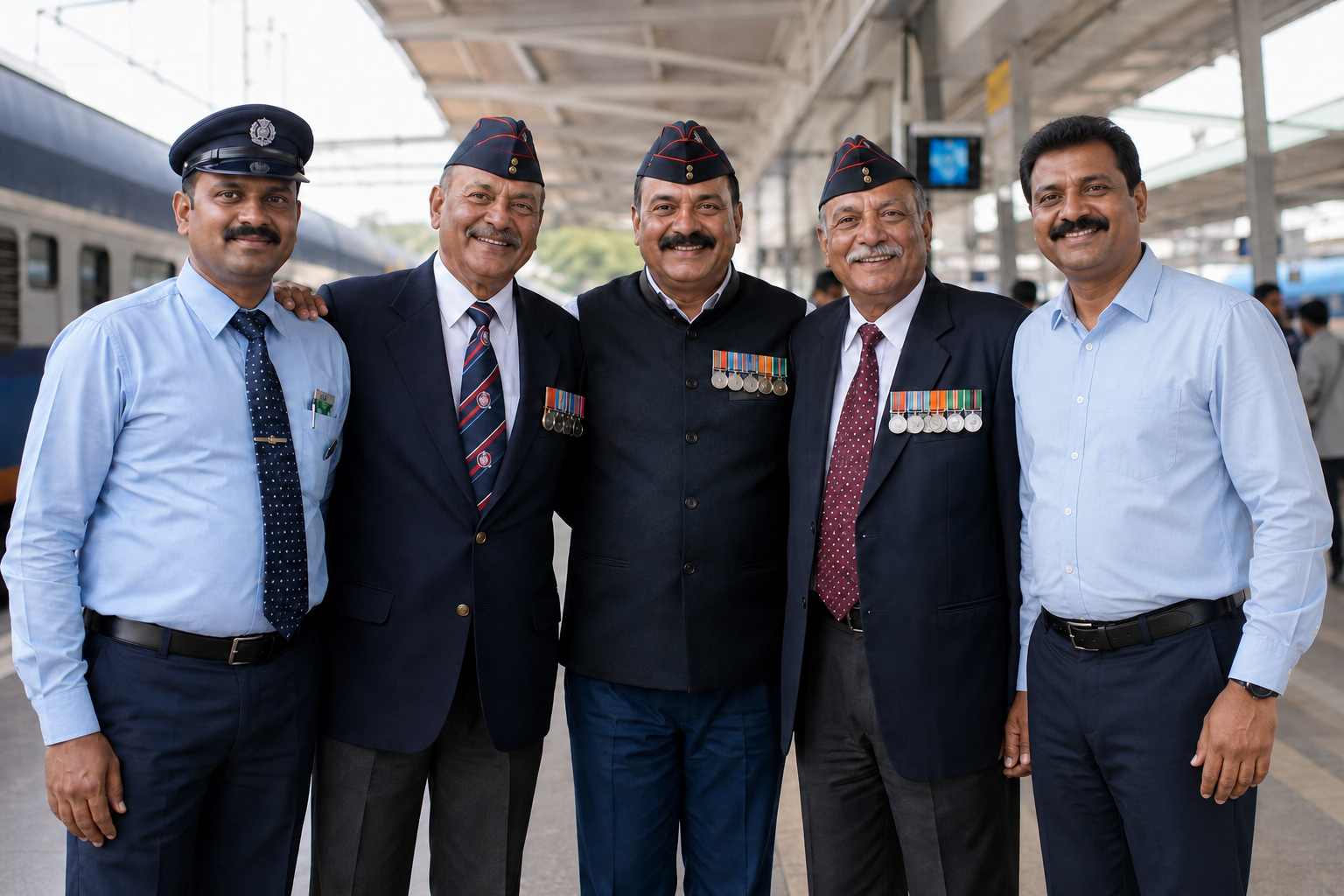
The 8th Central Pay Commission has issued another important update for employees, pensioners, defence stakeholders and railway organisations. A fresh notice dated 6 May 2026 has opened another round of Delhi interactions on 13 and 14 May 2026, giving Defence and Railways linked organisations another opportunity to place their issues before the Commission.
This update matters because many organisations could not secure a slot during the earlier Delhi interaction round held from 28 to 30 April. For such groups, this fresh interaction is not just another meeting. It is a second opportunity to ensure that pay, pension, allowances and service-related concerns are formally heard at the right stage.
The official 8th CPC website lists the notice regarding Delhi interactions on 13 to 14 May 2026, and the website’s appointment page also includes a separate link for seeking appointment for this Delhi interaction. According to reports based on the notice, the interaction is for institutions and organisations of the Ministry of Defence and Ministry of Railways, along with unions and associations of Defence Forces and Railways located or registered in Delhi. Interested stakeholders have to apply online by 10 May 2026 with the Memorandum ID generated after submission of their proposals.
For Defence and Railway employees, this is a major development. These two sectors have some of the most complex service structures in the Central Government system. Defence has issues related to rank, field service, risk, hardship, disability, early retirement, pension parity, MSP, OROP and veterans’ welfare. Railways has issues related to technical cadres, supervisory roles, safety duties, running staff, pensioners, promotion structure and pay matrix anomalies. A general Pay Commission formula may not automatically capture these sector-specific realities unless they are strongly presented.
This is why direct interaction becomes important. A memorandum puts the issue on record, but an interaction gives representatives a chance to explain the real impact behind the written demand. If a pay level is wrong, if an allowance is outdated, if a pension rule is creating hardship, or if a promotion channel is blocked, a well-prepared delegation can explain the issue in a way that raw paperwork may not.
However, the most important rule is clear: submit the memorandum first and save the Memo ID. The official 8th CPC memorandum page says the Commission is inviting representations, memoranda and suggestions from Central Government employees, Defence Forces personnel, pensioners, service associations, unions, ministries, departments, organisations and other listed stakeholders. It also says the last date for submission is 31 May 2026, and submissions must be made only through the specified online link. Paper-based memoranda, hard copies, PDFs and emails are not being considered or entertained.

This means an organisation should not assume that a physical letter or emailed PDF will be enough. The online submission is the safest route because it creates a Memo ID. That Memo ID becomes proof that the issue has entered the Commission’s system. Without it, an appointment request may not be properly considered.
For Defence organisations, the priority should be clear and disciplined presentation. Issues such as Military Service Pay, X Group Pay, disability pension, risk and hardship allowance, field area conditions, high-altitude service, pension commutation, OROP anomalies, family pension, ECHS concerns and rank-based pay structure should not be placed in a vague manner. Each issue must be written with the affected category, present problem, financial or service impact and suggested correction.
For Railway organisations, the memorandum should focus on cadre-specific problems. Technical supervisors, safety categories, running staff, workshop employees, pensioners and administrative staff may all have different issues. The Commission will likely look for repeated patterns and strong justification. If the same issue appears across multiple representations with data and examples, it becomes harder to ignore.
The appointment deadline is also important. Reports say interested stakeholders must apply by 10 May 2026 for the Delhi interaction on 13 and 14 May. This gives very limited time. Organisations should not wait for the last day, because online forms, OTP delays, missing registration details or incomplete representative information can create problems.
Before seeking appointment, every association should prepare five things. First, the Memo ID. Second, proof of registration or organisational identity, if applicable. Third, the names and designations of representatives. Fourth, a short summary of the top issues. Fifth, supporting points already submitted through the memorandum.
The strongest presentation is not necessarily the longest one. A short, clear and issue-wise document can be far more effective than a long emotional submission. For example, instead of writing ten pages about “pay injustice”, the memorandum should say exactly which pay level is wrong, who is affected, what correction is needed and why it is justified.
Pensioners should also not ignore this opportunity. Defence pensioners, railway pensioners and family pensioners often face issues that serving employees may not fully highlight. Pension revision, DR, commutation, arrears, medical support, PPO correction and family pension delays can deeply affect retired households. If pensioner organisations are eligible and located or registered in Delhi, they should use the appointment process carefully.
This update is also a reminder that the 8th CPC process is moving through structured consultation. The Commission is not only receiving general demands. It is holding city and sector-linked interactions. The official appointment page currently lists appointment links for Hyderabad, Srinagar, Ladakh and Delhi interactions, showing that stakeholder outreach is being organised in phases.
For individual employees, the message is equally important. Even if your association is applying for a meeting, submit your personal memorandum too. The Commission may study patterns across submissions. If thousands of employees raise the same anomaly in a structured way, the issue gains weight.
The biggest mistake at this stage would be to depend only on social media discussion. WhatsApp messages, YouTube comments and informal letters may spread awareness, but the official record is created through the memorandum portal. That is where the issue must be placed.
In simple words, the Delhi interaction on 13 and 14 May is a second chance for Defence and Railways voices. But it must be used properly. Submit the memorandum, save the Memo ID, apply before the deadline and prepare a crisp issue-wise presentation.
The 8th Pay Commission will shape pay, pension and allowances for years. Defence and Railways are two of the most important stakeholder groups in this process. If their concerns are not presented clearly now, it may become harder to correct gaps later. This is the moment to act with discipline, facts and preparation.



Leave a Reply