

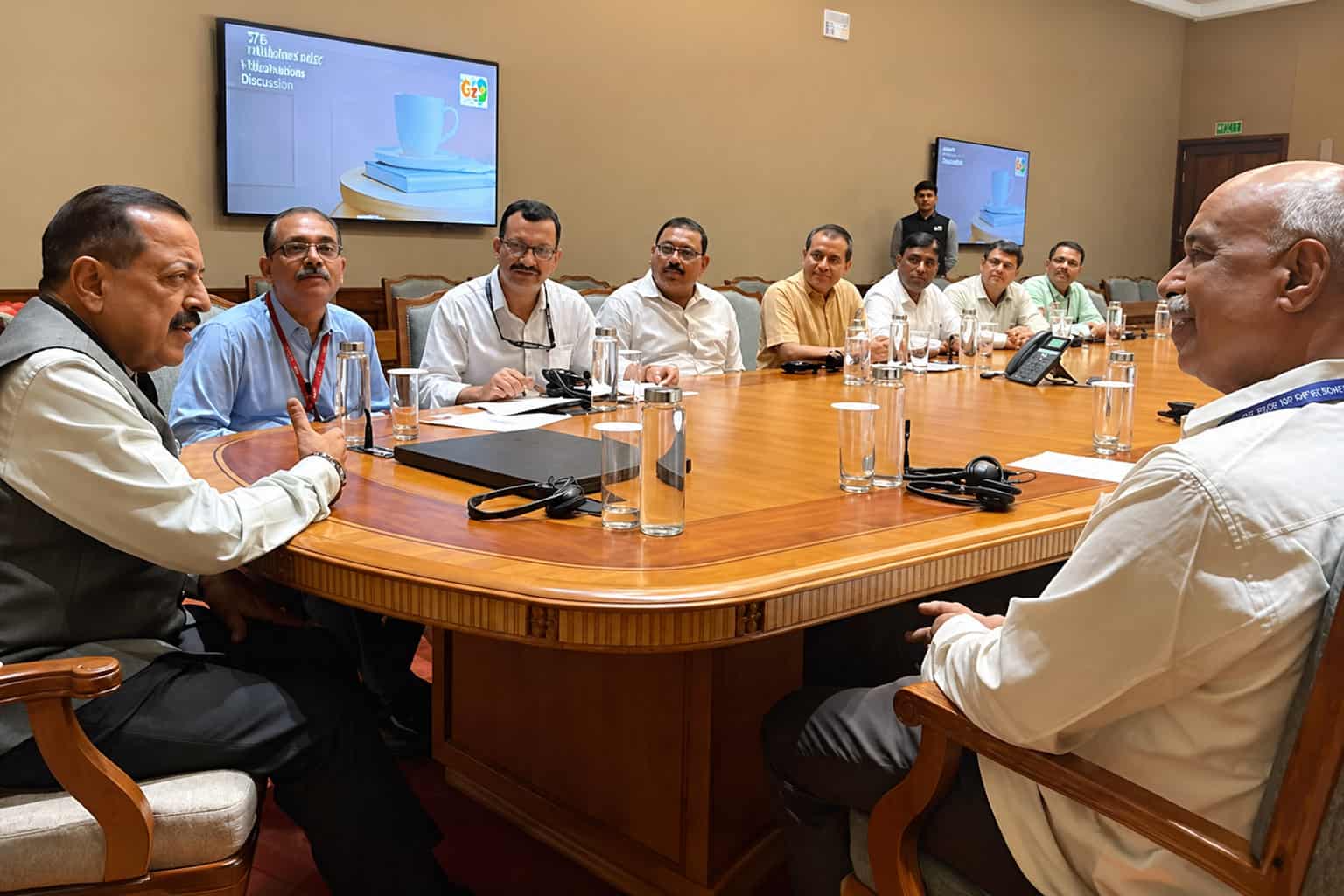
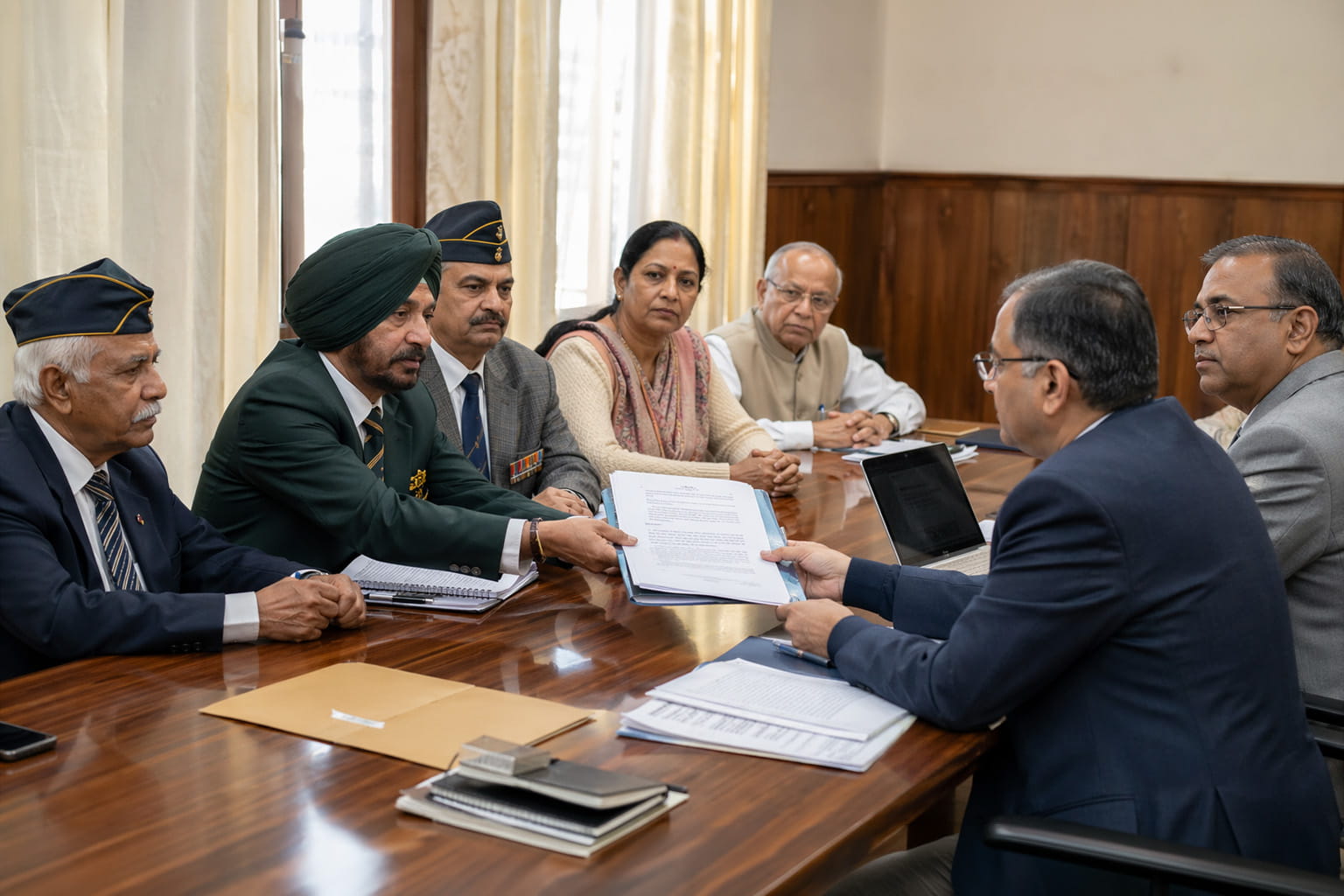
The first physical interaction of the 8th Pay Commission with stakeholders in Dehradun on 24 April 2026 has quietly changed the way central government employees, pensioners, and veterans need to approach their demands. While the meeting itself drew attention across newspapers and defence circles, the most important takeaway was not what was discussed inside the room, but what the panel clearly told everyone present.
If your issue is not submitted on the official portal, it may not exist in the Commission’s final analysis.
This single message has far-reaching implications, especially for lakhs of employees and pensioners who are still relying on associations, informal discussions, or expectations that their concerns will automatically be included.
What really happened in the Dehradun meeting?
The Dehradun interaction marked the beginning of direct engagement between the Commission and stakeholders. Representatives from various organisations, including veterans’ bodies, were given time to present their concerns. What stood out was the panel’s approach. They listened patiently, allowed extended discussion time, and showed openness to understanding ground-level realities.
However, alongside this openness came a very structured and firm direction.
The panel made it clear that physical meetings are limited in scope. They cannot meet every individual or every association across the country. Therefore, the only reliable and official method of capturing demands is through the memorandum submission portal.
This is not just a procedural step. It is the backbone of how the Commission will collect, classify, and analyse data before making recommendations.
Why the Portal Submission is now the most critical step?
For many employees and pensioners, this shift may feel technical. But in reality, it is strategic.
The Commission works on documented inputs. Every submission on the portal becomes part of a structured database. These submissions are then grouped, analysed, and evaluated while drafting recommendations on pay revision, pension changes, allowances, and service conditions.
If a specific issue is not recorded in that system, it risks being ignored, even if it is widely discussed informally.
The panel has also clarified that it will not accept physical memorandums, printed documents, emails, or hand-delivered representations. Only portal submissions will be counted as valid inputs.
Once submitted, each entry generates a unique Memo ID. This ID is not just a receipt. It is proof that your concern has officially reached the Commission and can be tracked in future discussions.
Who should be paying attention to this update?
This development is not limited to a specific category. It affects a wide spectrum of stakeholders:
Central government employees across ministries
Pensioners dealing with revision and parity issues
Defence pensioners and ex-servicemen
Serving personnel raising pay and allowance concerns
Associations and unions representing collective demands
Even individual cases that may not be covered by larger memorandums
One of the most important clarifications from the panel is that individuals can submit their own issues, even if their association has already filed a memorandum. This ensures that unique or overlooked anomalies do not get lost in broader representations.
Key issues that are likely to shape Submissions
During the interaction, several recurring themes were either raised directly or referenced through stakeholder discussions. These issues reflect long-standing concerns that may now find structured representation through the portal.
OROP anomalies and pension parity remain one of the most sensitive topics for defence pensioners. Many veterans continue to highlight gaps between different retirement cohorts.
Military Service Pay and related benefits are another area where expectations of revision or restructuring are strong.
Disability pension and invalidment policies continue to raise questions, particularly regarding fairness and assessment standards.
ECHS access, infrastructure gaps, and reimbursement delays remain a concern for both veterans and their families.
MACP and career progression policies are being closely examined, especially in terms of stagnation and delayed financial upgrades.
Honorary rank benefits after retirement, technical pay reductions, and the realities of premature retirement are also emerging as important areas where detailed submissions are expected.
These are not just policy points. They reflect lived experiences across services and departments.

How to submit your Memorandum the right way?
The process itself has been kept relatively simple, but the importance of doing it correctly cannot be overstated.
You need to visit the official portal at 8pc.gov.in and open the memorandum submission section. From there, you can select your category, whether as an individual, employee, pensioner, or organisation.
The login process works through mobile number or email with OTP verification. Once inside, you can fill in your details and submit your points.
The most important aspect is how you write your submission.
Keep it short, factual, and solution-oriented. Clearly state the problem, explain its impact, and suggest what change you are seeking. Avoid long narratives without clarity. Structured inputs are more likely to be analysed effectively.
After submission, make sure to save your Memo ID and keep a screenshot for your records.
Why the 30 April deadline matters more than ever?
The Commission has set 30 April 2026 as the deadline for submissions. This is not just a timeline marker. It is effectively the closing window for direct public input into the early stages of the Commission’s work.
Once this phase is over, the focus will shift towards internal analysis, consultations, and drafting.
Missing this deadline could mean waiting for the next stage, where opportunities for fresh inputs may be limited or structured differently.
The bigger challenge is not submission, but inclusion
One of the most important responsibilities that comes out of this update is not individual submission, but collective inclusion.
A large number of pensioners, especially senior veterans in rural areas, may not be comfortable with digital platforms. Many may not even be aware of the portal or the deadline.
This creates a real risk of underrepresentation.
Helping such individuals submit their concerns is not just a helpful act. It directly contributes to making the Commission’s data more representative and grounded in reality.
What this means for the future of the 8th Pay Commission?
The Dehradun meeting has effectively shifted the focus from expectation to participation.
Earlier, discussions around the 8th Pay Commission were largely centred on what the government might announce. Now, the process is clearly signalling that outcomes will depend significantly on what stakeholders formally submit.
This changes the equation.
Instead of waiting for decisions, employees and pensioners now have a defined window to influence those decisions through documented inputs.
The quality, clarity, and volume of these submissions will likely play a major role in shaping the final recommendations.
A simple takeaway that should not be ignored
At its core, the message from the Commission is straightforward.
If your issue is important to you, it must be written, submitted, and recorded.
Relying on assumptions, indirect representation, or general discussions is no longer enough.
The system is open, but it is also structured. And in such a system, what gets recorded is what gets considered.
As the deadline approaches, this may be the most important action every employee, pensioner, and veteran can take.
Because in the end, the difference between being heard and being missed may come down to one simple step.


Leave a Reply