

The conversation around the 8th Central Pay Commission is no longer limited to speculation. What began as a debate around its constitution, staffing, portal setup, and expected timeline has now moved into a more serious phase. The official 8th CPC platform has shown recent notices, consultation-related updates, and repeated instructions for submissions through the designated online system. That shift matters because it signals that the process is no longer sitting in the background. It is active, procedural, and gradually moving toward the stage where arguments, memorandums, and stakeholder priorities begin shaping the framework of future recommendations.
For central government employees and pensioners, that alone is important. But for the defence community, the stakes are even higher. That is because military service is not judged only through basic pay. It is judged through pension fairness, hardship compensation, rank parity, family support, and the long shadow of unresolved anomalies that often continue long after retirement. This is where the wider debate connects directly with OROP, or One Rank One Pension. Even though OROP is a separate policy track from the pay commission in a technical sense, both issues meet at the same emotional and financial point for lakhs of families: whether the system is truly delivering fairness after service.
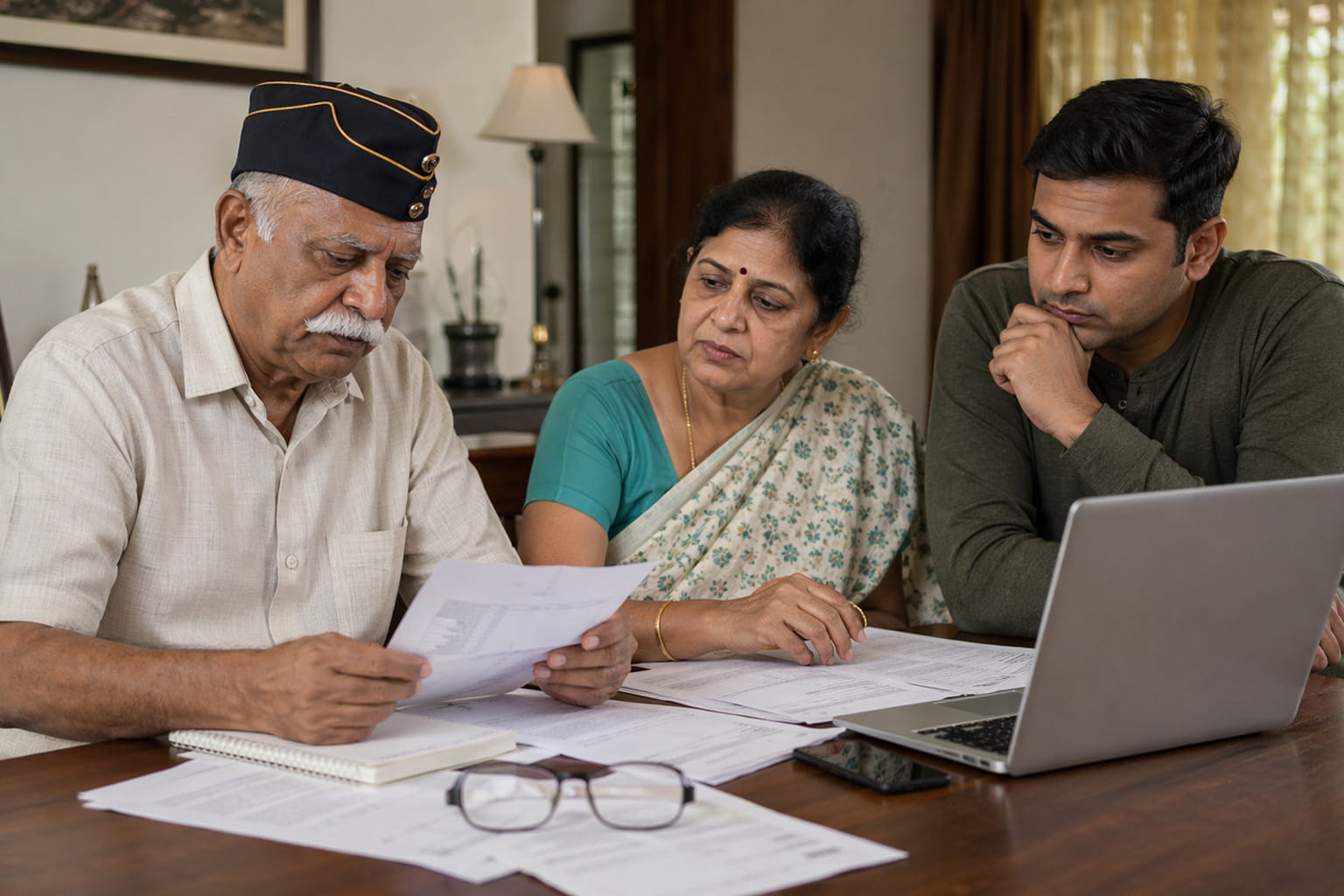
That is why the words “8th Pay Commission” and “OROP” generate such a strong response whenever they appear in the same conversation. For many households, this is not just about a government exercise. It is about monthly financial security. It is about whether an elderly pensioner can keep up with rising costs. It is about whether a widow feels the system has treated her family with dignity. It is about whether a jawan who served in extreme conditions sees that hardship respected in the structure of compensation, not just praised in speeches.
The official record already tells us that OROP remains a major pillar of the defence pension system. The government approved the revision of pension for armed forces pensioners and family pensioners under OROP with effect from 1 July 2019, and said that more than 25.13 lakh pensioners and family pensioners would benefit. It also stated that arrears from July 2019 to June 2022 were estimated at about ₹23,638 crore, while the additional annual expenditure for implementation was estimated at about ₹8,450 crore. Later official year-end material also noted that the next OROP revision with effect from 1 July 2024 was approved on 3 July 2024, with detailed instructions issued on 4 September 2024.
These figures are significant, but the real story lies beyond the numbers. In public policy, a benefit can be officially implemented and still remain a matter of debate in public life. That is exactly what has happened with OROP. For some, it represents a historic correction. For others, it continues to raise questions about coverage, interpretation, comparison between retirees, category-based treatment, and whether the principle of parity has fully translated into lived fairness. That continuing tension is the reason OROP remains central to defence welfare discussions even after multiple official decisions.
The 8th Pay Commission enters this environment at a time when expectations are already high. Employee bodies, pension associations, and organised groups have begun pressing their demands with sharper urgency. Recent reporting has shown calls for a significantly higher minimum basic pay, an aggressive fitment factor, better pension treatment, and wider revision logic affecting employees and retirees. Whether or not every demand survives the full consultation process in its present form, one thing is already clear: the Commission will be working in a high-pressure environment where different constituencies want their concerns recognised in the final report.
That is precisely why this stage of the process matters so much. Once a pay commission finishes its report, the space for correction becomes much narrower. At that point, unresolved problems often spill into anomaly committees, court cases, repeated representations, and fresh agitation. But before the report is drafted, there is still room for influence. This is the stage where well-structured submissions can shape the language, categories, and reasoning that ultimately guide recommendations. A demand raised after implementation becomes an appeal. A demand raised before drafting becomes evidence.

The 8th CPC’s own instructions reinforce that seriousness. The Commission has made it clear that memorandums and responses are to be submitted through the online mechanism provided on its official system, and that paper copies, emails, and PDF submissions are not being entertained in the normal course. That tells stakeholders something very important: this is now a process built around formal record, not informal noise. In a phase like this, the strength of a case depends not only on how many people are upset, but on how clearly the issue is documented, how logically it is framed, and how convincingly it fits within the structure of public compensation policy.
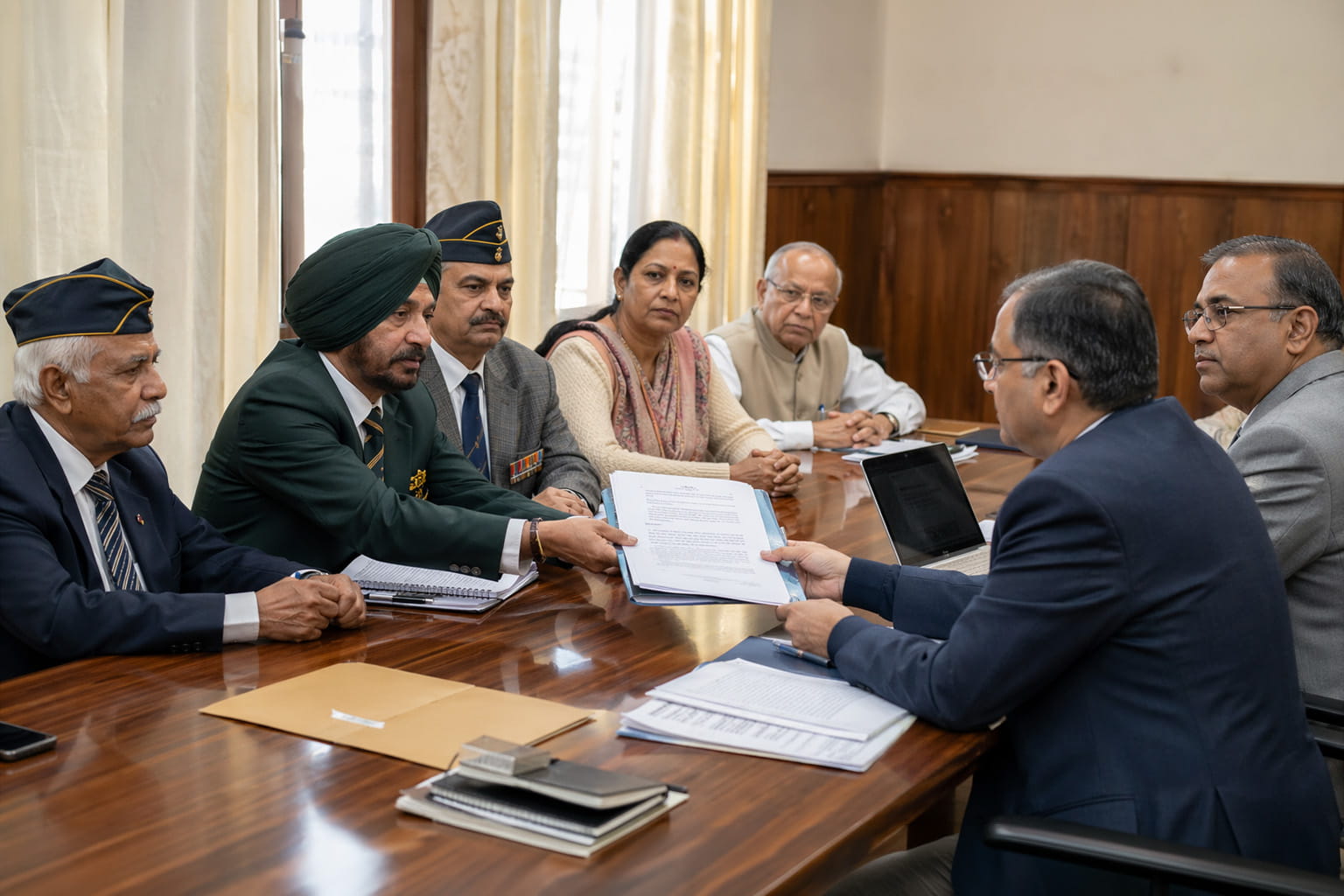
For the defence and veterans community, that creates both a challenge and an opportunity. The challenge is that emotional frustration alone is not enough. Long-running issues around pension parity, disability-linked treatment, family pension outcomes, hardship allowances, and older anomalies must be presented in a disciplined manner. The opportunity is that a live commission process offers a rare formal window in which these matters can be placed before an evolving framework rather than argued against a final one.
This is also why ordinary readers should not dismiss the 8th Pay Commission as a distant bureaucratic subject. Its eventual recommendations will influence how the government views pay justice, pension adequacy, rank-related fairness, and the treatment of service-linked hardship. In practical terms, that can affect not just serving employees but retired families, dependants, widows, and those whose lives are already shaped by the financial consequences of old decisions. What looks like a technical committee process from Delhi often becomes a monthly survival issue in homes across the country.
The same is true for OROP. It is easy to treat it as a slogan, but for families that depend on military pension, it is a benchmark of trust. It asks a simple question: if two people wore the same rank and gave similar years of service, should time alone create an unfair gap between them? That is why the idea continues to hold so much emotional and political force. It is not merely a pension formula. It is a test of whether service is being remembered equally.
The larger takeaway is simple. The 8th Pay Commission is now in an active and consequential stage, and OROP remains one of the most sensitive reference points in the defence pension debate. Together, they represent more than policy jargon. They represent the demand for financial dignity, institutional fairness, and long-term recognition of service. For lakhs of defence families and pensioners, this is not background noise. It is the story that will shape what justice looks like in the years ahead.




Leave a Reply