

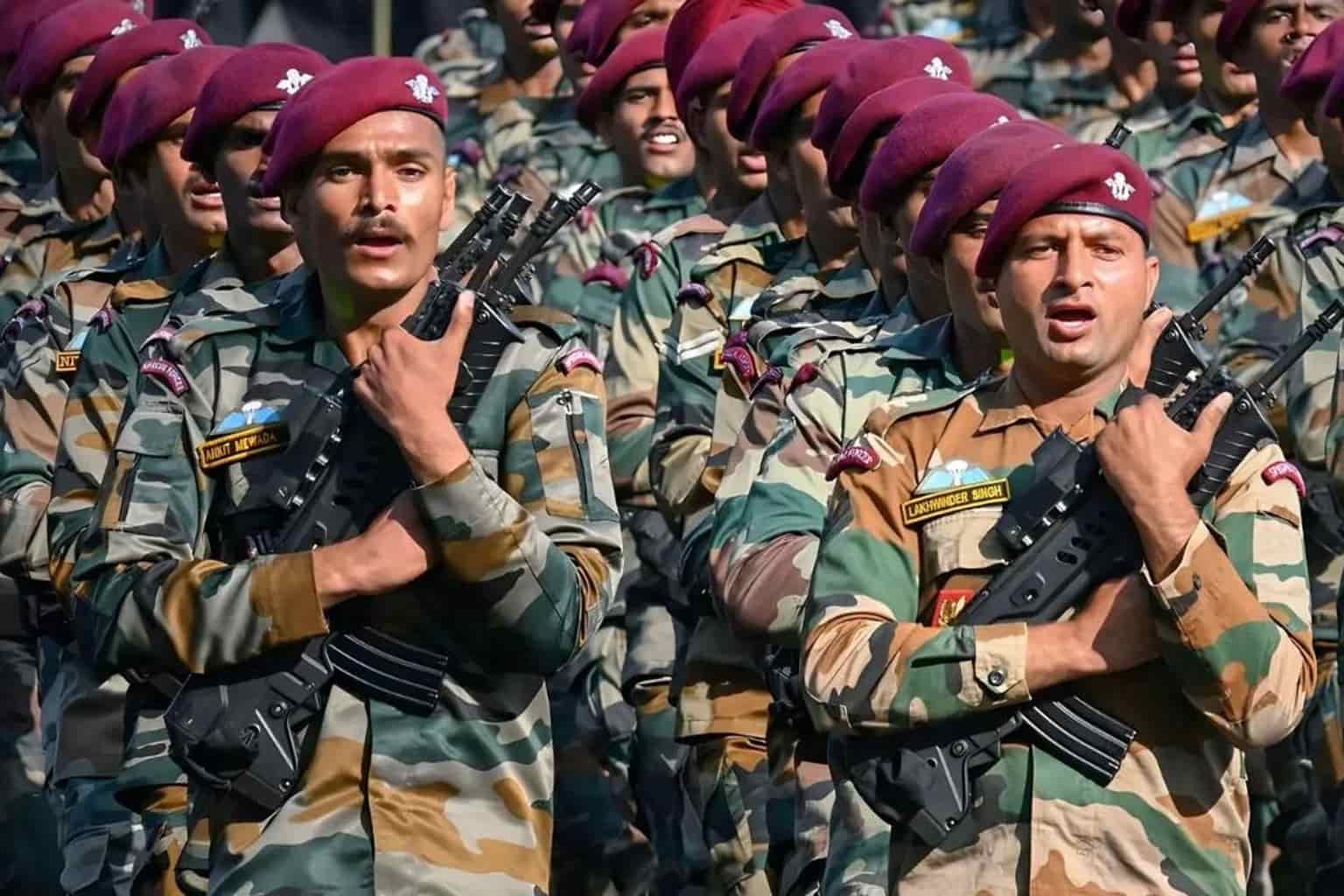
A Defence Salary Package (DSP) account can provide much more than a place to receive monthly salary or pension. Depending on the bank and the applicable Memorandum of Understanding (MoU), serving Army personnel, Agniveers and retired personnel may have access to personal accident insurance, disability cover, air accident insurance and several additional family benefits.
But there is an equally important point: these benefits are not available merely because a person has an account with a particular bank. The account must be correctly categorised, salary or pension must be credited into the eligible account, nomination and documentation must be in order, and bank-specific conditions must be followed.
The source material discussed here is based on the IHQ of MoD (Army), Adjutant General’s Branch Comprehensive Guide to Banking Benefits, which brings various Defence Salary Package benefits and claim conditions together in one place.

What is a Defence Salary Package account?
A Defence Salary Package or DSP account is a specially categorised salary account offered by banks that have an MoU with the Armed Forces.
The banking guide makes an important distinction between:
- an ordinary savings account;
- a Defence Salary Package account for serving personnel;
- and the appropriate pensioner/veteran category after retirement.
The guide specifically advises that serving personnel and Agniveers should have their accounts converted to the appropriate Defence Salary Account category and ensure that their salary is actually being credited into that account.
On retirement, the account should be converted to the appropriate pensioner or veteran category to retain eligibility for benefits applicable to retired personnel.
That small administrative step can become extremely important when a family later submits an insurance claim.
Who can receive benefits under these banking MoUs?
Depending on the individual bank agreement, benefits may be available to:
- Serving defence personnel
- Agniveers
- Retired personnel/ex-servicemen
- Pensioners
- Nominees or eligible family members in specified circumstances
However, the benefit amount for a serving person may not be the same as the amount available after retirement.
The guide discussed in the source material compares separate benefits for serving personnel/Agniveers and pensioners. Pasted text
This is why a pensioner should not assume that the insurance cover available during service automatically continues at the same level after retirement.
Personal Accident Insurance can run into lakhs or even ₹1 crore
One of the biggest benefits attached to many Defence Salary Packages is Personal Accident Insurance (PAI).
The guide discussed in the source material shows that several participating banks offer accident-death cover reaching ₹1 crore for serving personnel or Agniveers, while pensioner benefits vary from bank to bank. Pasted text
For example, the edition discussed in the source material lists examples such as:
| Bank | Serving personnel/Agniveer | Pensioner/Ex-serviceman |
|---|---|---|
| State Bank of India | Up to ₹1 crore | ₹50 lakh |
| Punjab National Bank | Up to ₹1 crore | ₹50 lakh |
| Punjab & Sind Bank | Up to ₹1 crore | Up to ₹1 crore |
| Union Bank of India | Up to ₹1 crore | Up to ₹1 crore |
| ICICI Bank | Up to ₹1 crore | ₹50 lakh |
These figures should not be treated as permanent rates. Bank MoUs are periodically renewed or revised, and the banking guide itself says the information can change when an MoU is renewed, terminated or banking policies change.
Therefore, a person should verify the current MoU applicable to his or her bank before relying on a particular insurance amount.
Accidental death does not mean every type of death
This is one of the most important conditions in the entire guide.
Personal Accident Insurance is linked to an accidental event.
The guide states that natural death and suicide are not eligible for Personal Accident Insurance benefits. It also sets additional conditions relating to the circumstances of an accident.
Therefore:
₹1 crore accident insurance does not mean ₹1 crore life insurance for every death.
The cause of death and the terms of the applicable policy matter.
The source material also refers to certain bank-specific provisions involving conditions such as High Altitude Pulmonary Oedema (HAPO) and High Altitude Cerebral Oedema (HACO). Such special provisions must be checked against the current bank MoU before a claim is made.

Disability cover is different from death cover
Some Defence Salary Package accounts also provide insurance for accidental disability.
But the maximum figure shown in a bank table should not be misunderstood.
Where an amount is stated for 100% disability, a lower percentage of disability may result in a proportionately lower benefit under the applicable insurance rules and policy conditions.
The source material notes that medical certification and the assessed percentage of disability are important for such claims. Pasted text
It also shows that disability benefits for pensioners differ considerably between banks. Some provide substantial pensioner cover, while others may not provide the same disability benefit after retirement.
So a veteran should check death cover and disability cover separately. They are not necessarily identical.
Air accident insurance may have a debit-card condition
Air accident insurance is another important DSP feature.
The guide shows that several banks provide separate air accident insurance, with cover in some cases reaching ₹1 crore, ₹1.5 crore or more, depending on the bank and applicable category. Pasted text
But there is a major condition in several bank packages:
The airline ticket may have to be purchased using the eligible bank’s debit card.
That means a person may have an eligible DSP account but still fail to satisfy the specific air accident insurance condition if the ticket was purchased through another payment method or another person’s card.
The banking guide also indicates that the conditions are not identical across all banks. Some packages may not impose the same debit-card purchase requirement.
Therefore, before travelling, personnel and veterans should check:
- whether the air accident benefit applies to their category;
- whether the debit card must be active;
- whether the ticket must be bought using that card;
- and whether domestic and international cover limits differ.
Some banks also provide additional family benefits
DSP benefits can extend beyond accident insurance.
The source material lists examples of additional benefits under different bank packages, including:
- Plastic surgery assistance
- Imported medicines
- Air ambulance expenses
- Ambulance charges
- Transportation of family members
- Repatriation of mortal remains
- Education benefits for children
- Girl-child marriage assistance
- Additional debit/credit-card-linked cover
- Preferential loan facilities
These benefits and ceilings differ from bank to bank. Pasted text
This is precisely why personnel should not compare banks using only one figure such as “₹1 crore insurance”.
A bank offering a slightly different PAI amount may have additional benefits relevant to a particular family, while another may offer different pensioner provisions.
Retirement? Check whether your account was converted
For veterans, this is perhaps the most important practical point.
The AG Branch guide says that when a serving person proceeds on pension, the account should be changed from the serving DSP category to the appropriate DSP Pension/Pensioner/Veteran category to ensure admissibility of applicable Personal Accident Insurance claims.
Simply receiving pension in an old account should therefore not be taken as proof that the account has been correctly categorised.
A veteran can ask the bank to confirm in writing or through account records whether the account is registered under the required defence pension package.

Nomination is not a formality
The guide specifically instructs account holders to ensure that nominee details are properly recorded.
It states that Personal Accident Insurance and other applicable benefits are extended to the nominee registered with the bank or insurance company in accordance with the applicable terms.
Personnel should therefore check whether:
- a nominee is registered;
- the nominee’s name is correctly recorded;
- contact information is updated;
- and the family knows which bank account carries the DSP benefits.
This becomes particularly important after an accidental death, when the account holder may no longer be available to explain the claim procedure.
Debit-card activity can also matter
One of the less obvious conditions in the guide concerns POS/swipe-linked benefits.
The guide advises account holders to use/swipe the debit card at least once in 30 days where a benefit is subject to a POS/swipe condition.
This should not be misunderstood as a universal condition for every benefit offered by every bank.
It specifically matters where the relevant benefit or MoU contains a POS/swipe condition.
The safest approach is to check the current terms attached to the exact card and package rather than assuming that an unused card will continue to carry every additional benefit.
Why are some Personal Accident Insurance claims delayed or rejected?
The guide identifies several common problems observed in claims.
These include:
- the account not being correctly updated as a DSP account;
- salary being credited to an account without the required DSP code;
- delay in submitting documents;
- account being maintained with a bank that does not have the applicable valid MoU;
- missing contact details;
- failure to intimate a disability case within the prescribed period;
- claims relating to natural death or suicide where only accidental death is covered;
- and inconsistencies between the documents describing the cause of the accident.
The publicly indexed updated guide specifically states that disability-related intimation should be given to the bank and insurance company within 30 days of the accident.
The most important principle is simple:
Police, medical and insurance documents should accurately record what actually happened.
Incomplete or contradictory documentation can make settlement more difficult.
Your family should know about the account before an emergency happens
A serving soldier may know which bank receives his salary. His spouse, parents or children may not.
That becomes a serious problem when the family suddenly has to identify:
- the correct account;
- the bank package;
- insurance company;
- nominee;
- claim form;
- deadline;
- and documents required.
The Army banking guide therefore has value not only for the soldier but also for the family.
Every account holder should ideally ensure that at least one close family member knows:
Bank name → account category → nominee → insurance benefits → claim contact → relevant documents.
The source material itself repeatedly stresses that lack of awareness can prevent families from taking timely action even when a benefit exists. Pasted text
5 checks every serving person and veteran should make now
Before assuming that the banking benefits are active, check these five things:
- Is your account correctly categorised as a Defence Salary Package account?
- Is your salary or pension being credited into that eligible account?
- After retirement, was the account converted to the appropriate pensioner/veteran category?
- Is your nominee information correct and updated?
- Do you and your family know the bank-specific insurance and claim conditions?
These basic checks can be more important than simply knowing the maximum insurance amount.

Important clarification: number of banks and benefits can change
The source transcription refers to an edition comparing 11 banks. Pasted text
However, a publicly indexed copy of the Comprehensive Guide to Banking Benefits updated on 28 April 2026 states that, at that point, the Indian Army had valid MoUs with 10 banks and expressly notes that the list will change whenever agreements are renewed or revised. Therefore, readers should not use an older comparison sheet as the final authority for a claim.
The latest bank MoU and applicable insurance terms should always be checked before choosing an account or submitting a claim.
What personnel and veterans should remember?
The biggest lesson from the Army banking guide is not simply that a Defence Salary Package may carry a large insurance benefit.
It is that eligibility has to be maintained before an accident occurs.
Correct account categorisation, salary or pension credit, nomination, debit-card conditions where applicable, timely intimation and proper documentation can all matter.
For serving personnel, Agniveers and veterans, the bank account can therefore become an important financial protection mechanism for the family—but only when the applicable conditions are understood and followed.



Leave a Reply