

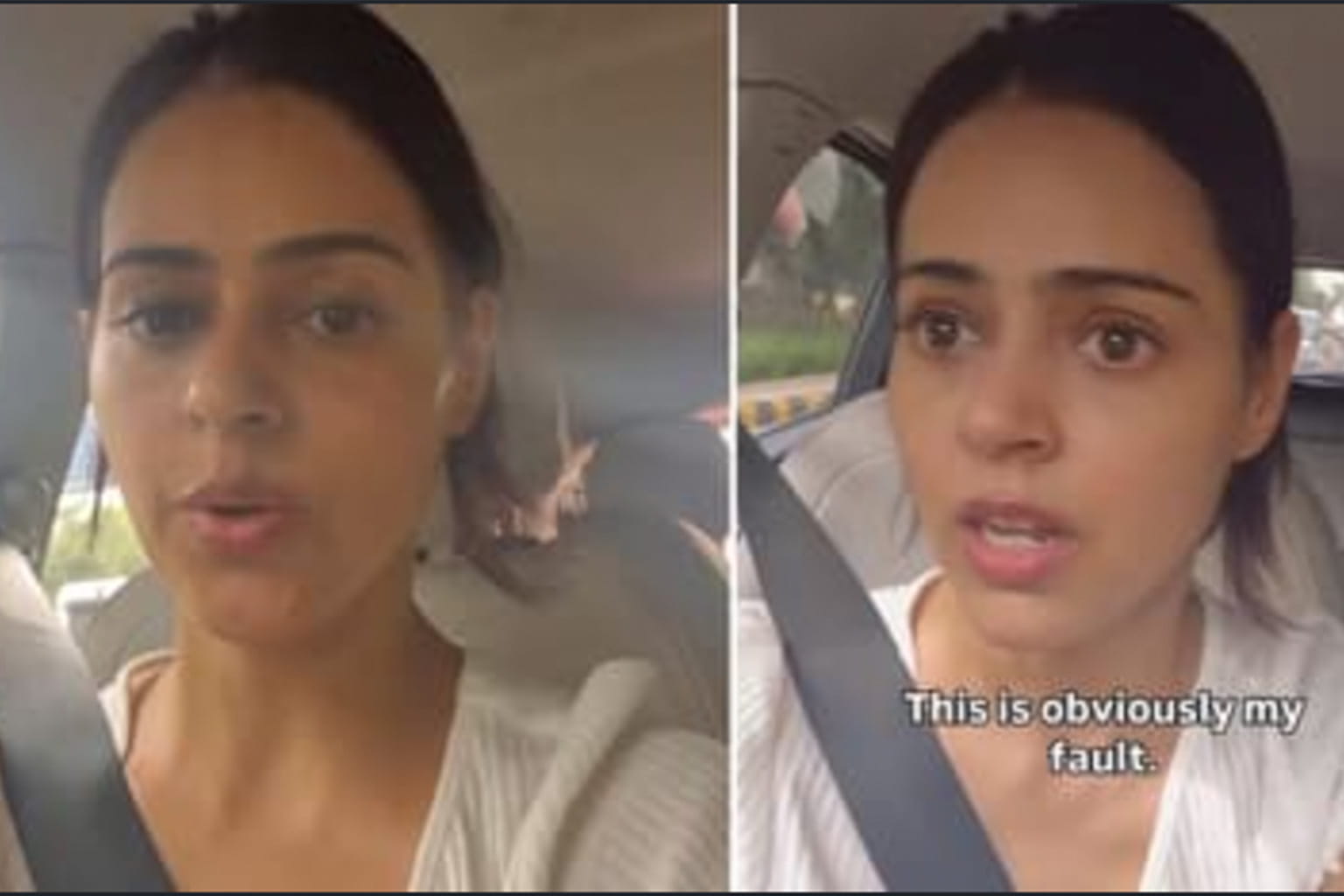
A journey in an electric car reportedly turned into an unexpected roadside difficulty when the vehicle’s battery reached a critically low level and stopped shortly before a charging station.
According to a first-person social-media account shared by content creator Deepika Sharma, an Indian Army personnel stepped forward to help move the stranded EV to the charging point. He reportedly stayed with her until the vehicle had enough charge to continue.
The incident attracted widespread praise because the soldier appears to have done more than simply give directions. However, it also carries an important message for electric-car owners: charging and route planning should begin before the battery reaches a critical level.

What reportedly happened to the EV driver?
News reports based on Sharma’s social-media account state that she began her journey with approximately 60% battery charge and believed it would be sufficient.
When the charge dropped to around 10%, she started searching for a charging station. The vehicle reportedly stopped when the battery indicator was close to 2%, shortly before she could reach the charger.
She then approached an Indian Army personnel, reportedly identified by her as Mr Narendra, to ask for directions.
Instead of only explaining the route, he allegedly helped push the electric car while Sharma remained inside to steer it. The vehicle was eventually moved to the charging point.
Soldier reportedly stayed until the EV could move again
The assistance reportedly did not end after the vehicle reached the charger.
Sharma said the Army personnel remained with her for approximately 30 minutes, waiting until the car had accumulated sufficient charge to resume the journey.
Some reports also state that he later travelled ahead on a scooter and helped guide her safely out of the area.
Sharma subsequently shared the incident online and thanked him for his patience and willingness to help.
His rank, unit, posting and complete identity have not been established through an official Indian Army announcement.

Was the LinkedIn post the original source?
No.
The LinkedIn post that later circulated the incident appears to be a secondary retelling. Reports trace the first-person version to an Instagram reel shared by Deepika Sharma.
This distinction is important because multiple websites may repeat one viral account without independently confirming every detail.
The story can therefore be described as a widely reported social-media incident, but not as an officially verified Army rescue operation.
Why did the incident receive so much attention?
The event connected with people because it presented a simple act of public assistance.
According to the woman’s account, the Army personnel:
- responded when she requested help;
- assisted in moving the stranded vehicle;
- stayed until the car had charged sufficiently;
- ensured that she could continue safely.
The strongest takeaway is not that the Army launched an official roadside-rescue mission.
It is that a uniformed individual reportedly chose to help a citizen facing difficulty.
What is established and what remains unverified?
The incident should be reported in two separate categories.
Reported through the original account
- The electric vehicle became stranded near a charging point.
- A uniformed Army personnel assisted the driver.
- The vehicle was pushed to the charging station.
- The person reportedly waited until charging had progressed.
- Sharma publicly thanked the individual identified as Mr Narendra.
Not independently established
- Exact city, road or charging-station location;
- EV manufacturer and model;
- distance for which the car was pushed;
- soldier’s official rank and Army unit;
- whether he was on duty;
- exact outside temperature;
- direct confirmation from the Indian Army, Ministry of Defence or PIB.
The absence of these details does not prove that the incident did not occur. It means those specific facts should not be presented as officially confirmed.

Why did the electric car stop?
The available account suggests that the vehicle did not suffer a confirmed battery defect. It appears to have stopped because its usable charge was nearly exhausted.
An electric vehicle’s displayed driving range is an estimate. It can rise or fall during a journey depending on actual energy consumption.
Factors that can reduce remaining EV range include:
- higher driving speed;
- rapid acceleration;
- air-conditioner or heater use;
- uphill roads;
- heavy traffic;
- passenger and luggage load;
- outside temperature;
- detours;
- battery age and condition;
- tyre pressure.
A vehicle displaying a certain number of remaining kilometres does not guarantee that it will travel exactly that distance under every condition.
Does this prove electric cars are unreliable?
No.
The incident appears to involve range planning rather than an established technical failure.
A petrol or diesel vehicle can also become stranded if the driver misjudges the remaining fuel. The practical difference is that liquid fuel may sometimes be brought to a conventional vehicle, while a fully discharged EV may require:
- access to a charging point;
- mobile charging assistance;
- manufacturer-approved recovery;
- or flatbed transportation.
The correct lesson is not that EVs are inherently unreliable.
The lesson is that EV journeys require:
- battery-reserve planning;
- charger-location awareness;
- connector compatibility;
- backup charging options;
- roadside-assistance preparation.
When should an EV driver begin looking for a charger?
There is no single battery percentage suitable for every driver and route.
A person travelling in a familiar city with several working chargers may have more flexibility than someone driving on a highway, in an unfamiliar area or late at night.
However, beginning a charger search only after the battery reaches a very low level leaves little room for:
- an occupied charging point;
- an out-of-service charger;
- an incompatible connector;
- an incorrect map location;
- traffic congestion;
- a route diversion;
- waiting time at the station.
Drivers should begin planning the next charging stop while they still have a safe reserve.

What should you do when an EV battery becomes critically low?
Select a compatible charger
A nearby charging station may not support every electric vehicle.
Before proceeding, check:
- connector type;
- charging standard;
- station availability;
- operating hours;
- access restrictions;
- payment method.
Reduce avoidable power consumption
Where safe and practical:
- maintain a moderate speed;
- avoid harsh acceleration;
- use the shortest safe route;
- reduce unnecessary climate-control use;
- follow the vehicle’s energy-saving recommendations.
These measures may preserve some charge but cannot replace proper charging.
Move towards a safe stopping point
Do not wait for the car to shut down in a live traffic lane.
Where possible, move to:
- a parking area;
- a roadside bay;
- a service lane;
- a well-lit public location;
- or another protected space.
Contact roadside assistance
Use:
- the vehicle manufacturer’s helpline;
- insurance roadside assistance;
- charging-network customer support;
- an authorised EV recovery service.
Should a fully discharged EV be pushed?
Not every EV should be moved in the same manner.
Some vehicles may permit limited manual movement in neutral. Others may have restrictions involving:
- electric motors;
- parking locks;
- regenerative braking;
- transmission systems;
- electronic parking brakes.
Improper movement or towing may damage the drivetrain.
Owners should check the recovery instructions in the vehicle manual and contact the manufacturer before attempting to push or tow a fully discharged EV.
Where recommended, a flatbed recovery vehicle is generally safer than improvised towing.
How can EV owners avoid becoming stranded?
Start longer journeys with sufficient charge
A long trip should not depend on reaching a charger with only one or two percent battery remaining.
Save more than one charging location
Drivers should identify:
- a primary charging station;
- an alternative nearby station;
- a backup charger earlier on the route.
Check live charger status
A map listing does not guarantee that the charger is functioning.
Where possible, verify:
- operational status;
- connector availability;
- queue or waiting time;
- access conditions.
Keep a reserve
The displayed remaining range should not be treated as the final usable limit.
A reasonable reserve allows for unexpected traffic, road closures and charger problems.
Keep emergency contacts ready
Store:
- manufacturer roadside-assistance number;
- insurance helpline;
- charging-network support number;
- emergency contact details.
Do not ignore low-battery warnings
Dashboard alerts are intended to give the driver time to plan safely. Continuing without a confirmed charger increases the likelihood of becoming stranded.
Does India need more EV charging infrastructure?
The incident does not establish that no charger was available. The available account suggests that a charging point was nearby, but the car stopped before reaching it.
Still, the story highlights the importance of a charging network that is:
- easy to locate;
- properly marked;
- operational;
- compatible with common EV standards;
- accessible on highways and urban routes;
- supported by reliable status information;
- connected with roadside-assistance services.
Successful EV adoption requires both responsible driver planning and dependable public infrastructure.
Was the Army personnel acting in an official capacity?
There is no public evidence showing that the individual was deployed as part of an official Army operation.
The safest description is:
An Indian Army personnel reportedly offered personal assistance to a stranded EV driver.
The incident should not be described as:
- an official Indian Army EV rescue;
- a military roadside-assistance programme;
- an Army endorsement of an EV brand;
- a Ministry of Defence-confirmed operation.
This distinction preserves the human value of the story without exaggerating its official status.
Frequently asked questions
Who was the EV driver?
News reports identify her as content creator Deepika Sharma.
Who was the Army personnel?
Sharma identified him as Mr Narendra. His rank, unit and complete official identity have not been independently confirmed.
At what battery percentage did the EV stop?
The driver’s account reportedly placed the remaining charge at approximately 2%.
How long did the Army personnel reportedly wait?
She said he remained nearby for around 30 minutes, until the vehicle had enough charge to continue.
Has the Indian Army officially confirmed the incident?
No direct Indian Army, Ministry of Defence or PIB confirmation was located in the reports reviewed.
Should every discharged EV be manually pushed?
No. Owners must follow the recovery instructions issued for their particular make and model.
Claims that should be avoided
Do not report that:
- the Indian Army officially rescued the EV;
- the soldier pushed the car for several kilometres;
- the vehicle suffered a battery defect;
- the incident proves that EVs are unreliable;
- the exact temperature was independently confirmed;
- the soldier’s rank and unit are known;
- the location has been officially verified.
The available evidence supports a narrower statement:
According to the driver’s social-media account, an Army personnel helped move her critically discharged EV to a nearby charging station.
Conclusion
The incident became memorable because the Army personnel reportedly chose to help a stranger rather than merely provide directions.
His gesture reflects humanity, responsibility and concern for another person’s safety.
At the same time, the incident offers an important practical lesson for electric-vehicle users. Displayed range can change due to speed, traffic, temperature, climate-control use and road conditions. Waiting until the battery reaches a critically low level leaves very little margin for error.
The balanced takeaway is:
Appreciate the soldier’s act of kindness, but also recognise that route planning, charger verification and battery reserve are essential parts of EV ownership.
Sources:-
- The Economic Times — Army personnel helps woman whose EV ran out of charge
- Hindustan Times — Woman thanks Army personnel for helping with stranded EV
- NITI Aayog e-AMRIT — EV frequently asked questions
- NITI Aayog e-AMRIT — EV charging standards and specifications
- Ministry of Power — EV charging infrastructure guidelines



Leave a Reply