

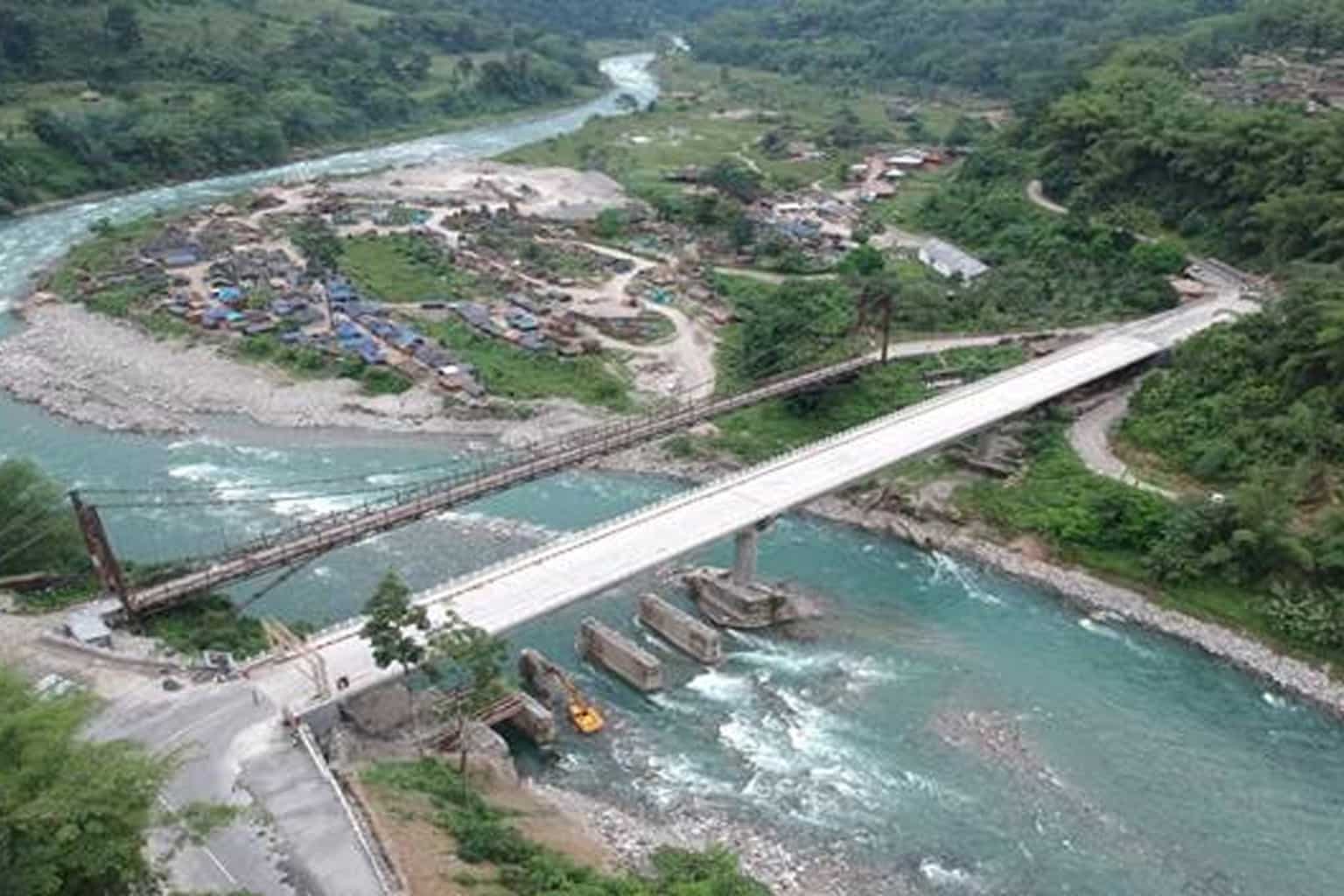
In the mountains of Arunachal Pradesh, national security is not built only through weapons, posts and patrols. It is also built through roads that survive rain, bridges that hold across deep valleys, and construction teams that keep working where the terrain itself becomes the first challenge.
That is why Project BRAHMANK of the Border Roads Organisation matters.

Project BRAHMANK marked its 16th Raising Day on 29 June 2026 at Ranaghat, Arunachal Pradesh. On paper, this may look like an organisational anniversary. But behind that date lies a much larger story of strategic connectivity, military mobility, civil access and quiet engineering endurance in one of India’s most demanding frontier regions.
Why Project BRAHMANK matters?
Project BRAHMANK is responsible for the development and maintenance of strategic road infrastructure across Siang, East Siang, West Siang, Upper Siang and Shi-Yomi districts of Arunachal Pradesh, along with parts of Dhemaji district in Assam.
These are not ordinary road-construction areas. Much of this region has steep terrain, heavy rainfall, fragile slopes, long distances, limited infrastructure and difficult working conditions. In such places, building a road is not simply a civil-work activity. It becomes a national-security requirement.
For the Armed Forces, roads decide how quickly men, vehicles, equipment, supplies and medical support can move. For remote villages, the same roads decide access to markets, schools, hospitals, administration and emergency services.
That is the dual value of BRO’s work: one road can serve both soldier and citizen.
The scale of Project BRAHMANK
Project BRAHMANK is entrusted with the maintenance and development of 811 km of roads and approximately 86 bridges. These bridges range from culverts to major steel and arch bridges.
This scale matters because border infrastructure is not created by one large project alone. It is built through hundreds of difficult stretches, bridge crossings, blacktopping works, drainage improvements, slope stabilisation, maintenance efforts and emergency repairs.
In a region where rain can damage roads and landslides can cut off movement, maintenance is as important as construction. A road that cannot stay open during pressure has limited operational value.
Project BRAHMANK’s responsibility therefore goes beyond building new infrastructure. It also includes keeping strategic routes usable in difficult conditions.
Bridges that change mobility
Among Project BRAHMANK’s major engineering achievements are the 100-metre steel arch bridge over Siyom Nallah and the 165-metre PSC bridge over Simang Nallah on the Along–Yingkiong Road.
For a reader sitting in a city, a bridge may look like a simple structure. But in Arunachal’s valleys, a bridge can change the movement pattern of an entire area.
A bridge can reduce travel time. It can prevent seasonal isolation. It can support military convoys. It can make emergency evacuation faster. It can connect villages that otherwise remain dependent on difficult routes.
In border regions, a bridge is not just concrete and steel. It is a mobility guarantee.
FY 2025–26 achievements
During FY 2025–26, Project BRAHMANK inaugurated 13 bridges with a cumulative span of 390 metres across the Siang and Siyom Valleys.
It also blacktopped 61 km of roads to NHDL specifications. In addition, the project developed helipads to improve connectivity and strengthen strategic infrastructure in the region.
These numbers should not be read casually. In mountain regions, even a few kilometres of all-weather-quality road can make a major difference. A blacktopped road improves movement, reduces vehicle stress, supports logistics and improves access during routine and emergency situations.
The helipad development angle is also important. In remote and difficult terrain, air access can become critical for medical evacuation, disaster response, administrative movement and military logistics.
Why Arunachal roads matter for defence?
Arunachal Pradesh is one of India’s most sensitive frontier states. The terrain is difficult, the distances are demanding and weather often creates additional pressure on connectivity.
In such an environment, road infrastructure becomes part of defence preparedness.
Better roads do not automatically make headlines like a missile test or a new fighter aircraft. But they quietly decide how fast troops can be reinforced, how quickly supplies can move, how reliably equipment can reach forward locations and how prepared the system remains during crises.
This is why BRO’s work is strategic.
A well-maintained road in a border region is not only a transport route. It is a readiness corridor.
The civilian side of border infrastructure
Project BRAHMANK’s work is equally important for local communities.
Remote villages in difficult terrain often face problems that urban readers rarely imagine: long travel time, delayed medical access, difficult school connectivity, restricted market movement and seasonal isolation.
When roads and bridges improve, the benefits reach ordinary citizens directly. A farmer can move produce more easily. A patient can reach medical help faster. Students can travel more reliably. Local administration becomes more accessible.
This is why border infrastructure should not be seen only through a military lens. It is also a development bridge between remote communities and the national mainstream.
Raised in 2011, still working in hard terrain
Project BRAHMANK was raised on 29 June 2011 at Ranaghat in East Siang district and became fully functional on 3 December 2011.
Since then, it has worked in conditions described by rugged terrain, frequent rainfall, poor connectivity and limited infrastructure. These are not small obstacles. They affect manpower, equipment movement, construction timelines, material transport and maintenance cycles.
The real strength of BRO personnel lies in this daily endurance. They do not work in ideal project-site conditions. They often work where the road does not yet exist, where weather can undo progress, and where every movement of machinery is itself a task.

The human side of BRO work
A road in a border area is visible. The people behind it are often invisible.
BRO personnel, engineers, operators, labour teams and supporting staff work in isolation, harsh weather and difficult geography. Their achievement is not always seen through parades or public ceremonies. It is seen when a convoy reaches on time, when a village gets connected, when a patient can be moved, or when a bridge remains open after heavy rain.
The 16th Raising Day therefore is not just an anniversary. It is a recognition of the people who build India’s access in the most difficult parts of the country.
Social outreach and welfare activities
As part of the 16th Raising Day celebrations, social outreach and welfare activities were organised at Headquarters and Task Force locations. Sainik Sammelans, troop interactions and Bada Khana or mess functions were also held.
This shows the internal culture of such organisations. In hard postings and difficult work environments, camaraderie and welfare activities matter. They keep teams connected, motivated and aware of their larger mission.
For personnel working away from easy facilities, such events are more than formal gatherings. They help maintain morale.
Why this story deserves attention?
Most people notice border infrastructure only when a major tunnel, bridge or highway is inaugurated. But strategic connectivity is built continuously. It is strengthened kilometre by kilometre, crossing by crossing, season by season.
Project BRAHMANK’s 16th Raising Day gives us a chance to look at that quiet work.
The 811 km roads, 86 bridges, 13 bridges in one financial year, 61 km blacktopping and helipad development are not isolated statistics. Together, they show how India is building resilience in a frontier region where mobility is directly linked with security and development.
What readers should understand?
The first takeaway is that Project BRAHMANK is a major BRO project in Arunachal Pradesh, working in strategically important districts.
The second takeaway is that its roads and bridges support both Armed Forces movement and civilian connectivity.
The third takeaway is that border infrastructure is not only about construction. It is about maintenance, reliability, all-weather access and readiness under difficult conditions.
The fourth takeaway is that the people building these roads are part of India’s defence preparedness, even if they are not always in the public spotlight.
Final takeaway
Project BRAHMANK’s 16th Raising Day is more than a ceremonial milestone. It is a reminder that border readiness is built through roads, bridges, helipads and human determination.
In Arunachal Pradesh, every improved road can reduce isolation. Every bridge can strengthen mobility. Every helipad can support emergency access. Every maintained route can help the Armed Forces remain prepared.
That is why BRO Project BRAHMANK matters.
It is not merely building roads in the mountains. It is strengthening India’s reach, resilience and readiness along a sensitive frontier.
Sources:-
PIB / Ministry of Defence — Project BRAHMANK of BRO Marks its 16th Raising Day
https://www.pib.gov.in/PressReleasePage.aspx?PRID=2278921&lang=1®=3
Border Roads Organisation — Official Project BRAHMANK page
https://bro.gov.in/brahmank


Leave a Reply