

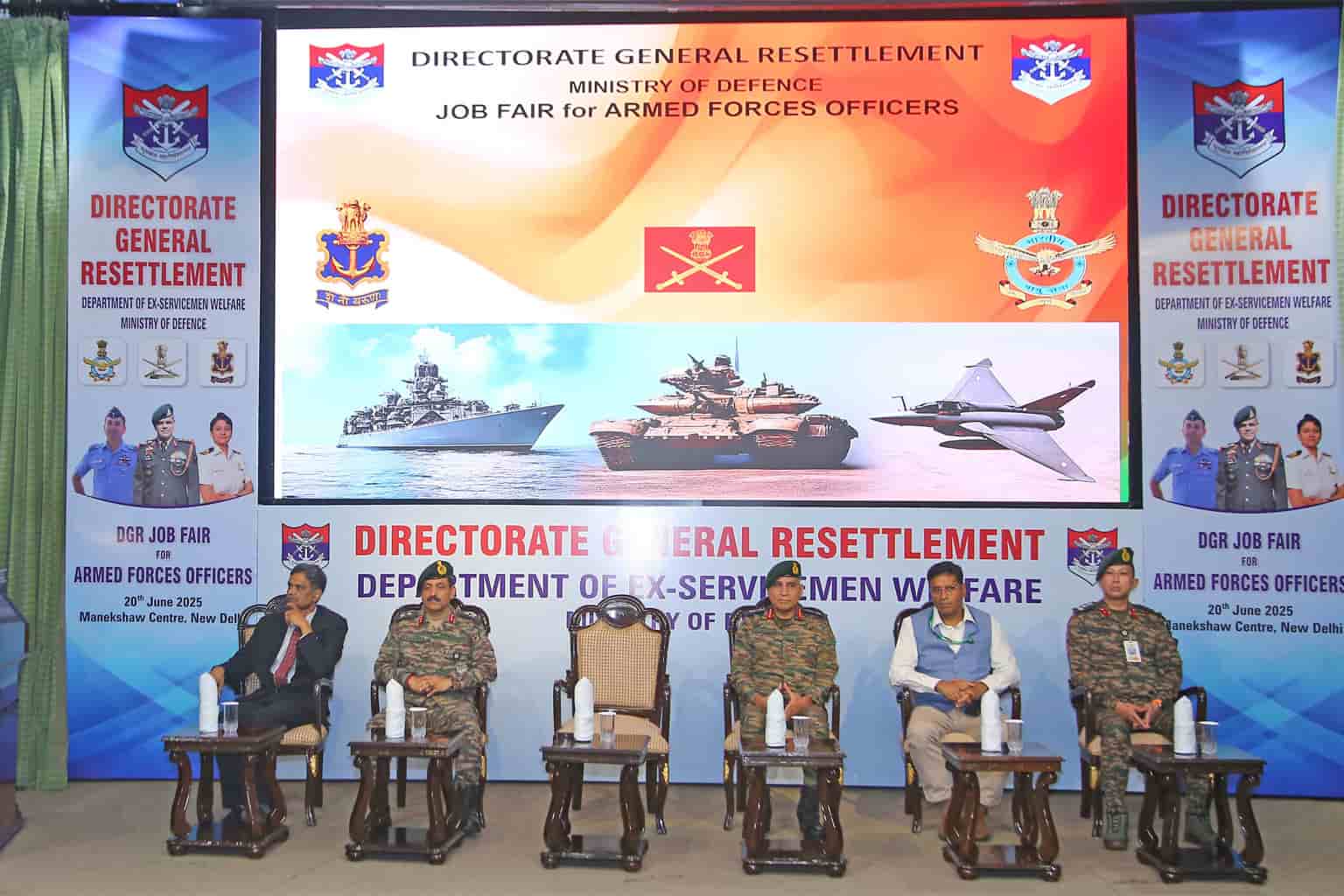
For many ex-servicemen, retirement from uniform does not mean retirement from responsibility. A large number of soldiers, sailors and air warriors leave service at an age when family duties, children’s education, housing needs and financial planning are still active parts of life.
This is where second-career support becomes important.

The Directorate General Resettlement has moved ahead with the planning of Job Fairs for Ex-Servicemen during FY 2026-27. These job fairs are not merely public gatherings where companies put up stalls. The official document shows a more organised system behind them — registration, resume preparation, skill mapping, employer matching and interviews.
For ex-servicemen looking for civilian employment after military service, this update can become practically useful if understood correctly.
What is the DGR Job Fair 2026-27 update?
The Directorate General Resettlement has issued an Expression of Interest for conducting Job Fairs for Ex-Servicemen during FY 2026-27 at various locations in India.
The purpose is clear: to provide employment opportunities and career-development support to veterans who are moving into civilian careers.
This makes the update important for officers, JCOs, ORs and equivalent ranks who are either retired, retiring soon, or exploring a structured second-career route after service.
The document is mainly meant for selecting vendors who will organise the job fairs. But for ex-servicemen, it gives a useful inside view of how the job fair system is expected to work.
Why this matters for ex-servicemen?
Military personnel retire with discipline, leadership experience, team-handling ability, technical skills, security awareness and operational maturity. But the civilian job market often uses a different language.
A soldier may know how to manage men, material and pressure. But a company may ask for a resume, a job role match, interview readiness and sector-specific presentation.
This gap is where many veterans struggle.
DGR job fairs can help bridge that gap by connecting ex-servicemen with employers in a structured manner. The process is not only about standing in a queue for an interview. It includes registration, skill mapping and sharing resumes with employers before and during the event.
That is why this update deserves attention.
Job fairs are not just walk-in events
Many people imagine a job fair as a one-day event where candidates walk in, meet companies and return home with uncertain results. The DGR document shows a more planned model.
The selected vendor has to create an online registration platform for ex-servicemen and employers. The registration details are meant to capture information required for identification, skill mapping and reporting.
Employers also have to register online and provide details of the jobs offered and job locations.
This is important because a good job fair should not depend only on physical presence. It should begin before the event day, with data collection and job matching.
Resume preparation at no cost to ESM
One of the strongest welfare points in the document is resume preparation.
The vendor is required to generate resumes of ex-servicemen using the data captured during registration. The document clearly indicates that no cost will be incurred by the ESM for resume preparation.
This is a practical benefit.
Many ex-servicemen have strong service experience but may not know how to translate it into civilian job language. For example, experience in logistics, administration, communications, transport, technical maintenance, security, operations or training may need to be presented in a way civilian employers understand.
A proper resume can make the difference between being overlooked and being shortlisted.
Skill mapping: The most important part
Skill mapping is the real heart of this job fair model.
The vendor has to map the skills of ex-servicemen with the job roles provided by employers. This means the system is expected to compare what an ESM can offer with what a company is looking for.
This is important because not every veteran will fit every job.
A retired technical tradesman may be suitable for maintenance or industrial operations. A former JCO may fit supervisory, administration or facility-management roles. A retired officer may be suitable for leadership, operations, security management, compliance, training or corporate administration.
Skill mapping helps reduce random placement and improves the chance of meaningful job matching.
Resume sharing with employers
The document also says that resumes of shortlisted ex-servicemen should be shared online with employers against respective job roles before and during the job fair.
This means employers may get a chance to review suitable candidates even before meeting them physically.
For ESM, this is useful because it gives their profile a better chance of reaching the right employer. Instead of simply walking from stall to stall, their resume may already be matched and shared with companies based on job roles.
This can make the job fair more focused.
Interviews during and after the job fair
Another important point is that interviews may be arranged during and after the job fair.
This means the process does not necessarily end on the event day. If an employer shortlists a candidate, follow-up interviews may continue after the fair.
This is important for veterans to understand. They should not judge the success of a job fair only by whether they receive an immediate offer letter at the venue. Shortlisting, resume sharing, interviews and final selection may take time.
The right approach is to attend prepared, keep documents ready, follow up properly and monitor official communication.
Registration may open one month before the event
The DGR document says registration for a particular job fair will open at least one month before the event and continue until the date of the job fair.
This is a very useful point for ex-servicemen.
It means candidates should not wait for the last moment. They should regularly check the official DGR Job Fair page and register early when the relevant event link opens.
Early registration can help ensure that the profile is captured, resume data is prepared and the candidate’s skills are available for matching with employer job roles.
Dates may change, so check official DGR updates
The document also mentions that event dates may change by one to two weeks. This is why ex-servicemen should avoid relying only on WhatsApp forwards, old screenshots or unofficial messages.
The safest route is to check the official DGR website for the latest job fair schedule, registration links and updates.
This is especially important for candidates travelling from another city or district.
Data protection for ESM
The document includes a Non-Disclosure Agreement requirement. The vendor must not share ESM data with any agency other than registered employers who want to employ ex-servicemen for posted job roles.
This is a very important protection point.
Veterans should be careful about sharing personal data with unofficial agents or unknown job groups. DGR’s structured process is meant to ensure that ESM data is handled only for employment-related purposes through registered employers.
In today’s digital job market, data safety is also a welfare issue.
What happens after the job fair?
The selected vendor has to submit a detailed report to DGR within one week of the job fair.
The report has to include data on ex-servicemen and employers registered for the event, ex-servicemen placed or shortlisted, and ex-servicemen interviewed by employers.
This reporting system matters because it makes the job fair measurable. It is not enough to conduct an event and take photographs. The real question is: how many ESM registered, how many employers participated, how many resumes were shared, how many were interviewed, how many were shortlisted, and how many were selected?
That is the kind of data that shows whether a job fair has practical value.

What the venue plan tells us?
The EOI also gives a detailed event layout. It includes corporate stalls, ESM sitting arrangements, stage, public address system, dining arrangements, generator, water dispensers, toilets and manpower support.
The document mentions 45 corporate or vendor stalls and lunch arrangements for 1000 persons.
This shows that these events are expected to be organised at a significant scale. They are not small informal meetings. They are planned employment-interface events where employers and ex-servicemen are brought together in a structured environment.
DGR job fairs are part of a larger resettlement mission
The Directorate General Resettlement exists because military retirement is different from normal civilian retirement. Many service personnel leave at a comparatively younger age to maintain the youthful profile of the Armed Forces.
This creates a responsibility: trained veterans should get support in using their experience in civilian life.
DGR’s role includes resettlement, training, employment assistance and self-employment support. Job fairs are one part of this larger transition system.
For a veteran, the second career may be in security, administration, logistics, operations, facility management, technical maintenance, corporate services, training, transport, manufacturing, aviation support, retail operations, banking support or government-linked roles.
The right opportunity depends on rank, age, education, trade, experience, location preference and personal readiness.
How ex-servicemen should prepare?
Ex-servicemen should treat DGR job fairs professionally.
Before registration, keep service number, rank, trade, education details, experience summary, mobile number, email ID and location preference ready. Candidates should also think clearly about what kind of civilian role they want.
A veteran should not attend a job fair with only one question: “What salary will I get?”
A better approach is to ask:
What role matches my service experience?
Which industry can use my skills?
Am I ready to relocate?
Do I need additional training?
Can my military experience be explained in civilian language?
Am I prepared for an interview?
The stronger the preparation, the better the outcome.
What beneficiaries should not assume?
This update does not mean that every registered ex-serviceman will automatically get a job.
A job fair creates access to employers. It supports registration, resume preparation, skill mapping and interviews. Final selection depends on employer requirements, candidate profile, location, salary expectation and interview performance.
So the correct understanding is:
DGR job fairs improve opportunity access, but they do not guarantee placement.
This distinction is important because false expectations can create disappointment.
Why this topic is important for defence families?
Second-career planning affects the entire family.
When a soldier retires, the question is not only about income. It is about dignity, routine, identity and stability. Many veterans are used to disciplined life, responsibility and leadership. A meaningful second career helps them continue contributing to society.
For families, job-fair information can help in planning. Spouses and children can support the veteran in registration, resume preparation, email access, document scanning and interview preparation.
This is why DGR job fairs should be seen as a family-relevant welfare update.
Final takeaway
The DGR Job Fairs FY 2026-27 update is not merely a vendor tender. It gives a clear signal that ex-servicemen second-career support is being planned through a structured employment platform.
The process includes online registration, employer registration, free resume preparation, skill mapping, resume sharing and interviews during and after the job fair.
For ex-servicemen, the message is simple: do not wait for the last day. Track the official DGR Job Fair page, register when the link opens, keep your documents ready and prepare for civilian job interviews seriously.
A uniformed career gives discipline, courage and responsibility. A second career should convert those strengths into civilian opportunity.
DGR job fairs can become one of the bridges in that journey.
Sources:-
Official DGR EOI PDF for Job Fairs FY 2026-27
https://www.dgrindia.gov.in/writereaddata/media/documents/EOI%20for%20Job%20Fairs%20FY%2020262027.pdf
DGR Official Job Fair Page
https://www.dgrindia.gov.in/Content1/job-fair
DGR About Page
https://dgrindia.gov.in/Content2/about-us/about-dgr
PIB New Delhi DGR Job Fair Report
https://www.pib.gov.in/PressReleasePage.aspx?PRID=2243034&lang=1®=3
PIB DGR Job Fair Announcement
https://www.pib.gov.in/PressReleasePage.aspx?PRID=2240500



Leave a Reply