

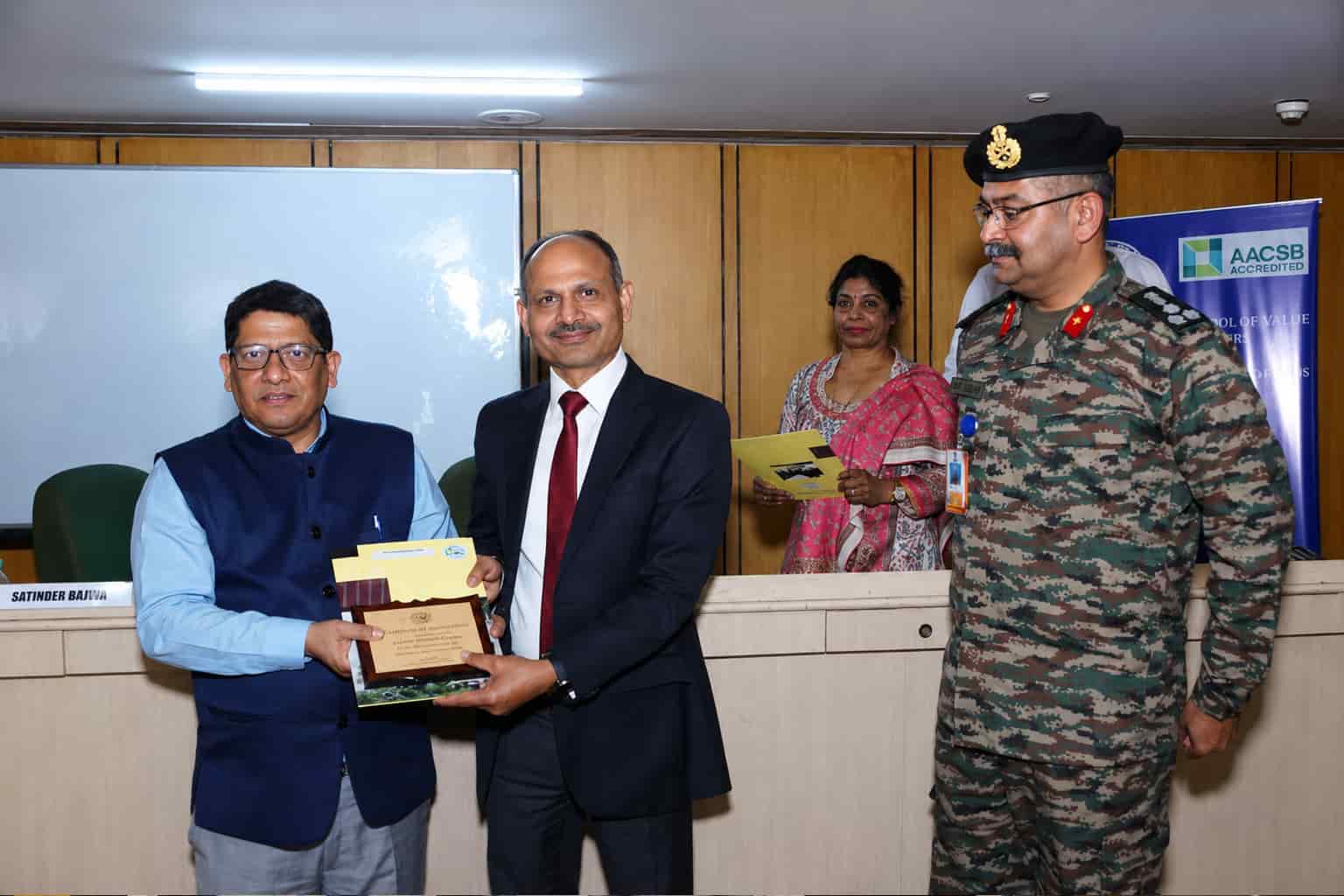
Lt Col Ashok Kumar Singh (Retd.) explains how ex-servicemen can build second careers beyond security jobs through leadership, green jobs, e-waste, ESG, CSR, GeM procurement and lifelong learning.
A soldier retires from uniform, not from responsibility
For many ex-servicemen, retirement is not the end of service. It is the beginning of a second mission.
In a special conversation on Sainik Welfare News, Lt Col Ashok Kumar Singh (Retd.) shared a powerful message for soldiers, JCOs, officers and defence families: the skills learned in uniform should not be limited only to security jobs after retirement.
His journey connects Army field leadership, Kargil memories, Kashmir experience, public administration, corporate leadership, e-waste management, sustainability and green jobs. The central message is simple but important — a fauji already carries discipline, leadership, logistics understanding, time management, team handling and mission focus. What is needed after retirement is direction, preparation and the right upskilling.
Who is Lt Col Ashok Kumar Singh (Retd.)?
Lt Col Ashok Kumar Singh (Retd.) represents a career path that many veterans can learn from. In the podcast, he spoke about his Army service, field experience, public administration role and present work in the corporate and sustainability space.
Public profile sources connect him with Army service, United Nations exposure, Director Education Delhi responsibility, Ministry of Home-related consulting experience and E[co]work’s e-waste capacity-building mission. His story is useful because it does not stop at motivation. It gives a practical roadmap for ex-servicemen who are preparing for life after retirement.
He is not only talking about discipline. He is showing how discipline can be converted into employability.
What Army life taught him about leadership
One of the strongest parts of the podcast is his memory of field areas. He spoke about Dras, Kargil, high-altitude conditions, cold weather, limited infrastructure and the emotional bond between officers and soldiers.
This part of the conversation explains something very important: Army leadership is not built in a classroom alone. It is tested when a leader walks with his men, understands their stress, shares their discomfort and keeps morale alive even when conditions are difficult.
He recalled how soldiers in tough terrain would keep encouraging their officer during long movement, saying the destination was close even when the route was still long. That small memory carries a big leadership lesson.
A leader cannot collapse emotionally in front of the team. Soldiers watch the face of their leader before they watch the difficulty of the road.
Why SOP and procedure matter in civil life too?
Another important learning from the podcast was about procedure. He shared how Army systems teach a person to respect appointment, responsibility, authority and charter of duties.
This is one of the biggest strengths veterans bring to the civilian world.
In many civilian organisations, systems are either weak or still developing. Files move slowly, people depend on individuals instead of processes, and decisions are sometimes taken without clear responsibility. A veteran understands why procedure exists. He knows that a system protects the organisation from confusion.
That is why ex-servicemen can do well in roles where discipline and structure are needed: operations, administration, facility management, compliance, procurement, logistics, training and project execution.
Army leadership in corporate life
Lt Col Ashok Kumar Singh explained that the basic management theory of the Armed Forces and corporate world is not very different. Both need mission, vision, loyalty, sincerity, teamwork and execution.
The difference is that the Army already has a strong hierarchy and established SOPs. In the corporate world, especially in growing organisations, a leader may have to create those systems from scratch.
This is where Army experience becomes valuable.
Vendor selection, purchase policy, documentation, stakeholder coordination, logistics planning, background verification, compliance and team accountability are all areas where military-trained professionals can make an immediate impact.
A veteran understands that work is not complete just because an instruction has been given. Work is complete when the task is executed, checked, documented and improved.

Why ex-servicemen should look beyond security jobs?
Security is a respected and important sector. Many ex-servicemen have built meaningful careers in it. But the podcast raises a bigger question: why should security be the only default option?
A soldier does much more than guard a gate during service. He handles men, stores, weapons, vehicles, communication, repair, transport, movement, discipline, records, training, inspection, field administration and emergency response.
These are employable skills.
The problem is not lack of ability. The problem is lack of career mapping.
Many veterans enter the civilian world without translating their military experience into civilian job language. A company may not understand “company quartermaster” or “platoon administration,” but it understands inventory control, manpower management, asset tracking, logistics coordination and operations supervision.
The veteran already has the skill. He only needs to present it in the right language.
Green jobs for ex-servicemen: Why e-waste is a serious opportunity?
One of the most useful parts of the podcast is the discussion on e-waste and green jobs.
India’s electronics use is increasing every year. Old computers, mobiles, servers, circuit boards, batteries and IT assets do not simply disappear after use. They must be collected, documented, dismantled, recycled or disposed of through proper channels.
This creates an organised employment space.
E-waste is not only a waste problem. It is also a logistics, compliance, recovery and sustainability opportunity. It needs trained people who can manage material flow, warehouses, documentation, safety, vendor coordination, government rules and audit trails.
These are areas where ex-servicemen can fit naturally.
A veteran who has managed stores, vehicles, equipment, records or technical teams in the Army can understand the logic of e-waste operations. With short upskilling, he can move into facility management, e-waste operations, compliance support, ESG audit assistance, warehouse control, procurement or training roles.
E-waste is not waste, it is recoverable value
The podcast makes an important point: e-waste should not always be seen as useless scrap. Many electronic items reach end-of-life, but they still contain recoverable materials such as copper, aluminium, circuit components and other useful inputs.
This is why the recycling sector needs disciplined handling.
If material is not tracked properly, value is lost. If compliance is ignored, the environment is harmed. If records are weak, audits fail. If safety is poor, workers are exposed to risk.
The Army teaches accountability for equipment. That mindset is useful in e-waste because every item has to move through a chain — collection, storage, dismantling, segregation, documentation, dispatch and recycling.
Career options after Army retirement beyond security
The biggest takeaway for veterans is that opportunities are not limited to one lane.
Depending on rank, experience, education and upskilling, ex-servicemen can explore several second-career roles:
Facility manager
A soldier who has handled manpower, stores and buildings can understand facility operations.
Operations supervisor or operations head
Veterans are trained to complete tasks under pressure. This is useful in manufacturing, logistics, recycling and service industries.
E-waste operations role
Material handling, dismantling process, storage, ledger entry and disposal chain need disciplined supervision.
ESG audit support
Companies now need help with environmental, social and governance compliance. Veterans with process discipline can upskill into this space.
CSR project coordinator
Many companies need people who can execute social projects on the ground with accountability.
GeM procurement assistant or specialist
Government e-marketplace procurement is a useful skill for those interested in purchase, tendering and supply roles.
Warehouse and logistics manager
Army supply-chain experience can be converted into civilian logistics, inventory and dispatch roles.
Education sector administrator
Veterans can contribute as estate managers, discipline coordinators, training heads, hostel administrators, school operations managers or SSB preparation mentors.
Skilling and training manager
Army people know how to train, demonstrate, supervise and correct. This is valuable in skill-development institutions.
Repair and technical services entrepreneur
Technical trades from service can be converted into repair, maintenance, IT asset handling or equipment service businesses.
Retirement planning should start before retirement
A very practical point from the podcast is that transition planning should not start after the retirement date.
It should begin two to three years earlier.
A soldier should ask:
What field do I want to enter?
What civilian words describe my Army experience?
Which short course can improve my profile?
Do I need GeM knowledge, ESG basics, CSR understanding, computer skills or compliance training?
Can I visit companies before retirement to understand how they work?
Can I prepare a civilian-style resume before leaving service?
This preparation is important because the uniform gives identity inside the Armed Forces, but outside the gate, skills must be explained in civilian language.
Why lifelong learning is necessary?
Lt Col Ashok Kumar Singh also spoke about learning even after service. This is one of the strongest messages for veterans.
The civilian world changes fast. E-waste rules, CSR norms, procurement systems, technology platforms, sustainability reporting and compliance requirements keep evolving. A veteran who keeps learning remains relevant.
This does not mean every retired soldier must do a big degree. Even small, focused courses can help.
A three-day GeM course, a short ESG course, a logistics certificate, a basic computer course, a warehouse management module or a CSR orientation can open new doors.
The key is not the size of the certificate. The key is whether the learning connects your military experience with a civilian opportunity.
What officers, JCOs and ORs should understand?
Every rank has a second-career pathway.
Officers can move into administration, corporate leadership, compliance, education management, operations, CSR, sustainability and consulting roles.
JCOs can become strong facility managers, training supervisors, logistics coordinators, discipline heads, warehouse controllers and school/college administrators.
ORs can enter facility operations, technical maintenance, security technology, repair services, store management, e-waste handling, transport coordination and field supervision roles.
The point is not to compare ranks. The point is to map experience correctly.
A person who has spent years maintaining discipline, equipment and accountability is not starting from zero. He is carrying a tested foundation.
Role of DGR and official resettlement channels
Ex-servicemen should also use official resettlement channels. The Directorate General Resettlement supports retiring and retired defence personnel through training, employment assistance, job fairs and second-career pathways.
Veterans should regularly check DGR updates, job fairs, resettlement courses and authorised training opportunities. This is especially important because random private agents and unverified job promises can mislead retiring personnel.
A genuine second career should be built through verified channels, skill-based preparation and realistic expectations.
The real message for veterans
This podcast is not only about one officer’s journey. It is a reminder that the country still needs the experience of its veterans.
A veteran can build systems in a company.
A veteran can improve discipline in a school.
A veteran can manage logistics in a warehouse.
A veteran can guide young defence aspirants.
A veteran can support green jobs and sustainability.
A veteran can help organisations follow processes better.
The retirement certificate closes one chapter. It does not close the book.
Final takeaway
The most important message from Lt Col Ashok Kumar Singh’s conversation is clear: ex-servicemen should not underestimate the value of their own experience.
Army service teaches discipline, leadership, punctuality, planning, logistics, teamwork, courage and responsibility. These qualities are needed in corporate offices, schools, public administration, sustainability projects, e-waste operations, CSR programmes and government procurement systems.
The future of veteran resettlement should not be limited to security alone. Security is one option, but not the only option.
For soldiers preparing to retire, the best time to plan is now. Choose a field, learn its language, take small courses, build a civilian resume and enter the second innings with confidence.
A soldier may leave the uniform, but the uniform never leaves his way of working.
Sources:-
- E[co]work Team Profile
https://www.ecowork.international/team - DGR Official Website
https://dgrindia.gov.in/ - DGR Job Fair Page
https://dgrindia.gov.in/Content1/job-fair - PIB — E-Waste Management / EPR Portal
https://www.pib.gov.in/PressReleasePage.aspx?PRID=2155124 - Government e-Marketplace Training Page
https://gem.gov.in/training - India Code — Companies Act Section 135 CSR
https://www.indiacode.nic.in/show-data?actid=AC_CEN_22_29_00008_201318_1517807327856&orderno=139§ionId=1326§ionno=135


Leave a Reply