

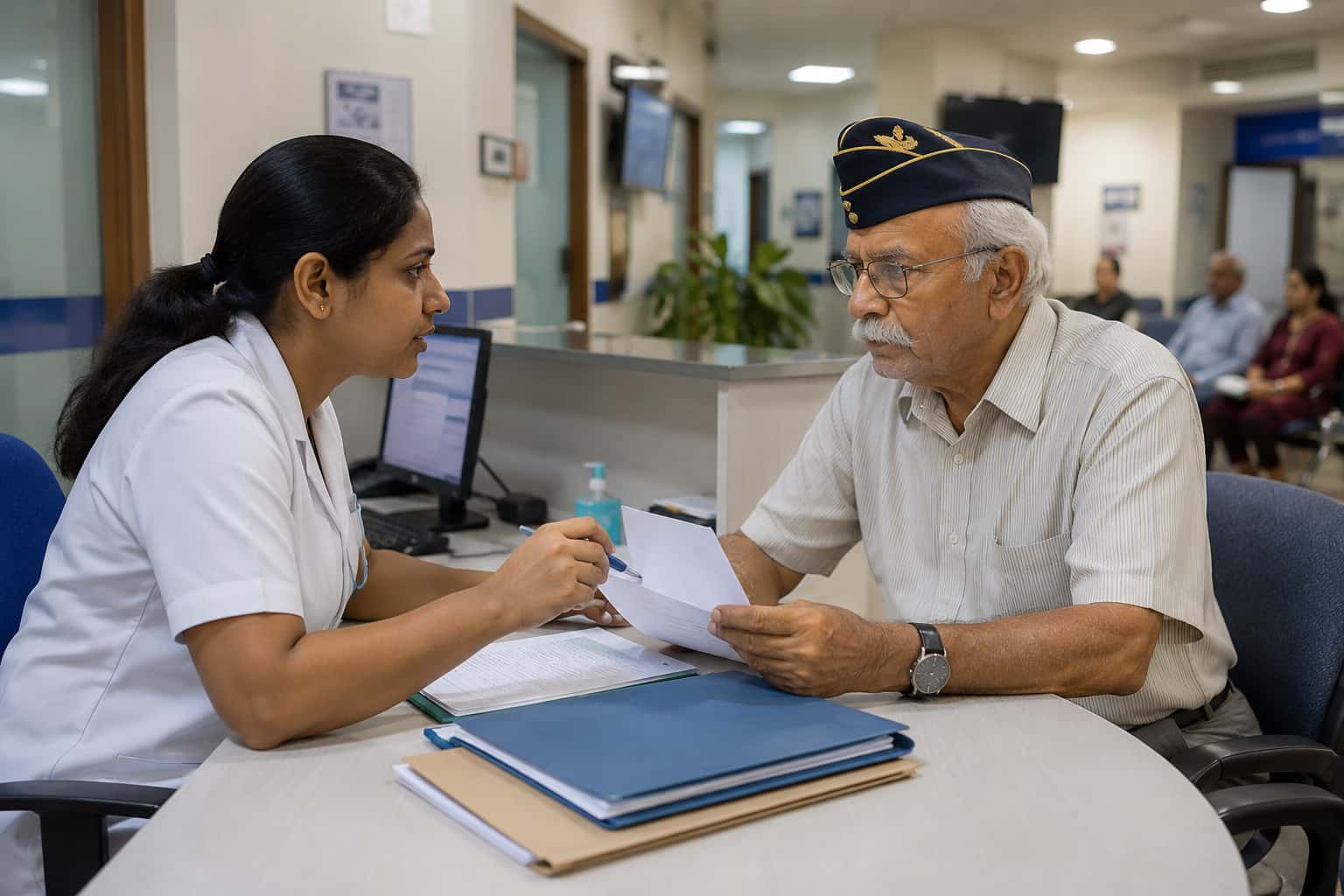
For ex-servicemen, pensioners and dependents, ECHS is not just a medical facility. It is a lifeline. A proper referral, a cashless hospital admission and correct documentation can save a family from sudden financial pressure during illness.
But one small mistake can create a big problem.

A circulated advisory attributed to Regional Centre ECHS Kochi, dated 04 June 2026, has raised an important issue related to individual reimbursement claims for planned treatment. The letter says that some ECHS beneficiaries are undergoing planned treatment in empanelled hospitals without obtaining the required referral, and then requesting reimbursement later.
This is where beneficiaries need to be careful.
The message is simple: for planned treatment, do not bypass the ECHS referral procedure.
What does the ECHS Kochi advisory say?
The advisory visible in the shared image is addressed to all Polyclinics under the Area of Responsibility of RC ECHS Kochi.
The subject is:
Individual reimbursement claim for planned treatment
The letter says that ECHS beneficiaries are going for planned treatment in empanelled hospitals without taking the required referral first. After treatment, they are submitting reimbursement claims. The advisory states that this is contrary to existing ECHS policies and guidelines.
This point is very important because many beneficiaries may think that if a hospital is empanelled with ECHS, they can directly take treatment, pay the bill and later claim reimbursement. That understanding can create trouble, especially in planned treatment cases.
In ECHS, planned treatment is generally expected to move through the referral route.
Planned treatment and emergency treatment are not the same
This is the most important difference every ECHS beneficiary must understand.
Planned treatment means treatment that is not an immediate life-threatening emergency. It may include a planned consultation, surgery, procedure, admission, investigation or follow-up treatment where the patient has time to approach the ECHS Polyclinic and obtain referral.
For such treatment, the safer route is:
ECHS Polyclinic referral first, empanelled hospital treatment later.
Emergency treatment is different. In emergency situations, the patient may need immediate medical attention. Official ECHS material explains that in case of direct emergency admission in an empanelled hospital, the referral should be obtained within 48 hours from the Polyclinic as per the procedure.
So the rule should be understood clearly:
For planned treatment, take referral before admission.
For emergency treatment, follow ECHS emergency procedure and complete referral formalities within the prescribed time.
This distinction can protect beneficiaries from reimbursement disputes later.
Why referral matters in ECHS?
A referral is not just a paper formality. It is the link between the ECHS Polyclinic, the empanelled hospital and the beneficiary.
When referral is properly taken, the treatment process becomes official, trackable and easier to process. It also helps ensure that the empanelled hospital provides cashless treatment as per ECHS rules.
Without referral, problems can arise later. The hospital may treat the case as a paid case. The beneficiary may pay from pocket. Later, when the reimbursement claim is submitted, questions may come up about why the referral was not taken before treatment.
For an elderly veteran or dependent family member, this can become stressful. Medical expenses can be heavy. A reimbursement delay or objection can create unnecessary financial pressure.
That is why the Kochi advisory is important. It is not just an office letter. It is a warning to follow the correct ECHS procedure before planned treatment.
Empanelled hospitals must provide cashless treatment
The advisory also highlights another important point. It says empanelled Healthcare Organisations are mandated to provide treatment on a cashless basis.
This means the responsibility is not only on beneficiaries. Empanelled hospitals also have duties.
If an empanelled hospital denies treatment or refuses cashless service, the advisory says such denial should be treated as a violation of the Memorandum of Agreement. The letter also says that such practices may encourage denial of cashless services and could cause significant financial burden on ECHS beneficiaries.
This is a very strong point for ex-servicemen.
Beneficiaries should not feel helpless if an empanelled hospital asks them to pay cash for treatment that should be cashless under ECHS rules. Official ECHS FAQs also say that if an empanelled hospital asks for cash deposit, the hospital has to provide cashless treatment as per ECHS policy and guidelines. The beneficiary should contact the OIC of the nearest Polyclinic or the Director of the Regional Centre.
So the correct response is not silence. The beneficiary should report the issue.
What should a beneficiary do if cashless treatment is denied?
If an empanelled hospital denies cashless treatment, the beneficiary should not simply pay and hope everything will be reimbursed later.
The safer steps are:
First, contact the ECHS Polyclinic immediately.
Second, inform the OIC Polyclinic or Regional Centre about the denial.
Third, ask the hospital to give a written reason for denial of cashless treatment.
Fourth, keep all documents, referral papers, hospital bills, discharge summary and written communication safely.
The Kochi advisory specifically says that when a claim is processed for treatment undertaken without referral, the comments or justification of the concerned empanelled hospital regarding non-extension of cashless treatment must be obtained and uploaded along with claim documents.
This is a very practical point.
If the hospital refused cashless treatment, there should be a written explanation from the hospital. Without written justification, the beneficiary may find it difficult to prove later why cashless treatment was not provided.

Why paying first and claiming later can be risky?
Many ex-servicemen and families may take a practical decision in a medical situation. They may think:
“The patient needs treatment now, so let us pay first. We will claim later.”
In genuine emergency cases, ECHS has a separate procedure. But in planned treatment cases, this approach can become risky if referral was not taken.
The reimbursement route may involve scrutiny. Questions may be asked:
Was the treatment planned or emergency?
Was proper referral taken?
Was the hospital empanelled?
Why was cashless treatment not given?
Was the Polyclinic informed?
Is there written justification from the hospital?
If these answers are not supported by documents, the claim may become difficult.
That is why beneficiaries should avoid treating reimbursement as a shortcut. In ECHS planned treatment, referral should be treated as the first protective step.
What Polyclinics have been asked to do?
The advisory also asks Polyclinics under RC ECHS Kochi to educate and sensitise beneficiaries under their jurisdiction.
This means the system itself recognises that awareness is needed. Many veterans, widows, dependents and senior citizens may not fully understand every technical rule. Some may depend on hospital staff, neighbours or informal advice.
That can be dangerous.
ECHS Polyclinics should therefore explain the referral procedure clearly. Beneficiaries should also ask questions before planned admission. It is better to clarify before treatment than to struggle after paying hospital bills.
What is the real message for ex-servicemen?
The real message is not fear. The real message is awareness.
ECHS beneficiaries should remember:
If treatment is planned, take referral first.
If the hospital is empanelled, cashless treatment should normally be provided as per rules.
If cashless treatment is denied, report it to the Polyclinic or Regional Centre.
If you are forced to pay, take written justification from the hospital.
Keep all medical and billing documents safely.
This awareness can protect families from financial stress and claim-related confusion.
Why this update matters for ECHS beneficiaries?
ECHS beneficiaries include retired defence personnel, family pensioners, widows and dependents. Many of them are senior citizens. For them, hospital treatment can be emotionally and financially difficult.
A sudden bill, a denied cashless service or a rejected reimbursement claim can disturb the entire family.
This is why such advisories matter. They remind beneficiaries that ECHS treatment is rule-based. The system can help, but only if the correct process is followed.
For planned treatment, referral is the foundation.
Final takeaway
The ECHS Kochi advisory should be understood as a practical warning for beneficiaries.
Do not go directly to an empanelled hospital for planned treatment without referral and later assume that reimbursement will automatically be approved. Planned treatment should follow the ECHS referral process.
At the same time, empanelled hospitals cannot casually deny cashless treatment. If cashless service is refused, beneficiaries should immediately contact the ECHS Polyclinic or Regional Centre and obtain written justification from the hospital.
For veterans and their families, the safest rule is simple:
Referral first. Cashless treatment as per ECHS rules. Proper documents always.
This one step can save an ex-serviceman’s family from unnecessary financial burden, claim delays and medical stress.
Sources:-
ECHS FAQ official PDF
https://www.echs.gov.in/assets/policy/Final%20ECHS%20FAQs%2010%20Apr%202023.pdf
ECHS Brochure 2023 official PDF
https://www.echs.gov.in/assets/policy/FINAL%20ECHS%20BROCHURE%202023.pdf
ECHS SOP Guidelines official PDF
https://www.echs.gov.in/assets/policy/SECTION%20-I%20GUIDELINES%20SOP.pdf
ECHS Medical Section official page
https://www.echs.gov.in/med_sec


Leave a Reply