

For a young recruit, the first big military parade is never just a ceremony.
It is the moment when months of early mornings, physical training, classroom learning, drill practice, discipline, homesickness and self-doubt finally come together in front of family, instructors and the service.
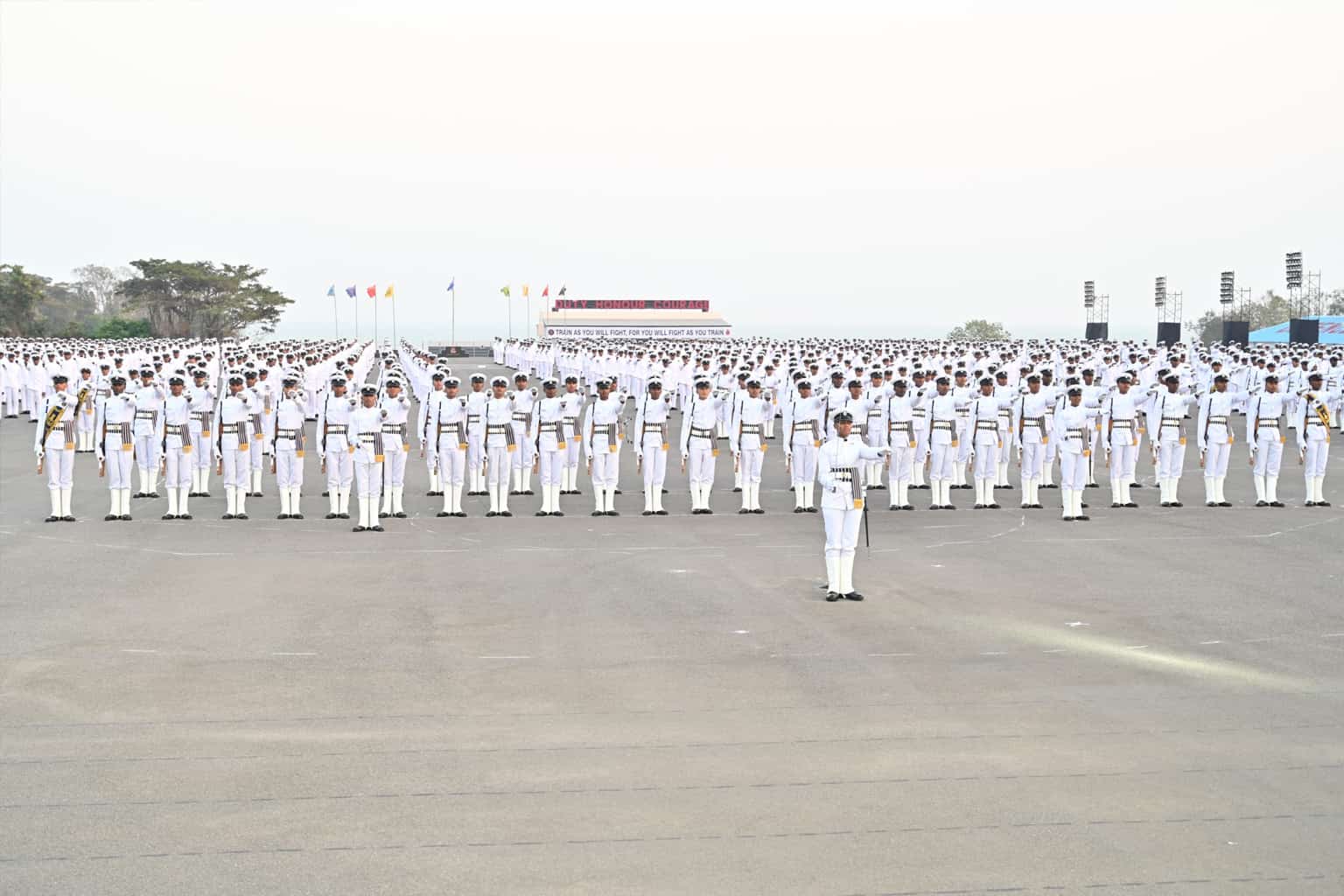
The Passing Out Parade of the 01/26 batch of trainees at INS Chilka is scheduled to be held on 12 June 2026. According to the official Ministry of Defence release, the parade marks the successful completion of 16 weeks of rigorous ab-initio training by the eighth batch of Agniveers of the Indian Navy and Naviks of the Indian Coast Guard.

This update may look like a simple parade announcement, but for defence aspirants, families and young recruits, it carries a deeper meaning.
It shows the first transformation point in the life of a sea warrior.
Why this passing out parade is important?
Every military journey has stages.
The first stage is selection. The second is training. The third is professional specialisation. The fourth is actual service in units, ships, establishments and operational roles.
The Passing Out Parade at INS Chilka stands at the crossing point between basic training and the next professional phase.
For the trainees, this is the moment when they move from being raw recruits to disciplined young personnel ready for further specialised training. For families, it is the first public proof that their son or daughter has survived the pressure of military training and earned the pride of standing on parade.
The official release says the POP marks a key milestone in their transformation into disciplined, resilient and professionally competent sea warriors. This is important because military training is not only about learning instructions. It is about changing habits, building confidence and developing mental toughness.
What happens after 16 weeks of training?
The 16 weeks of ab-initio training at INS Chilka are meant to build the foundation.
At this stage, trainees learn discipline, physical endurance, drill, academics, outdoor training, service values and the basic conduct expected from a naval or Coast Guard professional.
But this is not the end of their journey.
After the Passing Out Parade, the trainees will proceed for specialised professional training at various Naval establishments and for afloat attachments onboard frontline warships of the Indian Navy and Indian Coast Guard.
This is the real next step.
A recruit who learns discipline at the training establishment must now learn professional skills in a more specialised environment. The sea, shipboard routine, technical branches, operational drills and service-specific duties will demand another level of maturity.
This is why the POP should not be seen as the final destination. It is the doorway to a more serious phase.
Why INS Chilka matters in naval training?
INS Chilka has an important role in shaping young recruits for the Indian Navy and related maritime service responsibilities.
The official release describes training as the bedrock of a professional fighting force. That line is important because no modern armed force can depend only on equipment. Ships, aircraft, weapons and sensors matter, but trained personnel remain the real strength of the service.
A disciplined recruit can become a reliable sailor.
A confident trainee can become a dependable team member onboard ship.
A physically tough young person can handle difficult service conditions.
A person trained in duty, honour and courage can carry the values of the service into future appointments.
That is why training establishments like INS Chilka matter. They do not only teach routine. They build the human foundation of the force.
What does this mean for defence aspirants?
For defence aspirants, this update is a reminder that selection is only the beginning.
Many young candidates focus only on joining. They think about the form, exam, physical test, medical test and final merit. But military life begins after selection. Training is where the real test starts.
Agniveers and Naviks who stand in the passing out parade have already gone through weeks of structured training. They have had to adjust to military discipline, controlled routine, physical demands, instructions, teamwork and service culture.
For aspirants watching from outside, the message is clear.
Prepare not only to clear the recruitment process. Prepare to live the discipline that comes after selection.

Why families should understand this moment?
The family of a trainee carries its own emotional journey.
Parents may have watched their child leave home for the first time. They may have worried about training pressure, food, health, adjustment and distance. For many families, the Passing Out Parade becomes a proud and emotional moment because they can see the change with their own eyes.
The young person who left home as a candidate now stands in uniform as a trained military trainee moving towards professional service.
That is why the presence of family members at such events matters. It connects the service, the trainee and the home that supported the journey.
The official release mentions that proud family members, distinguished veterans, eminent sportspersons and other dignitaries will witness the occasion. This makes the parade not only a military event but also a social and emotional milestone.
Why this is relevant for Indian Navy and Coast Guard?
This POP includes Agniveers of the Indian Navy and Naviks of the Indian Coast Guard. That makes the event important for India’s wider maritime security ecosystem.
The Navy and Coast Guard perform different but connected roles in India’s maritime domain. The Navy focuses on naval power, maritime security, sea control, deterrence and operational readiness. The Coast Guard plays a vital role in coastal security, search and rescue, anti-smuggling operations, pollution response and protection of India’s maritime interests.
Both services need disciplined and trained personnel.
The early training foundation helps young recruits understand the seriousness of maritime duty. Life at sea is not easy. It requires teamwork, alertness, technical skill, endurance and discipline. A weak link can affect the whole team.
This is why the early transformation at INS Chilka is important.
Why this should not be written as just a parade story?
A routine article may say that a passing out parade will be held at INS Chilka and mention the chief guest, date and batch.
But that misses the real story.
The real story is about transition.
It is about a young recruit becoming ready for the next phase.
It is about families seeing the first visible result of training.
It is about the Navy and Coast Guard investing in disciplined manpower.
It is about the first professional step towards becoming a sea warrior.
It is about the message to future aspirants: the uniform is earned through discipline, not only desire.
That is the stronger angle for readers.
What will happen during the event?
As per the official release, Vice Admiral Sanjay Vatsayan, Flag Officer Commanding-in-Chief, Western Naval Command, will be the Chief Guest and Reviewing Officer for the parade.
The Chief Guest will also preside over the Valedictory Function and present awards and trophies to meritorious trainees, the Champion Division and the Best Instructor.
The bilingual trainees’ magazine, Ankur, will also be unveiled on the occasion.
These details show that the event is not only ceremonial. It also recognises merit, training excellence, teamwork and instructional quality.
A good training system does not only produce trained recruits. It also celebrates effort, recognises performance and motivates the next batch.
Why live streaming matters?
The official release says the event will be live streamed on the Indian Navy’s official social media platforms.
This is useful for families, aspirants and citizens who cannot physically attend the parade. It also helps build public awareness about naval training and the disciplined journey of young recruits.
For many defence aspirants, watching such ceremonies can be motivating. It gives them a glimpse of what training means beyond written exams and physical tests.
However, viewers should follow only official Indian Navy platforms for the live stream and avoid unofficial links.
What should aspirants learn from this update?
The first lesson is that selection is not the end of hard work.
The second lesson is that basic training builds discipline before specialisation begins.
The third lesson is that a military career requires mental adjustment, not only physical fitness.
The fourth lesson is that family pride comes after the candidate accepts hardship.
The fifth lesson is that the Navy and Coast Guard need young people who are ready for service, not only status.
For aspirants, this passing out parade should be seen as motivation with responsibility.
Final takeaway
The INS Chilka Passing Out Parade of the 01/26 batch is more than a ceremonial event.
It marks the completion of 16 weeks of rigorous basic training by the eighth batch of Indian Navy Agniveers and Indian Coast Guard Naviks. It also marks the beginning of their next professional phase at Naval establishments and onboard frontline warships of the Indian Navy and Indian Coast Guard.
For the trainees, this is a day of pride.
For the families, it is a moment of emotion.
For aspirants, it is a reminder that military life begins after selection.
For the services, it is another step in shaping disciplined, resilient and professionally competent sea warriors.
A parade lasts for a limited time, but the values built during training travel with the trainee for years.
That is why this INS Chilka milestone matters.
Sources:-
PIB official release:
https://www.pib.gov.in/PressReleasePage.aspx?PRID=2269294&lang=1®=3
PIB Ministry of Defence releases page:
https://www.pib.gov.in/newsite/pmreleases.aspx?mincode=33
Indian Navy official website:
https://indiannavy.gov.in/



Leave a Reply