

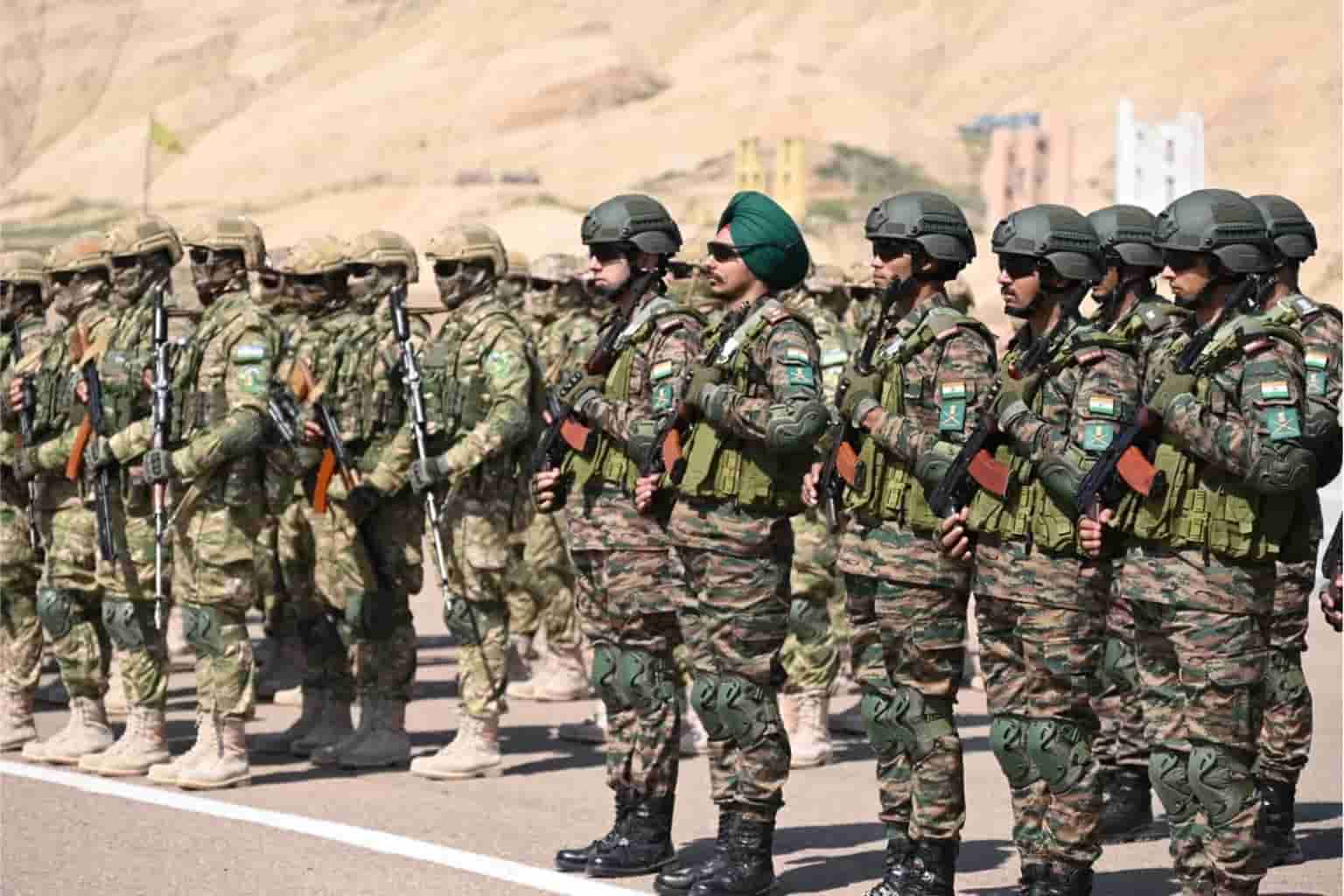
Whenever India faces floods, disaster relief operations, evacuations, law-and-order challenges or national emergencies, the Indian armed forces are among the first institutions people trust. The Army, Navy and Air Force have repeatedly stood with citizens during crises. But a larger question now needs attention: should military manpower, aircraft and equipment be used for routine civil tasks, or only when civilian systems are genuinely overwhelmed?

This question is important because the armed forces are not just another government department. They are the nation’s ultimate shield.
Their primary responsibility is national defence, territorial integrity, war-fighting capability, counter-insurgency and counter-terrorism readiness. Their training, equipment, budget, logistics and manpower are designed first for that mission. Everything else, however important, must be seen in relation to that primary role.
This does not mean the military should not help civil authorities.
In a democracy, the armed forces are under civilian control. The elected government has the authority to task the military when national requirements demand it. The armed forces have historically assisted during floods, earthquakes, pandemics, evacuations, tsunamis, law-and-order challenges and other emergencies.
This is called aid to civil authority.
The principle is not wrong. In genuine emergencies, military assistance can save lives. The armed forces have trained manpower, mobility, discipline, communication systems, engineering capability, medical support, helicopters, transport aircraft and field experience. During a disaster, these capabilities can make the difference between delay and rescue.
The problem begins when aid becomes routine dependency.
There is a difference between helping civil authority and replacing civil authority.
Aid to civil authority means the military steps in when the crisis is beyond normal civilian capacity. Replacement of civil authority means the military is repeatedly used because civilian systems are weak, underprepared or administratively convenient to bypass.
That is where the red line begins.
If military assets are used for a flood rescue, earthquake relief or evacuation of stranded citizens, the purpose is clear. Lives are at risk and time is critical. But if military aircraft or manpower are used for a task that could have been handled by hiring civilian resources, the question becomes different.
Why should a defence aircraft be used where a civilian aircraft could do the job?
Why should trained military manpower be diverted when civilian agencies are capable of arranging the same support?
Why should the armed forces become the first call for administrative convenience?
These questions are not anti-national. They are necessary for national security.
Every aircraft sortie has a cost. Every vehicle movement affects maintenance. Every deployment of soldiers takes time, energy and attention. Every diversion from training affects readiness. Military equipment is not maintained for casual use. It is maintained so that when the nation faces a real security challenge, the force can respond without delay.
Combat readiness is not automatic. It is built every day through training, maintenance, rehearsal, rest cycles, logistics and discipline.
That is why military readiness must be protected.
The strength of the armed forces rests on five pillars.
The first pillar is war-fighting capability. The military exists first to deter and win wars. This must remain the central purpose.
The second pillar is readiness and training. Soldiers, sailors and air warriors must remain prepared for war, counter-insurgency, counter-terrorism and national security roles. Readiness needs constant preparation.

The third pillar is morale and esprit de corps. Personnel must feel that their sacrifice serves national security and not routine administrative convenience.
The fourth pillar is professional autonomy. The armed forces must remain above partisan politics and day-to-day administrative use. Their professional focus should not be diluted.
The fifth pillar is public trust and prestige. The Indian armed forces are seen as the people’s ultimate shield. That prestige must be preserved carefully.
When military assets are repeatedly used for non-military tasks, all five pillars can be affected.
At first, the public may praise the armed forces for solving the problem. But over time, another question begins to appear: why are normal civilian systems not working? If every difficult task goes to the military, what happens to accountability in civil administration? What happens to the capacity of disaster response agencies, transport systems, state institutions and local departments?
A strong nation does not prove its strength by using the military for every problem. It proves its strength by building civilian institutions strong enough that the military is called only when the nation truly needs its ultimate shield.
This is the real policy issue.
The military should remain a strategic reserve of national power. It should not become the routine solution to administrative shortcomings.
There is no doubt that the armed forces will never step back when lives are at risk. That is their character. They will come during floods. They will rescue during landslides. They will evacuate citizens from danger zones. They will support the country during national emergencies.
But the same respect for the armed forces also demands restraint from the system.
Civil agencies must be strengthened. Disaster response mechanisms must be prepared. State institutions must maintain their own capacity. Essential services must have backup plans. If transport is needed for routine non-military work, civilian options should be explored first.
The armed forces should not be treated as a convenient administrative tool.
This is not about refusing help. It is about using help wisely.
The distinction is simple.
When civilian capacity is overwhelmed, call the military.
When civilian alternatives exist, use them first.
When lives are at immediate risk, military assistance is justified.
When the task is routine, administrative or avoidable, the military should not become the default option.
This balance is important for another reason: morale.
Soldiers and airmen understand sacrifice. They accept hardship when it is linked to national security or saving lives. But if they repeatedly see military resources used for tasks that civilian agencies could handle, it can send the wrong signal. It may create the impression that military readiness is being taken for granted.
Respect for the armed forces is not shown only through praise, slogans or ceremonial honour. It is also shown by protecting their time, equipment, training and professional purpose.
A serious country must know the value of its military.
The armed forces can do almost anything when asked. That is their strength. But the more important question is: what should they be asked to do?
That question requires maturity.
Aid to civil authority must remain available. It is an essential part of national resilience. But it must not become replacement of civil authority. The military should remain ready for the gravest tasks of the nation, not routine tasks that exist because other systems have not been strengthened.
The final message is clear.
The armed forces are the nation’s shield. They must help during real crises, but their core purpose is combat readiness. If military manpower, aircraft and equipment are repeatedly used for routine civil tasks, it can affect readiness, morale, accountability and the strength of civilian institutions.
A strong India needs strong armed forces. It also needs strong civilian systems.
The right balance is not to keep the military away from citizens. The right balance is to call the military when the country truly needs military capability, and to build civilian institutions strong enough to handle everything else.
That is how a nation respects its armed forces.
Not only by applauding them when they help, but by preserving them for the mission for which they exist: defending the country, deterring threats and winning wars when required.
Sources:-
Ministry of Defence Annual Report 2024-25:
https://mod.gov.in/sites/default/files/Annual-Report-of-MoD-2024-25.pdf
NDMA HADR Guidelines, October 2024:
https://ndma.gov.in/sites/default/files/PDF/Guidelines/HADR_Guideline_Oct_2024.pdf
PIB: Indian Armed Forces in Humanitarian Assistance and Disaster Relief:
https://www.pib.gov.in/PressReleasePage.aspx?PRID=2228319&lang=1®=3
PIB: Ministry of Defence Year End Review 2023, HADR operations:
https://www.pib.gov.in/PressReleaseIframePage.aspx?PRID=1989502&lang=2®=3



Leave a Reply