

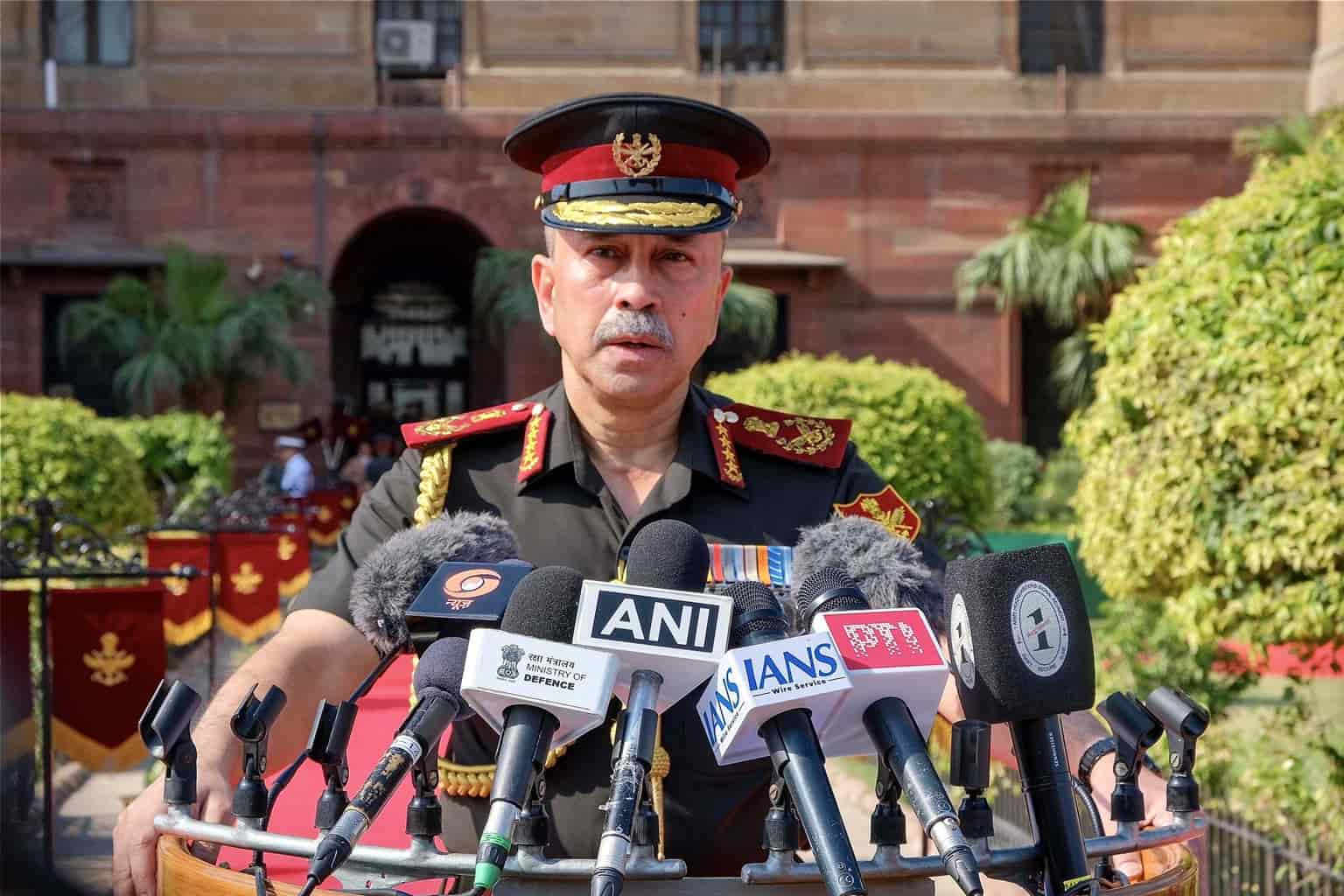
When a new Chief of Defence Staff takes charge, it is not just a change of nameplate outside an office in New Delhi.

It is a signal.
A signal about the direction in which India’s armed forces may move. A signal about how the Army, Navy and Air Force will work together. A signal about the reforms that may shape future wars, future training, future technology and the future of India’s military leadership.
General NS Raja Subramani has now assumed charge as India’s Chief of Defence Staff and Secretary, Department of Military Affairs. He succeeds General Anil Chauhan, who completed his tenure after leading the office through an important phase of military integration and reform.
For the ordinary citizen, this may look like a routine appointment. But for soldiers, veterans, defence watchers, aspirants and families connected with the armed forces, this is a major development.
Because the post of Chief of Defence Staff is not a ceremonial position. It sits at the centre of India’s attempt to bring the three services closer, reduce duplication, improve joint planning and prepare the armed forces for modern warfare.
The story is not only that General Subramani has taken charge.
The bigger story is what lies ahead.
Why the CDS post matters?
India created the CDS post to improve coordination between the Army, Navy and Air Force. In a modern battlefield, no service fights alone. Air power, land forces, naval assets, cyber systems, drones, space-based surveillance, missiles, logistics and intelligence all have to work together.
This is why jointness has become such an important word in India’s defence conversation.
For decades, each service built its own systems, doctrines and structures. That was natural to some extent because the Army, Navy and Air Force have different operational roles. But future conflict will not wait for separate files, separate commands and separate thinking.
A missile threat may come from one direction. A drone swarm may come from another. A cyberattack may begin before the first bullet is fired. A naval challenge may have land and air consequences. A border crisis may require all three services to respond together.
This is where the CDS becomes important.
The CDS is expected to help the armed forces think as one integrated force, not as three separate silos.
The timing of this appointment is important
General NS Raja Subramani has taken charge at a time when India is pushing military transformation, indigenous defence capability and deeper tri-service integration.
This timing matters.
The armed forces are looking at theatre commands, modernisation of weapons, use of artificial intelligence, drones, cyber capabilities, space support, indigenous systems and faster decision-making. These are not small administrative changes. These are structural reforms that can influence India’s military preparedness for decades.
That is why the new CDS will have to balance many difficult priorities.
He has to protect continuity from the previous leadership, while also giving fresh direction. He has to push reforms, while respecting service-specific strengths. He has to encourage innovation, while keeping operational readiness at the centre. He has to look at future technology, while never forgetting the soldier standing at the post.
This balance will define the seriousness of the role.
From command experience to national security role
General Subramani brings long military experience to the office. Before this appointment, he had served in important leadership roles including Vice Chief of Army Staff, General Officer Commanding-in-Chief of Central Command and Military Adviser at the National Security Council Secretariat.
This background matters because the CDS must understand both operational military realities and national-level security planning.
A commander who has seen field formations understands the pressure on units. A senior officer who has worked at national security levels understands policy, coordination and long-term planning. The CDS office needs both types of understanding.
This is why his appointment will be closely watched by those who follow military reforms.

Jointness, atmanirbharta and innovation
In his first message after taking charge, General Subramani placed focus on jointness, Atmanirbharta and innovation. These three words are now central to India’s defence thinking.
Jointness means the Army, Navy and Air Force must work more closely in planning, training, logistics and operations.
Atmanirbharta means India must reduce dependence on foreign defence systems wherever possible and build stronger indigenous capability.
Innovation means the armed forces must not remain stuck in old patterns when warfare itself is changing rapidly.
These three ideas are connected.
If India wants joint commands, those commands need modern systems. If India wants modern systems, industry, startups, academia and research institutions must become part of the defence ecosystem. If India wants indigenous capability, the armed forces must clearly communicate what they need from Indian industry.
This is not only about buying equipment.
It is about building a defence ecosystem where soldiers, commanders, scientists, engineers and private industry work with a common purpose.
Why theatre commands will remain the biggest test?
One of the biggest reform challenges before India’s defence leadership is theatreisation.
Theatre commands aim to bring assets of different services under integrated structures based on operational requirements. In simple words, instead of thinking separately as Army command, Air Force command or Navy command, the idea is to create joint commands that can respond better to a specific theatre or region.
But this is not easy.
Every service has its own culture, doctrine, command structure and operational concerns. The Air Force thinks differently from the Army. The Navy has a different maritime vision. The Army has massive land responsibilities. Bringing these together requires patience, trust and clarity.
This is why the CDS role becomes sensitive.
The CDS cannot simply push reform on paper. He has to build confidence among the services. He has to ensure that integration does not weaken any service’s core capability. He has to make sure jointness improves combat effectiveness, not just administrative structure.
That is the real challenge.
What this means for soldiers?
For a soldier posted in a difficult area, military reform may sound like a big Delhi word. But eventually, reforms matter only if they improve ground reality.
Will the soldier get better equipment?
Will logistics become smoother?
Will communication between services improve?
Will air support, surveillance and operational coordination become faster?
Will indigenous technology reach the field in a practical form?
Will training become more realistic?
These are the questions that matter.
A reform is meaningful only when it strengthens the man or woman in uniform.
This is why the new CDS’s focus on training and welfare is important. Military modernisation cannot be only about platforms, missiles and technology. It must also be about people.
Soldiers, sailors and air warriors are the core of the armed forces. Their training, morale, family welfare and operational confidence remain central to national security.
Why veterans and veer naris are also part of this story?
For Sainik Welfare News readers, one important point is that this story is not only for serving personnel.
The public broadcaster’s report highlighted that the new CDS also referred to the welfare of veterans and Veer Naris. This matters because the military family does not end at retirement. A soldier’s service continues to shape the life of his family long after uniformed service is over.
Veterans carry operational experience, institutional memory and national service. Veer Naris carry sacrifice that the nation must never forget. Their welfare cannot be treated as a side issue.
It is important to be clear here. This appointment does not mean an immediate pension change, OROP update, ECHS reform or new welfare order. No such direct announcement should be assumed.
But when the CDS speaks of welfare, it shows that the human side of military service remains part of the larger defence conversation.
That is important.
Why defence aspirants should study this appointment?
Defence aspirants often focus on ranks, uniforms, SSB, written exams and motivation. But they should also understand how India’s military leadership works.
The CDS is one of the most important appointments in India’s national security structure. Understanding this role helps aspirants understand modern defence thinking.
Future officers will not serve in an old battlefield. They will operate in an environment shaped by drones, cyber warfare, surveillance, precision weapons, artificial intelligence, electronic warfare and joint operations.
This means future officers must be adaptable. They must understand technology. They must respect inter-service coordination. They must think beyond one branch, one regiment or one platform.
General Subramani’s appointment comes at a time when this wider thinking is becoming necessary.
The reform journey will not be simple
It is easy to write big words like transformation, integration and modernisation. It is difficult to implement them inside a large military system.
Reforms in the armed forces require clarity, discipline and consensus. They also require time. The CDS will have to deal with operational realities, budget priorities, service concerns, procurement timelines and changing threats.
There will be expectations from many sides.
Some will expect faster theatre commands. Some will expect quicker indigenous procurement. Some will expect stronger tri-service training. Some will expect more focus on technology. Some will expect welfare to remain central.
The challenge is to move forward without creating confusion.
That is why this appointment should be seen with seriousness, not hype.
What should not be misunderstood?
This is not a salary announcement.
This is not a pension revision order.
This is not an OROP update.
This is not a direct ex-servicemen benefit notification.
This is a national defence leadership update.
Its importance lies in military reform, jointness, modernisation, Atmanirbharta, innovation, operational readiness and welfare focus.
For employees, pensioners, veterans and defence families, it is important to understand the difference between leadership news and welfare policy news. Both are important, but they are not the same.
The real takeaway
General NS Raja Subramani taking charge as Chief of Defence Staff is a major moment in India’s defence leadership.
The appointment comes at a time when India is trying to prepare its armed forces for a more complex future. The challenges are not limited to borders. They include technology, cyber threats, drones, maritime security, air defence, intelligence, logistics and joint operations.
The CDS will be expected to help the three services move with greater unity and sharper focus.
For soldiers, this should mean better coordination and preparedness.
For veterans and defence families, the mention of welfare is important, but expectations must remain linked to official policy decisions.
For defence aspirants, this is a chance to understand how modern military leadership is changing.
And for citizens, the message is simple: India’s armed forces are entering another important phase of transformation, and the new CDS will have a key role in shaping that journey.
The uniform may remain the same. The salute may look the same. The ceremony may appear familiar.
But behind that moment of taking charge lies a much bigger question.
How will India prepare its military for the next battlefield?
That is why this appointment matters.
Sources:-
PIB, Ministry of Defence:
https://www.pib.gov.in/PressReleasePage.aspx?PRID=2259242&lang=1®=3
News On AIR / Akashvani:
https://newsonair.gov.in/general-n-s-raja-subramani-assumes-charge-as-the-countrys-new-cds/


Leave a Reply