

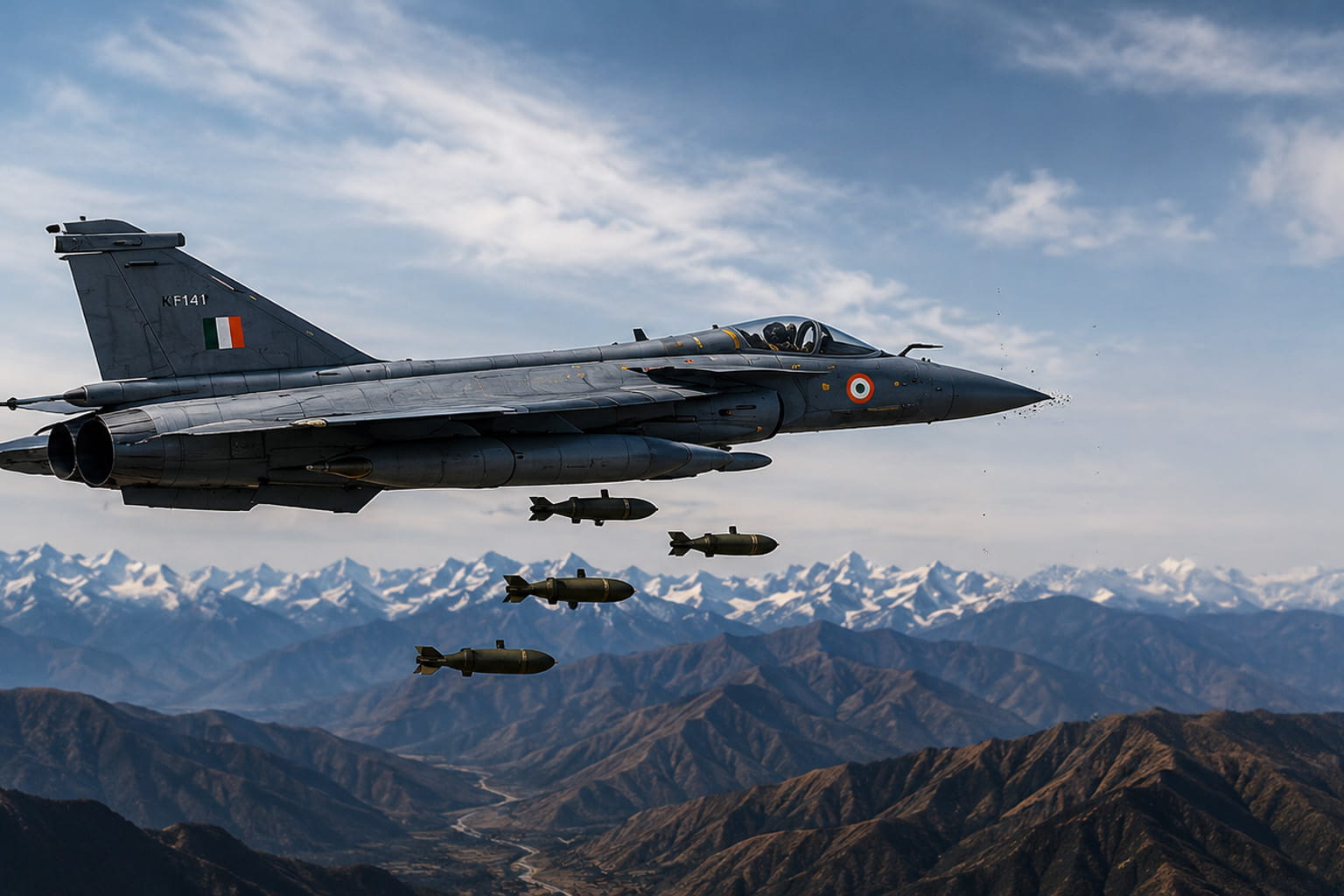
Modern warfare is changing faster than most people realise. A war is no longer fought only by fighter aircraft, tanks, artillery guns or infantry columns. It is also shaped by drones, missiles, satellites, cyber systems, artificial intelligence, real-time intelligence and political decision-making. In such an environment, the biggest question for any country is simple: can its military thinking keep pace with the speed of change?
This question becomes even more important when it comes from someone who has seen the Indian Air Force from the cockpit to the highest levels of command.
In this Sainik Welfare News podcast, former Vice Chief of the Air Staff Air Marshal Anil Khosla (Retd) shares lessons from nearly four decades in uniform. PIB records that Air Marshal Khosla retired as Vice Chief of the Air Staff on 30 April 2019 after an illustrious career spanning four decades. He was commissioned into the fighter stream of the Indian Air Force and has flown aircraft including the Jaguar, MiG-21 and Kiran.
That background matters because air power is not just about aircraft. It is about timing, judgement, deterrence, coordination and the ability to strike with precision when the nation needs it most.
One of the most important parts of the conversation is the difference between cockpit decisions and command decisions. A fighter pilot makes decisions in seconds. The wrong choice can cost a mission, an aircraft or a life. But at senior command level, the decisions are broader. They affect formations, bases, operations, diplomacy, escalation control and national security.
This is where Air Marshal Khosla’s experience becomes useful for a wider audience. Leadership in the military is not only about bravery. It is about clarity under pressure. A young officer must act fast, but a senior commander must think deep, plan ahead and understand consequences beyond the immediate moment.
The podcast also looks at maritime air power, an area that many common viewers do not discuss enough. India’s security is not limited to land borders. The Indian Ocean Region is central to trade, energy routes and strategic competition. Aircraft, surveillance systems and maritime strike capabilities play a major role in watching, protecting and influencing this vast space. Air Marshal Khosla’s background includes maritime air operations, which makes this part of the discussion especially relevant.
For most Indians, however, the most emotionally powerful part of the conversation is Balakot.
The Balakot air strike was not only a military action. It was a strategic signal. After the Pulwama terror attack on 14 February 2019, India announced that it had conducted a strike on a Jaish-e-Mohammad training camp at Balakot on 26 February 2019. The Ministry of External Affairs described it as a “non-military pre-emptive action” directed at a terrorist training camp, not at Pakistan’s military or civilians.
That language is important. It showed that India wanted to send a message against terrorism while also controlling escalation. Balakot therefore changed the public debate. It showed that India was willing to cross older psychological barriers in response to terror infrastructure, while still presenting the action as calibrated and limited.
In the podcast, the larger lesson from Balakot is that national security messaging matters. Modern military action is not only about what is hit. It is also about what message is sent, how the adversary reads it, how the international community interprets it and how escalation is managed afterwards.
This is why the discussion on nuclear saber-rattling is important. For years, Pakistan-backed proxy terrorism has often operated under the shadow of nuclear threats. The question is whether nuclear weapons can be used as a shield for terrorism. Balakot pushed back against that idea by showing that a country can respond to terror infrastructure in a calibrated way.
The conversation then moves toward Operation Sindoor and the future of warfare. Even without going into unnecessary sensationalism, the idea is clear: warfare is becoming more precision-driven. Drones, missiles, standoff weapons and real-time targeting are changing the way militaries think. A commander today must not only understand aircraft, but also unmanned systems, cyber vulnerabilities, satellite support, electronic warfare and information dominance.

This is why the question “is the fighter era ending?” is so important. The simple answer is no, but the role of fighters is changing. Fighters are no longer operating alone. They are part of a larger network that includes drones, missiles, air defence systems, sensors, command networks, satellites and cyber systems. Future air warfare will not be aircraft-centric in the old sense. It will be effect-centric. The question will not only be which platform flies, but what result it delivers.
That is why missiles and drones have become such a major part of the defence debate. Drones can observe, track, confuse and strike. Missiles can hit from distance. AI can help process information faster. Cyber and space systems can support or disrupt the battlefield. But despite all this technology, human judgement remains central. Machines may assist, but commanders still decide.
The podcast also covers jointness and theatre commands. This is one of the most important defence reform debates in India. The Army, Navy and Air Force must work together, but integration cannot be copied blindly from another country. India’s geography, threats, borders, coastline, airspace and political conditions are unique. The question is not whether jointness is needed. It clearly is. The real question is what model of jointness best suits India.
Air Marshal Khosla’s perspective matters here because air power must not be reduced to a supporting arm. Air power has speed, reach and flexibility. It can influence land battles, maritime security, deterrence and strategic signalling. Any future command structure must preserve this flexibility while improving coordination between the three services.
For defence aspirants, the most useful part of the podcast may be the leadership message. A successful military leader needs courage, but courage alone is not enough. He needs discipline, patience, professional knowledge, tolerance, emotional control and the ability to learn continuously. The future officer must be physically fit, mentally sharp and technologically aware.
This is a major message for young viewers. Motivation may bring someone to the gate of the armed forces, but only preparation, character and resilience can carry them forward. In future wars, officers will not only command men. They will also command information, technology, machines and time-sensitive decisions.
The human side of the podcast also matters. Discussions on family, balance and hobbies remind viewers that military life is not only about operations. Behind every senior officer is a long journey of sacrifice, responsibility and personal discipline. The uniform demands much more than public recognition.
For Sainik Welfare News readers, this episode is valuable because it connects past, present and future. It begins with the journey of a fighter pilot, moves through Balakot and Doklam-era strategic thinking, and then looks ahead to drones, missiles, AI, cyber, space and theatre commands.
The biggest takeaway is clear: India’s future security will depend not only on weapons, but on the quality of thinking behind those weapons. Aircraft, drones and missiles can provide capability, but leadership gives them purpose. Technology can increase reach, but judgement prevents misuse. Precision weapons can hit targets, but strategic clarity decides when and why they should be used.
That is why this conversation with Air Marshal Anil Khosla matters. It is not just a discussion about Balakot, aircraft or air strikes. It is a discussion about how India must think, prepare and lead in the next era of warfare.


Leave a Reply