

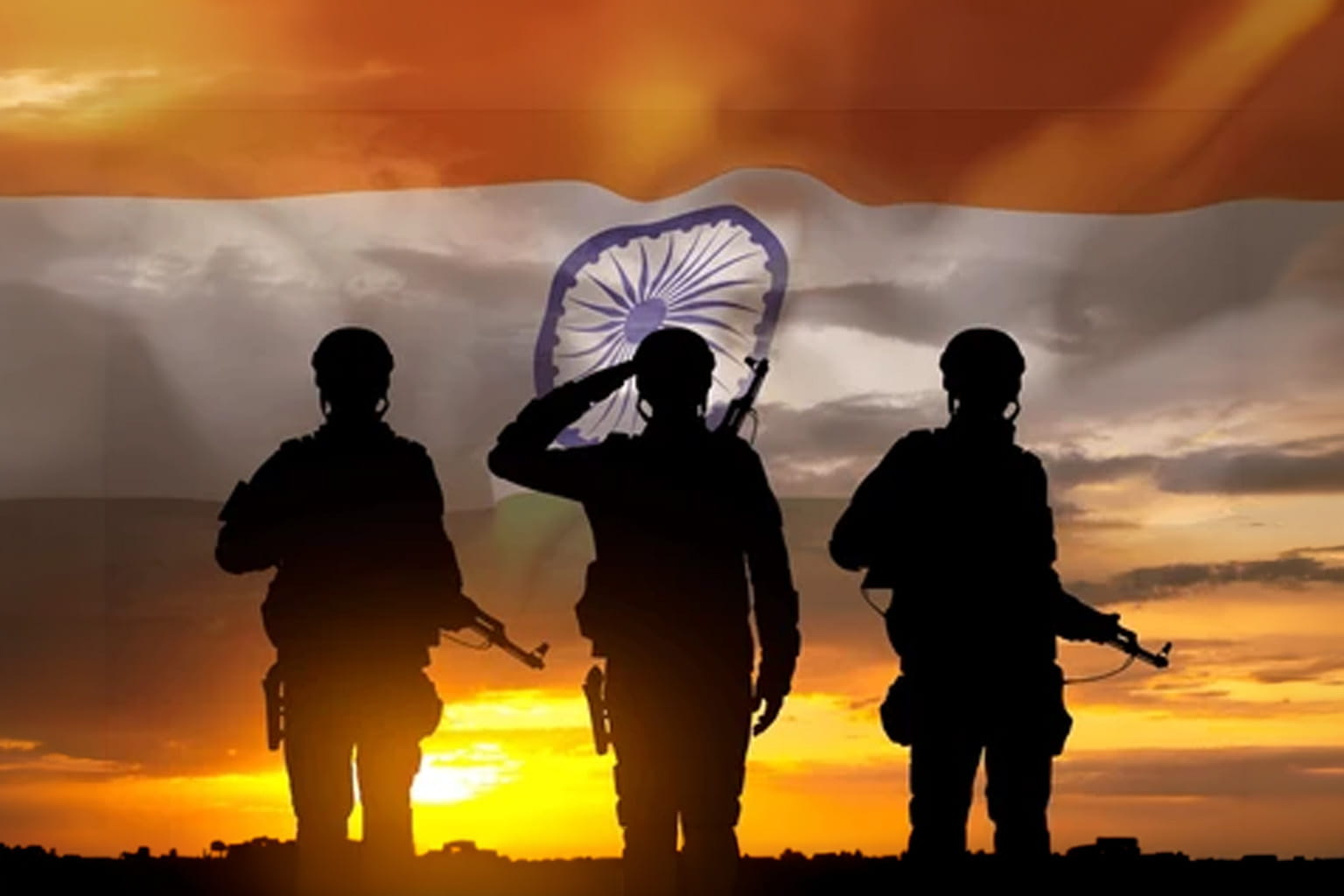
War is often imagined from a distance. For civilians, it may appear as a story of victory, bravery, medals and national pride. But for the soldier who has stood close to the battlefield, war is not a sports match where one side wins and the other loses. War has a cost. Blood is shed. Lives are lost. Families are changed forever. And those who return from the battlefield carry lessons that go far beyond military service.
This is the deeper message that comes through in the discussion around Lt Col Manoj Kumar Sinha, an Indian Army veteran, gallantry award recipient and speaker on discipline, leadership and national responsibility. His perspective is not based on empty motivation. It comes from the hard reality of uniform, operations, responsibility and service.
The biggest lesson is that freedom and discipline are not enemies. Many people today see discipline as restriction and freedom as doing whatever one wants. But in real life, freedom survives only when people understand responsibility. A family, an institution, a team, an Army unit and a nation cannot run only on individual choices. They need role clarity, sacrifice and respect for systems.
This is where the military mindset offers a powerful lesson to society. In the Army, every person has a role. A soldier, a commander, a medical attendant, a cook, a driver, a clerk, a technician and a doctor all contribute to the mission. No role is small when the mission is important. The success of the whole system depends on whether each person performs his duty with sincerity.
Lt Col Sinha’s team-sport analogy explains this clearly. A player may be talented, but he cannot play only for his own ego. The captain selects a player because the team needs a particular role to be performed. If every player decides to play only according to personal mood, the team collapses. The same applies to society. Talent without discipline becomes selfishness. Freedom without responsibility becomes disorder.
This message is especially important in today’s “I, me, myself” culture. People often speak strongly about rights, opinions and identity, but many forget contribution, duty and accountability. Having an opinion is not wrong. In a democracy, opinions are natural and necessary. But opinion becomes ego when a person refuses to respect facts, systems and responsibility.
The Army teaches a different way. It teaches that the mission is bigger than the individual. It teaches that the team must come before ego. It teaches that duty does not wait for comfort. This is why military discipline is not just about obeying orders. It is about understanding that the nation, the unit and the task are larger than personal convenience.
Another important issue raised in the description is the question of role models. Every society is shaped by the people it celebrates. If society celebrates only money, fame, glamour and viral popularity, then the next generation will naturally chase shortcuts. But if society celebrates courage, knowledge, service, sacrifice and character, then young people will look for deeper meaning in life.
Earlier generations grew up hearing stories of warriors, saints, scholars, reformers, disciplined leaders and value-driven personalities. These stories were not just entertainment. They were moral training. They taught young minds what was worth respecting. Today, many young people are surrounded by noise, trends and shallow success stories. This is why stronger role models are needed.
A soldier can be one such role model, not because he wears a uniform, but because his life demands discipline, sacrifice and responsibility. A soldier cannot abandon duty because he is tired. He cannot walk away because conditions are hard. He cannot put personal comfort above national security. This mindset has value far beyond the battlefield.
The discussion also highlights a very important point for serving soldiers and veterans: institutions must not be damaged casually on public platforms. This does not mean problems should be hidden. Every system has issues, and soldiers also have genuine grievances. But the method matters. A disciplined system provides channels: chain of command, official grievance mechanisms, documentation, legal routes and courts where required.

Noise may create attention, but it does not always create solutions. Constructive criticism is different from public damage. A responsible soldier or veteran raises issues with facts, records and discipline. This protects both the individual and the institution. The Army’s dignity is not separate from the soldier’s dignity. Both are connected.
At the same time, institutions must also remain sensitive. If soldiers are advised to use proper channels, then those channels must be responsive, fair and timely. A grievance system works only when people trust it. Discipline should not become silence, and freedom should not become chaos. The balance lies in responsible expression and accountable institutions.
One of the most powerful parts of the description is the comparison between military life and civilian life. Many soldiers may not fully realise the value of the security net available to them during service: salary, ration support, medical facilities, family welfare systems, accommodation structures, canteen benefits and pension. These benefits are not small. In the civilian world, many people struggle without such stability.
But this does not reduce the hardship of military service. A soldier earns these benefits through risk, discipline, difficult postings, family separation and readiness for sacrifice. The point is not that soldiers should stop asking for improvements. The point is that they should value what exists, use it responsibly and prepare intelligently for life after retirement.
Post-retirement contribution is another important lesson. A soldier’s service to society does not end when he removes the uniform. Veterans carry discipline, leadership, punctuality, crisis-handling ability and team spirit. These qualities can help them build businesses, guide youth, manage institutions, support communities and strengthen civil society. A veteran who serves society after retirement becomes a bridge between military values and civilian life.
The hospital experience mentioned in the description also adds a human layer. Sometimes the hardest duty is not always on the battlefield. For a leader, making decisions that affect people’s livelihoods, careers and families can also become emotionally difficult. This reminds us that leadership is not only about command. It is also about responsibility, empathy and carrying the weight of difficult choices.
The larger message of this discussion is clear: the nation does not survive only because of soldiers at the border. It survives when citizens also understand duty. A country needs disciplined soldiers, honest officials, responsible doctors, committed teachers, hardworking workers, respectful youth, fair institutions and families that teach values.
War quickly breaks illusions. On the battlefield, there is no space for ego, fashion, online arguments or shallow identity battles. There is only duty, fear, courage, teamwork and survival. That is why lessons from war must not remain limited to soldiers. They must guide society too.
Lt Col Manoj Kumar Sinha’s message should be understood as a call for maturity. Freedom is precious, but it must be protected by responsibility. Opinions matter, but truth matters more. Rights are important, but duty gives them meaning. Institutions must be questioned when needed, but not destroyed carelessly. Role models must inspire character, not just popularity.
In the end, the real cost of freedom is paid by those who stand ready when others sleep in peace. A soldier knows this cost. A veteran carries this cost in memory. Society must honour that experience not only with applause, but by learning from it.
Discipline is not weakness. Duty is not outdated. Sacrifice is not a slogan. These are the values that keep a nation strong. And when a soldier speaks from the reality of war, society should listen with seriousness, respect and humility.


Leave a Reply