

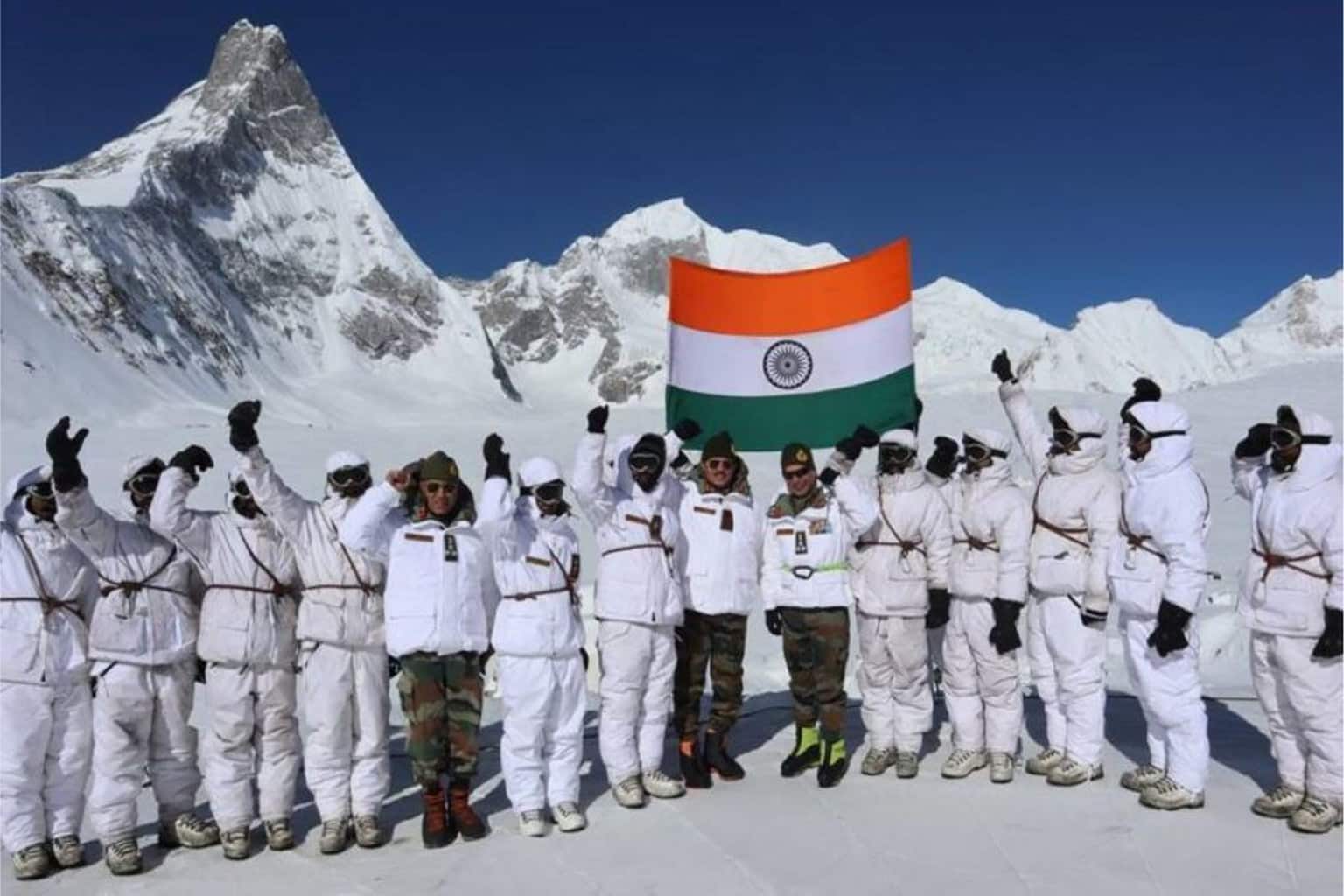
Most civilians see the armed forces from the outside. They see uniforms, medals, weapons, parades and headlines. But behind every uniform, there is a very different duty profile, training system and operational pressure. This is why the difference between an NSG Black Cat commando and a regular Army soldier is often misunderstood.
An NSG commando and an Army soldier are both warriors. Both serve the nation. Both need courage, discipline, physical fitness and mental strength. But their roles are not the same. One is trained for specialised counter-terror and high-risk intervention missions. The other carries the wider responsibility of military service across borders, field areas, high-altitude posts, operational sectors and long-duration deployments.
The NSG, popularly known as the Black Cat commandos, is a specialised counter-terror force. Its role is not routine military deployment. It is called for situations where precision, speed and controlled aggression are required. These include hostage rescue, anti-hijack operations, counter-terror response and close-quarter battle situations. In such missions, even a few seconds can decide life and death.
A regular Army soldier serves in a much broader environment. He may be posted at the Line of Control, in high-altitude areas, in deserts, jungles, counter-insurgency zones, peace stations, logistics units or operational formations. His duty may not always look dramatic, but it is continuous. He lives with uncertainty, weather pressure, operational risk, family separation and the discipline of military life every day.
This is the first major difference. An NSG commando is prepared for short, intense, highly specialised missions. An Army soldier is prepared for sustained military duty in different terrains and conditions. The commando may face extreme danger in a sudden operation. The soldier may face danger in a slow, continuous and exhausting form.
The NSG selection process is also extremely demanding. Personnel are usually selected from the armed forces and central armed police forces on deputation. The selection is not only about physical strength. It tests alertness, reaction, courage, decision-making, discipline and the ability to handle pressure without panic. Not everyone who is fit can become an NSG commando.
The training is designed to break hesitation. Close-quarter battle training requires a different mindset. A commando has to enter confined spaces, clear rooms, identify threats, protect hostages, move with the team, use weapons with accuracy and remain calm when the situation is changing every second. There is no space for confusion. There is no time for slow thinking. The mind and body must work together.
The 90-day NSG course is often discussed because of its intensity. But the real point is not just duration. The real point is the nature of training. Obstacle courses, firing drills, time-bound movement, room intervention, simulated hostile situations and mental pressure are designed to create a fighter who can act under extreme stress. Injuries, fatigue and dropouts are part of this kind of training because the standard is high.
For an Army soldier, training begins differently but is equally serious in its own context. A soldier is trained to survive, fight, move, obey orders, operate in a unit, handle weapons, adjust to terrain and maintain discipline under pressure. He may not be trained for every NSG-style operation, but he is trained for battlefield endurance, field craft, weapon handling, teamwork and long-term operational reliability.
This is why it is wrong to compare the two with a “who is tougher” mindset. Toughness has different forms. In a building intervention, the NSG commando needs split-second precision. In Siachen, the soldier needs the ability to survive weeks and months in conditions that challenge the human body every hour. Both are tough. Both are different.

Siachen is one of the harshest examples of regular soldiering. At extreme altitude, the enemy is not the only threat. The weather itself becomes a threat. Oxygen is low, temperature can become life-threatening, movement becomes difficult, and even a small mistake can turn dangerous. Frostbite, acute mountain sickness, high-altitude pulmonary edema and high-altitude cerebral edema are real risks.
For civilians, cold weather means discomfort. For soldiers in Siachen, cold weather can become a daily battle for survival. A simple task can take far more energy. Carrying equipment, maintaining posts, moving across snow, watching for avalanches, preserving communication and staying mentally stable in isolation are all part of the duty. This is not cinematic soldiering. This is endurance.
The Kargil and Ladakh sectors also show how terrain shapes military life. Mountains do not forgive carelessness. Weather, height, distance, snow, wind and limited movement affect every decision. Soldiers in such areas learn lessons that cannot be taught fully in classrooms. Terrain teaches discipline. Loss teaches seriousness. Survival teaches humility.
Another part that civilians rarely understand is the emotional pressure of losing a buddy. In military life, grief and duty often stand together. If a soldier is lost during an operation or due to terrain conditions, the unit still has to continue the task. The mission cannot always stop. The area has to be secured. Others have to be protected. Orders have to be followed.
This does not mean soldiers do not feel pain. They feel it deeply. But training and leadership teach them how to carry pain without breaking the mission. This is one of the hardest truths of military life. The uniform gives strength, but it does not remove emotion.
The NSG commando also carries a different kind of emotional burden. In counter-terror operations, civilians may be trapped, hostages may be present, the enemy may be hidden, and the environment may be crowded or unclear. The commando has to act fast but carefully. He has to neutralise the threat without unnecessary damage. Such operations demand courage with control.
The Balidan badge and similar earned symbols matter because they represent this journey. They are not ordinary decorations. They carry the weight of selection, training, risk and identity. For the man wearing it, the badge is a reminder of the standard he must live up to every day.
Post-retirement life also deserves attention. A soldier’s discipline does not end with service. Many veterans use their military training to build businesses, lead teams, manage security, train youth and contribute to society. Punctuality, responsibility, courage, crisis management and loyalty become strengths in civilian life. Veterans often prove that military discipline can become a career advantage after retirement.
The Agniveer discussion adds a modern policy dimension to this larger issue. The aim of a younger force profile, better trainability and improved manpower balance may have operational logic. But any military reform must also answer the family’s question: what happens in case of martyrdom, disability or long-term injury? A soldier joins with courage, but his family also needs assurance.
This is why future reforms must combine operational efficiency with welfare protection. A young soldier must know that the nation values his service not only during training or deployment, but also when life takes a difficult turn. Martyr families, disabled soldiers and retired personnel must receive clarity, dignity and timely support.
In the end, the difference between an NSG commando and a regular Army soldier is not about superiority. It is about role. The NSG commando is a specialist for high-risk counter-terror missions. The Army soldier is the backbone of sustained national defence across difficult borders, terrains and operational areas.
Both represent sacrifice. Both represent discipline. Both represent the same national spirit in different forms.
For civilians, the real lesson is simple: do not understand the armed forces only through movies, viral clips or dramatic headlines. Understand the training behind the uniform. Understand the cold of Siachen, the pressure of CQB, the silence after losing a buddy, the discipline after retirement and the family’s worry behind every posting.
Respect for the soldier should not be seasonal. It should come from understanding. Whether he is a Black Cat commando entering a dangerous building or an Army soldier standing at a snow-covered post, he is carrying a responsibility that most citizens will never experience. That responsibility deserves not only applause, but also awareness, welfare and lasting respect.


Leave a Reply