


The 8th Central Pay Commission has become one of the biggest financial and welfare discussions for Central Government employees, pensioners, defence personnel and veterans. For the defence community, the issue is even more sensitive because pay and pension are not just linked to office service. They are linked to rank, hardship, field posting, early retirement, disability, family separation, operational risk and long-standing anomalies.
This is why the discussion around a Pay Commission Cell inside the Ministry of Defence has attracted so much attention. A document being widely shared on social media, described as an MoD Office Memorandum dated 8 April 2026, speaks about the creation of a dedicated cell to coordinate defence-related inputs for the 8th Central Pay Commission. Since the document is circulating publicly, readers should cross-check it with official MoD sources before treating it as final. But the issue it raises is extremely important.
The main question is simple: if the 8th Pay Commission is going to examine pay, pension, allowances and benefits, then who will ensure that defence-specific realities are properly placed before it?
The 8th CPC has already been formally constituted by the Government of India through the notification dated 3 November 2025. The official 8th CPC website also lists its composition, including Justice Ranjana Prakash Desai as Chairperson, Prof. Pulak Ghosh as Member (part-time), and Shri Pankaj Jain as Member-Secretary. This means the process is no longer only a matter of expectation. It is now a formal exercise where structured inputs can influence future recommendations.
For defence stakeholders, the stakes are high. The 8th CPC will affect serving soldiers, JCOs, officers, defence civilians, veterans, family pensioners and widows. It will also affect sensitive subjects like Military Service Pay, risk and hardship allowances, field area benefits, X Group Pay, disability pension, commutation, OROP-linked anomalies, pension revision, ECHS-related concerns and rank-linked pay structures.
A Pay Commission Cell inside MoD, if functioning as described, can play an important coordination role. Such a cell would not decide the final recommendations. That power rests with the Pay Commission and later with the Government. But it can help collect inputs, organise proposals, examine defence-related demands and ensure that the Ministry’s position is presented in a structured manner.

This matters because defence pay is complex. A civilian post may be examined through grade pay, pay level, seniority and service rules. But a soldier’s case cannot be understood only through a desk-based comparison. A jawan may retire early. A JCO may carry command and administrative responsibility. A soldier posted in a high-altitude area may face conditions that cannot be compared with normal office duty. A veteran may face pension issues for decades after retirement. A family pensioner may depend entirely on timely revision and correct calculation.
If such issues are not explained properly, they can be misunderstood or under-prioritised. That is why domain knowledge is essential. The people compiling defence proposals must understand how Army, Navy and Air Force structures actually work. They must understand the difference between rank, trade, appointment, field service, peace posting, technical duty, operational hardship and pension impact.
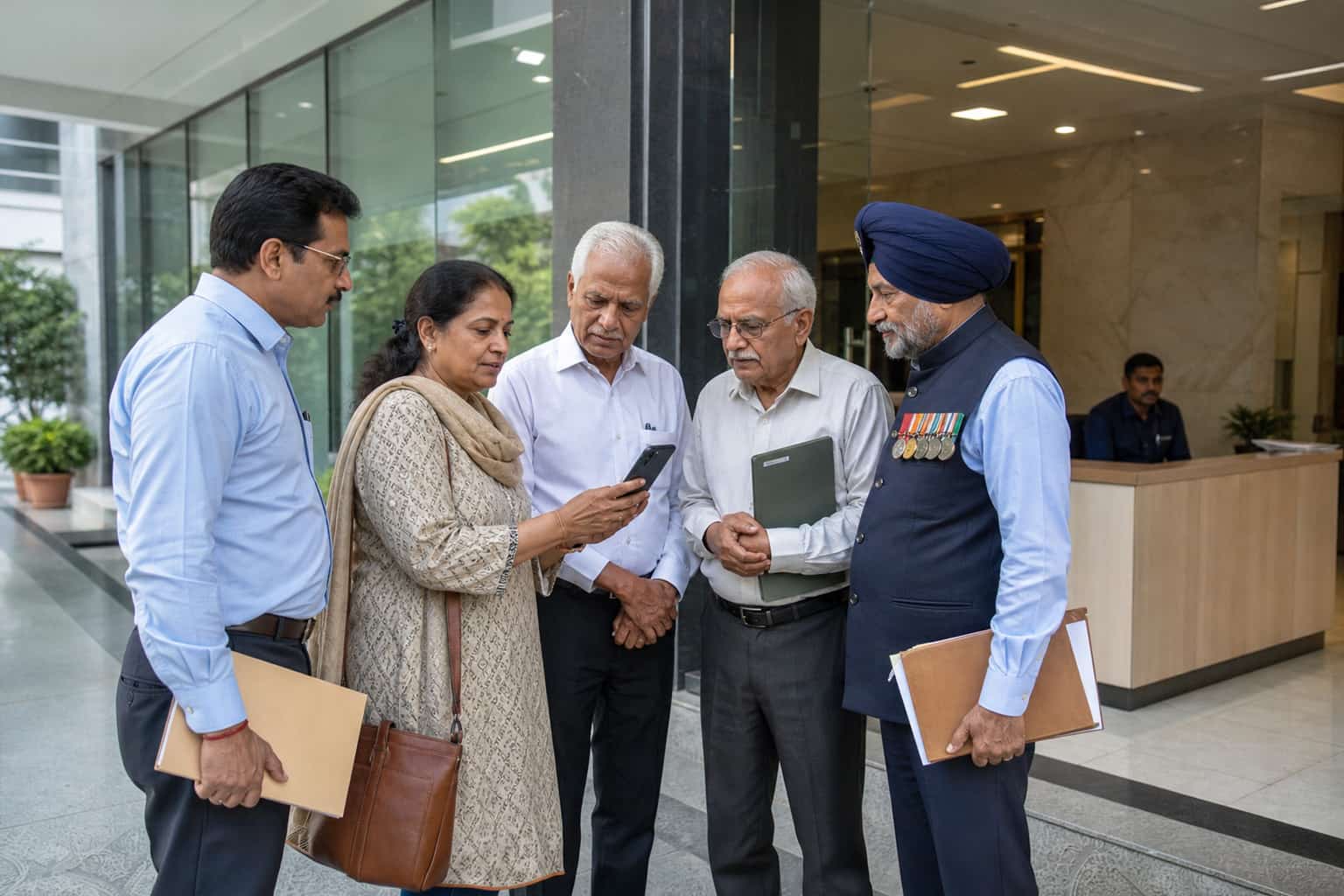
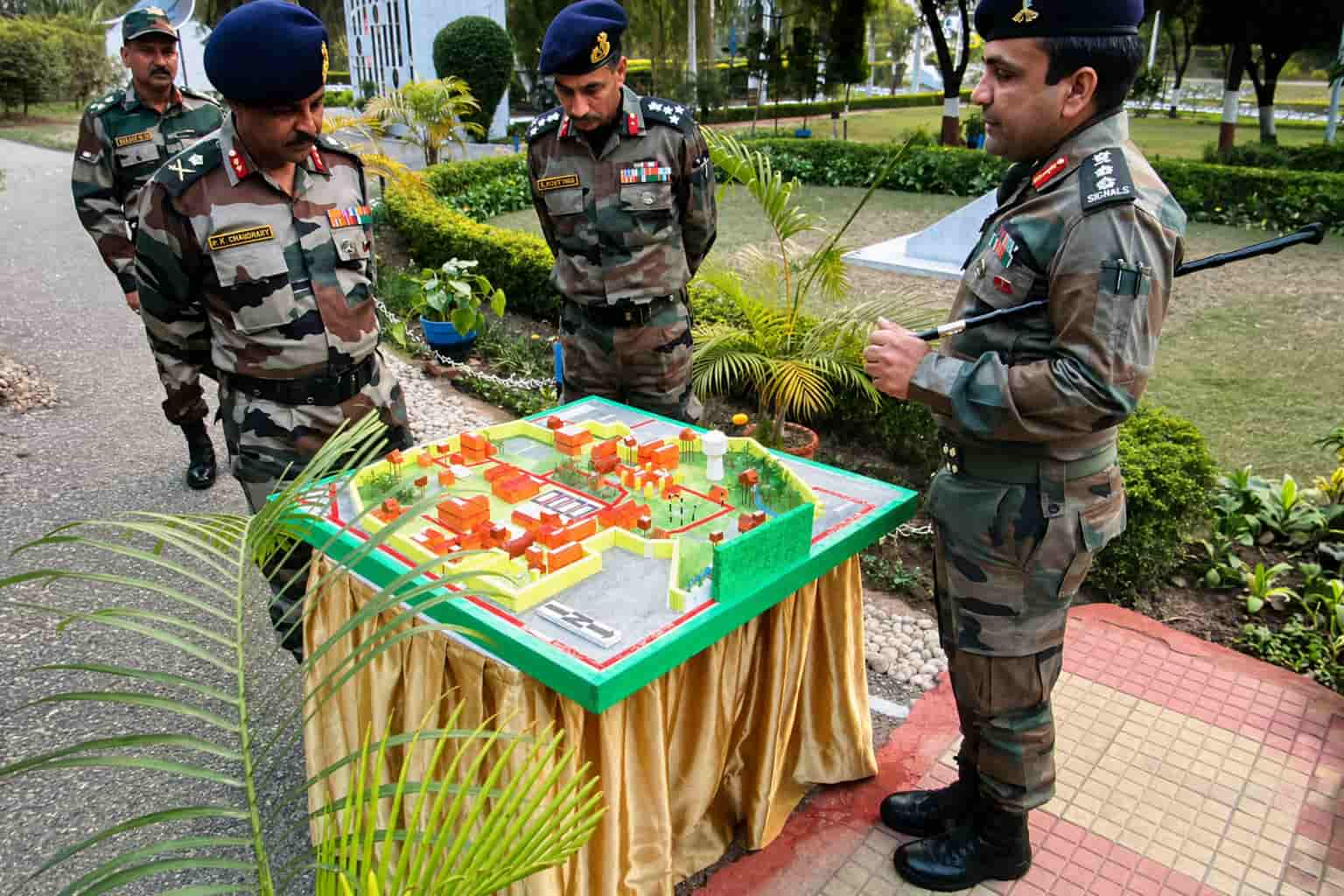
The widely discussed concern is whether uniformed representation should be part of the process. This concern is natural. Defence Civilians have their own issues, and they deserve proper representation. But uniformed personnel also have service-specific realities that need direct understanding. Veterans are asking whether the inputs going before the 8th CPC will truly reflect the ground experience of those who have served in field areas, border posts, operational formations, ships, air bases and difficult terrains.
This does not mean the Pay Commission Cell itself should become a decision-making authority. It means the cell must collect the right inputs from the right sources. It must not become a paperwork desk where real field problems are reduced to technical wording. Even a small sentence in a proposal can later affect thousands of serving personnel and pensioners.
The official 8th CPC memorandum page confirms that representations and suggestions are invited from Central Government employees, personnel belonging to Defence Forces, pensioners, service associations, unions, ministries, departments and organisations. It also says the last date for submission is 31 May 2026, and submissions must be made only through the specified online link. Paper-based memoranda, hard copies, PDFs and emails are not being considered by the Commission.
This official memorandum process is very important for defence stakeholders. Whether or not someone’s issue reaches through internal MoD channels, every association, veteran group and eligible stakeholder should also prepare a proper memorandum in the official format. The MyGov memorandum page also lists participation categories including individual employees or pensioners, associations or unions of serving employees or pensioners, and ministries or departments through nominated officers.
For serving personnel and veterans, the message is clear: do not depend only on forwarded documents or informal discussions. Prepare your issue in writing. Make it short, factual and issue-wise. Mention the affected category, the existing problem, the financial or service impact and the suggested correction.
For example, if the issue is MSP, explain why the present structure does not fully reflect service conditions. If the issue is disability pension, show how calculation or eligibility affects injured soldiers. If the issue is commutation, explain the recovery period and pensioner impact. If the issue is OROP anomaly, give rank-wise or service-wise examples. If the issue is ECHS, explain the practical difficulty faced by veterans and families.
The same approach should be followed for defence civilians. Their pay matrix, cadre structure, promotion channels, allowances, pension and service conditions should also be represented clearly. The purpose of a coordinated MoD channel should be to ensure that every defence stakeholder’s concern is placed correctly, without one category being ignored.
The 8th Pay Commission will not be shaped by emotion alone. It will be shaped by data, structure, comparison and justification. Therefore, every memorandum should avoid vague demands. Instead of writing “increase pension”, explain what exactly should be revised, why it is needed, and how it affects the category concerned. Instead of writing “remove anomaly”, identify the anomaly clearly and show the correction required.
This is where the idea of a Pay Commission Cell becomes useful. If MoD compiles inputs properly, it can prevent scattered representations from becoming weak. A centralised coordination mechanism can identify common issues, remove duplication, strengthen arguments and ensure that defence-specific subjects are not lost in the larger Central Government employee framework.
At the same time, transparency is important. Defence personnel and veterans will want confidence that their issues are not only collected but also carried forward. The defence community has seen many long-pending issues over the years. Therefore, trust will depend on whether the process is inclusive, informed and serious.
The 8th CPC is a rare opportunity. It comes once in many years, and its recommendations can influence pay and pension structures for a long period. For the defence community, this is the time to raise issues with discipline and evidence. MSP, OROP, pension revision, commutation, disability pension, X Group Pay, risk and hardship allowances, ECHS and defence civilian concerns all need proper representation.
In the end, the MoD Pay Commission Cell discussion is not only about one office memo. It is about whether defence voices will reach the 8th CPC in an organised and powerful manner. If the cell works as a strong coordination bridge, it can help ensure that the sacrifices, hardships and service conditions of soldiers, veterans and defence employees are understood correctly.
For now, the safest and strongest action is this: verify official documents, prepare your issues in writing, submit through the official 8th CPC memorandum portal, and keep proof of submission. The defence community should not miss this stage. Once the recommendations are finalised, the opportunity to correct missing issues may become much harder.




Leave a Reply