

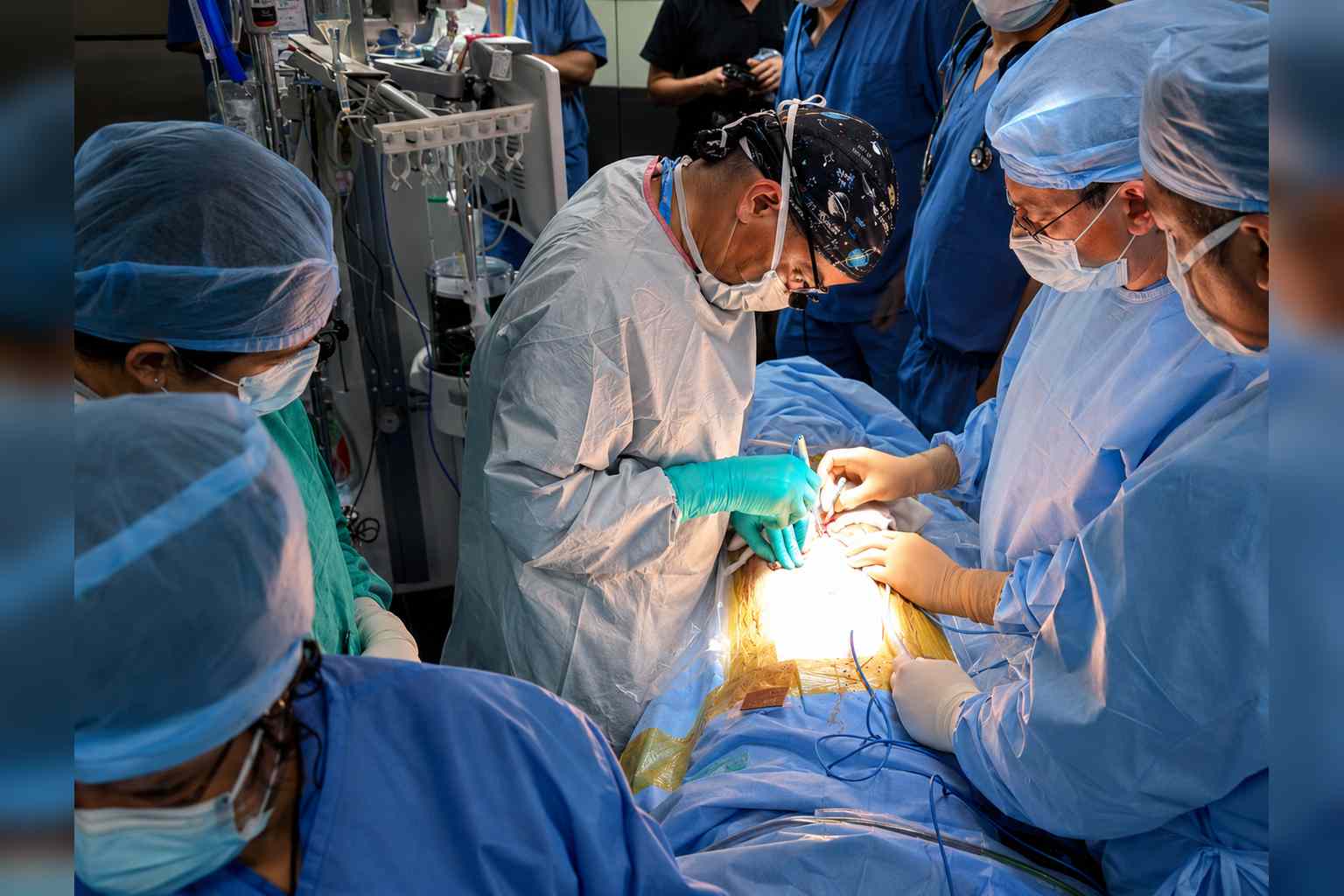
A soldier’s duty does not always end on the battlefield. Sometimes, even after life itself comes to an end, the spirit of service continues in a way that gives hope to others. The recent organ donation by a brain-dead infantry soldier is one such story. It is emotional, painful and inspiring at the same time.

According to reports, a 38-year-old infantry soldier suffered critical injuries in an accident in Nashik on 3 May 2026. He was later declared brain dead. For any family, this moment is unbearable. It is the moment when hope fades and grief takes over. But in that hour of personal loss, the soldier’s family made a decision that saved three lives. They consented to donate his organs.
The multi-organ donation procedure was carried out at Command Hospital, Southern Command, Pune, on 5 May 2026. Doctors retrieved the soldier’s liver and kidneys under medical protocols. The liver and one kidney were flown to Army Hospital (Research and Referral), Delhi, while the second kidney was transplanted at the Pune hospital. Reports say the recipients included two serving Army personnel in Delhi and a dependent of a serving Subedar in Pune.
This was not an ordinary medical procedure. Organ transplant is a race against time. Every minute matters. Once organs are retrieved, they must be transported and transplanted within strict medical windows. That is why coordination becomes as important as surgery. In this case, the Indian Army, Indian Air Force and civil authorities worked together to ensure the organs reached the recipients in time. The Indian Air Force deployed an AN-32 aircraft to support the Pune-Delhi transfer, and a green corridor was created for rapid movement.
The most touching part of this story is the family’s courage. Organ donation after brain death is never an easy decision. A family is already facing shock, sorrow and emotional collapse. At that moment, they are asked to think not only about their loss, but also about the lives of unknown people who may survive because of the donation. It takes extraordinary strength to say yes.
For the soldier’s family, the decision meant that his final act became an act of service. In uniform, he served the nation. After death, his organs gave life to others connected with the same defence family. Two serving soldiers and a dependent of a Subedar benefited from this donation. That detail gives the story a powerful emotional circle: a soldier’s sacrifice continued to protect and support the soldier community itself.

This story also reminds us that military medicine is not only about treating injuries in war. Military hospitals support soldiers, veterans and families through complex medical care, including advanced procedures like organ transplant. Command Hospital, Southern Command, Pune, is reported to have already completed eight organ transplant-related procedures this year.
The role of the Indian Air Force also deserves attention. In organ transport, speed can decide whether a transplant succeeds or fails. Airlifting organs through a coordinated mission shows how the armed forces can use their logistics strength not only for operations, but also for saving lives. The green corridor, aircraft deployment and hospital coordination show a system working with urgency and purpose.
Organ donation is one of the highest forms of human compassion. India’s National Organ and Tissue Transplant Organisation functions under the Ministry of Health and Family Welfare framework, and official awareness material repeatedly stresses the importance of deceased organ donation, brain stem death monitoring and transplant coordination. A Government press release has also noted that one deceased donor can save up to eight lives through donation of organs such as heart, lungs, liver, kidneys, pancreas and intestines.
But awareness remains the biggest challenge. Many families do not understand brain death. Some believe that if the heart is beating with machine support, the person may recover. Others hesitate because of fear, social pressure, religious confusion or lack of counselling. This is why every such story matters. It teaches society that organ donation is not about losing someone again. It is about allowing a part of that person’s life to continue in others.
For soldiers and veterans, this story carries a special meaning. The armed forces are built on the idea of service before self. Soldiers accept hardship, risk and separation because they believe in duty. Organ donation reflects the same spirit in another form. It says that even in death, one can serve.
This does not mean every family can easily make such a decision. Grief is personal. Every family needs time, support and sensitive counselling. No one should be pressured. But every family should be informed. When people know the value of organ donation before a crisis, they are better prepared to make a meaningful decision if such a tragic moment ever arrives.
The soldier’s story also tells us something about the defence family. In uniform, a soldier may belong to one regiment, one unit and one posting. But in reality, he belongs to a much larger family of serving personnel, veterans, widows, dependents and military medical institutions. When his organs saved other members of that family, it became a reminder that the military bond does not end with rank or posting.
For the public, the message is clear: organ donation is not only a medical subject. It is a social responsibility. It can turn tragedy into hope. It can give a grieving family a reason to believe that their loved one’s life still has meaning. It can give another family more years with a father, husband, son or daughter.
At Sainik Welfare News, stories like this deserve respect because they show the human side of the armed forces. This is not about publicity. It is about gratitude. A soldier suffered a tragic accident. His family made a brave decision. Doctors worked under pressure. The Army, Air Force and civil authorities coordinated. Three lives were saved.
In the end, the soldier’s name may or may not be publicly known, but his final service will be remembered by the families who received life through him. His duty did not end with death. It continued through the heartbeat of gratitude, the relief of families and the quiet strength of organ donation.
A soldier serves in life. Sometimes, a soldier serves even after life. This story is proof of that.


Leave a Reply