


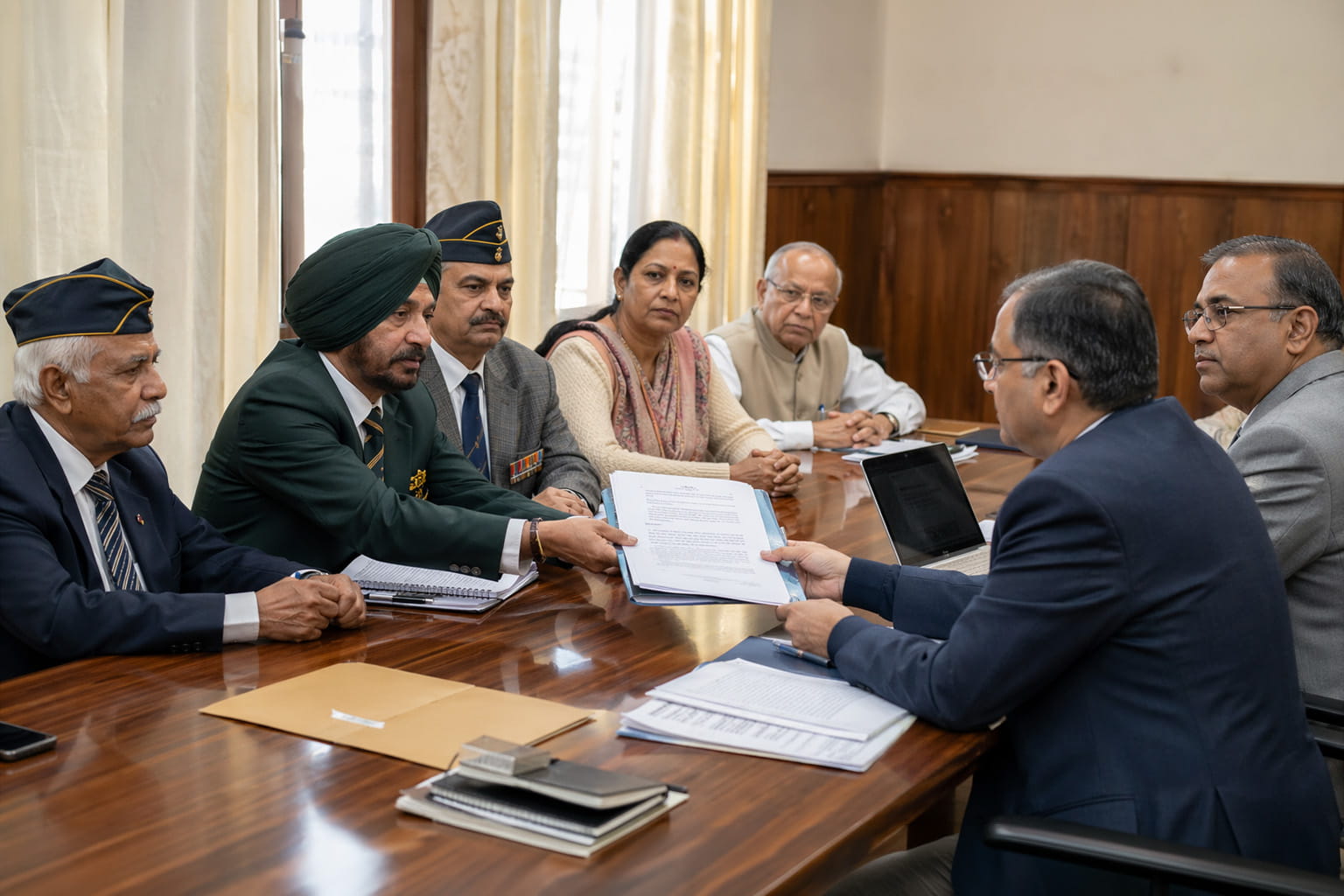
The 8th Pay Commission discussion is now moving into a more serious and document-based phase, as employee organisations begin submitting their final proposals. One of the most notable representations has come from the Federation of National Postal Organisations, which issued a detailed 60-page final memorandum on 7 January 2026. The document does not announce any final decision by the government, but it does show what one major staff body wants the 8th CPC to consider while framing its recommendations.
At the centre of the FNPO proposal is the demand for a major revision in minimum pay. According to the memorandum, the present Level-1 basic pay of ₹18,000 is no longer adequate when measured against current living costs. Using 15th Indian Labour Conference norms and the Aykroyd formula, the organisation has attempted to justify a much higher salary base. The calculations discussed in the proposal cover not just food and clothing, but also fuel, electricity, water, housing, medical needs, mobile and internet expenses, and even festival-related spending. Based on this approach, the demand has been placed for the minimum pay to be raised to ₹54,000.
This wage argument is also linked to the debate over family size. The memorandum reportedly compares calculations based on a 3-unit family and a 5-unit family, with the logic pushing the expected wage requirement into a significantly higher bracket. That is why the fitment factor has become another key battleground. FNPO has argued that the 2.57 factor used in the 7th CPC framework is no longer sufficient and has called for a minimum fitment factor of 3.0 under the 8th CPC. For employees and pensioners watching the developments closely, this is one of the most important points because the fitment factor has a direct impact on revised basic pay and pension.
Another major demand relates to the structure of pay progression. The memorandum supports continuation of the pay matrix system, but with meaningful improvements. One such proposal is to raise the annual increment from 3 percent to 5 percent. If such a recommendation ever gets accepted, it would change long-term salary growth significantly for serving employees. At the same time, FNPO has also pressed for a more balanced minimum-maximum pay ratio, suggesting a range such as 1:8 or 1:9. The idea behind this proposal is to reduce the widening gap between lower and higher pay levels.
Promotion and career progression form another important part of the memorandum. FNPO has reportedly demanded that every promotion should carry at least two increments. On the Modified Assured Career Progression front, it has called for a much more generous structure than the existing 10-20-30 year pattern. Instead, the organisation wants MACP benefits at six-year intervals, with a total of five MACP upgrades. This is a significant demand because it directly targets stagnation issues faced by many central government employees.

The memorandum also raises the politically and financially sensitive issue of Dearness Allowance merger. It argues that once DA reaches 50 percent, it should be merged with the basic pay. This demand has appeared in earlier pay revision debates as well, and it remains highly relevant because it affects pay fixation, future increments, retirement benefits and pension calculations. In addition, the organisation has sought restoration of Special Pay in place of Special Allowance under FR 9(25), arguing that such a move would improve the treatment of pension, DA and HRA-linked benefits.
On the administrative side, the proposal suggests that the traditional Group A, B, C and D classification has become outdated. In its place, FNPO has recommended a work-based classification model such as Executive and Non-Executive. This reflects a broader effort to modernise service structures and align designations more closely with actual job roles rather than old grouping patterns.
A particularly notable point in the memorandum is the demand to include Gramin Dak Sevaks within the scope of the 8th Pay Commission. This is likely to attract strong attention because GDS employees have long been at the centre of discussions on parity, service conditions and benefit coverage. Their inclusion, if ever accepted, would widen the impact of the Commission’s recommendations.
The proposal also covers allowances in detail. It seeks revision of transport allowance, TA/DA rates, transfer-related benefits, composite transfer grant and journey entitlements. Educational support has also been addressed through a demand to raise the Children Education Allowance from ₹2,250 to ₹4,500 and hostel subsidy from ₹7,500 to ₹13,500. The memorandum further suggests that these benefits should continue up to graduation and professional courses, which would be a major relief point for many employees with children in higher education.
Perhaps the most important takeaway is that the memorandum seeks implementation of the 8th CPC from 1 January 2026. That effective date demand is crucial because it shapes expectations around arrears, revised salary calculations and pension revision timelines.
For now, employees should understand one thing clearly: these are demands and proposals, not approved recommendations. Still, such memorandums matter because they help reveal the direction in which staff federations want the 8th Pay Commission to move. As more organisations submit similar drafts, the overall pressure for changes in minimum pay, fitment factor, MACP, allowances and pension structure is likely to increase. The coming months could therefore be very important for central government employees, pensioners and postal staff tracking the future shape of the 8th CPC.





Leave a Reply