


For central government employees, pensioners, defence pensioners and ex-servicemen, the 8th Pay Commission is not just about a possible salary increase. It is about pay structure, pension security, allowances, medical support, retirement dignity and fairness after decades of service. That is why the Terms of Reference of the 8th Central Pay Commission have become a matter of serious discussion.
The 8th Central Pay Commission was constituted by the Government of India through a notification dated 3 November 2025. The official website states that the Commission has been established at Chanderlok Building, Janpath, New Delhi, with Justice Ranjana Prakash Desai as Chairperson, Prof. Pulak Ghosh as Part-Time Member and Shri Pankaj Jain as Member-Secretary.
At first glance, this should have been a moment of relief. After years of waiting, the Commission was finally in place. But soon after the notification, employee bodies began raising concerns about the wording of the Terms of Reference. Their argument is simple: some lines that existed in earlier Pay Commission references are either missing or worded differently this time.
The first major concern is the “date of effect” of recommendations. Previous pay commission cycles had a clear tradition of implementation from the first day of the new ten-year cycle. The 4th CPC was implemented from 1 January 1986, the 5th CPC from 1 January 1996, the 6th CPC from 1 January 2006 and the 7th CPC from 1 January 2016, as AIDEF highlighted in its objection letter reproduced by StaffNews.
AIDEF’s concern is that the 8th CPC Terms of Reference do not clearly ask the Commission to recommend the date from which its recommendations should take effect. According to the federation, this creates uncertainty because employees naturally expect 1 January 2026 to be the date of effect, following the earlier ten-year pattern.
This matters because the date of effect is not a minor technical point. It directly affects arrears, salary fixation, pension revision and the financial planning of employees and pensioners. If the date is clearly stated as 1 January 2026, the expectation becomes easier to understand. If it is left open, employees fear that implementation may be delayed or decided later by the government.
The second major issue is pension revision. The 7th CPC Terms of Reference clearly included examination of pension and retirement benefits, including revision of pension for employees who had retired before the date of effect of the recommendations. The 7th CPC ToR also mentioned the New Pension Scheme context for those appointed on or after 1 January 2004.
By comparison, the 8th CPC notification does contain pension-related references, but the language is different. It asks the Commission to review death-cum-retirement gratuity for employees under the National Pension System, including the Unified Pension Scheme, and to review gratuity and pensions of employees not under the National Pension System, while keeping fiscal factors in view.

The concern of pensioner groups is that this wording does not carry the same explicit assurance that pre-date retirees will be covered in the same manner as earlier. AIDEF argued that more than 69 lakh pensioners and family pensioners should be clearly included and that an amendment should be issued to remove any doubt.
There is an important update here. Later, the Finance Ministry clarified in Parliament, as reported by The Economic Times, that the 8th CPC will make recommendations on pay, allowances and pension-related matters of central government employees. This clarification reduces one part of the fear, but it does not fully remove the debate over whether the ToR should carry more explicit language on pension revision for existing and past pensioners.
The third issue is the phrase related to stakeholder expectations. In the 7th CPC ToR, the Commission was asked to work on the emoluments structure with due regard to the expectations of stakeholders. AIDEF has pointed out that this phrase is not present in the same form in the 8th CPC ToR.
For employees, this phrase matters because pay commission work is not only a calculation exercise. It also involves morale, recruitment, retention, career progression, working conditions and dignity of service. If stakeholder expectations are not clearly mentioned, employee bodies fear that the process may become more finance-driven and less employee-sensitive.
Another point raised by AIDEF is the absence of a clear reference to the Old Pension Scheme restoration demand. The federation claimed that lakhs of NPS-covered central government employees have been demanding restoration of the non-contributory pension system, but the 8th CPC ToR does not specifically include this issue.
This does not mean the Commission cannot examine pension-related matters at all. The official ToR does refer to pension and gratuity review in specific categories. But employee bodies are arguing for stronger and clearer language because pension is one of the most sensitive subjects for serving employees, retirees and families.
The 8th CPC has also been given 18 months from the date of its constitution to submit its recommendations. The notification says the Commission may consider interim reports if necessary after recommendations are finalized on any matter.
This timeline makes the present stage very important. Once the Commission begins deeper examination, the language of the ToR will guide what is studied, how issues are framed and what kind of recommendations are finally made. That is why unions and pensioner bodies are not waiting for the final report to raise concerns. They want clarity now.
For ordinary employees and pensioners, the main takeaway is this: the 8th Pay Commission has been formed, but the debate has shifted to the scope of its work. The issue is no longer only “when will salary increase?” The bigger question is whether the Commission’s mandate is broad and clear enough to protect pay, pension, allowances and retirement benefits.
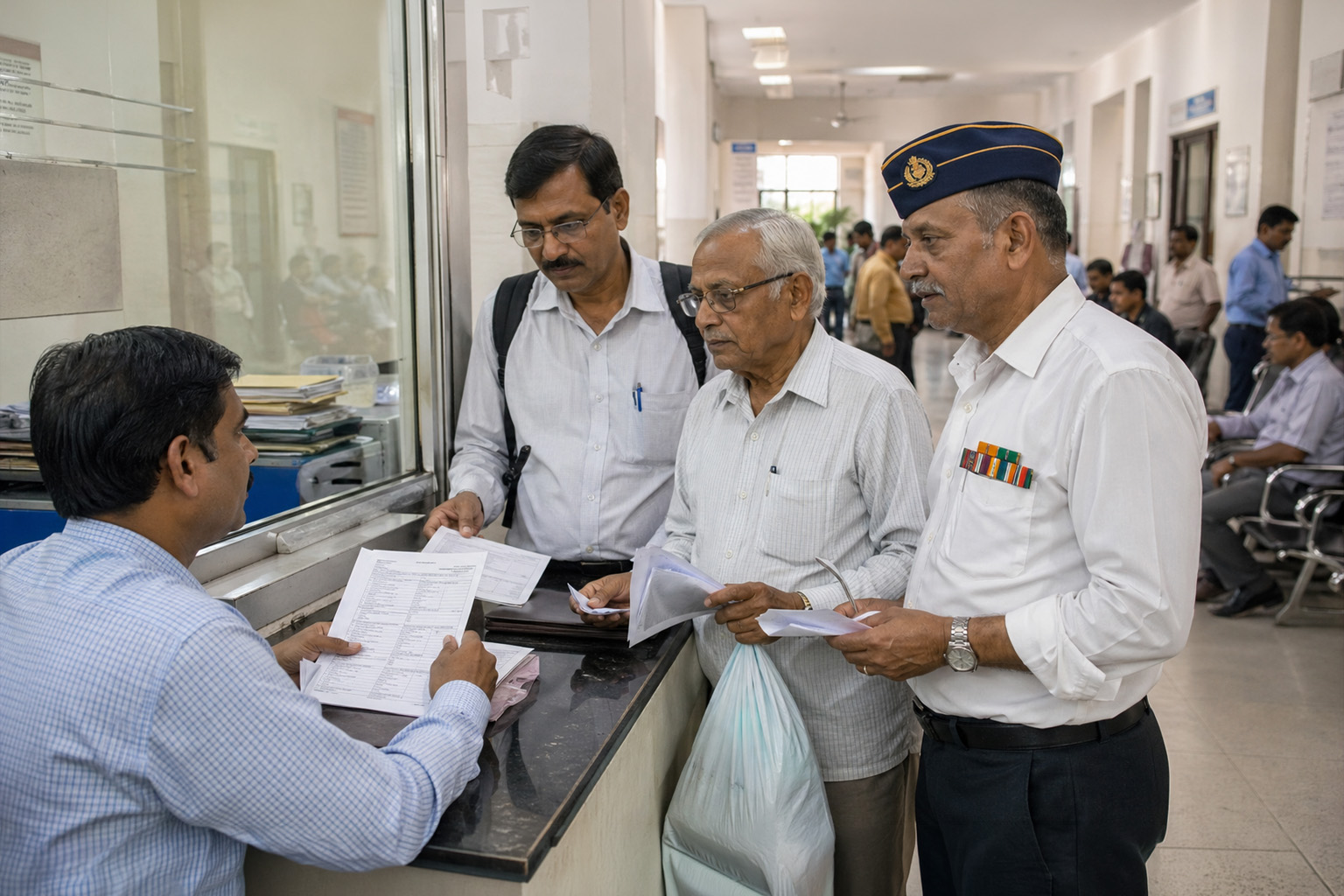
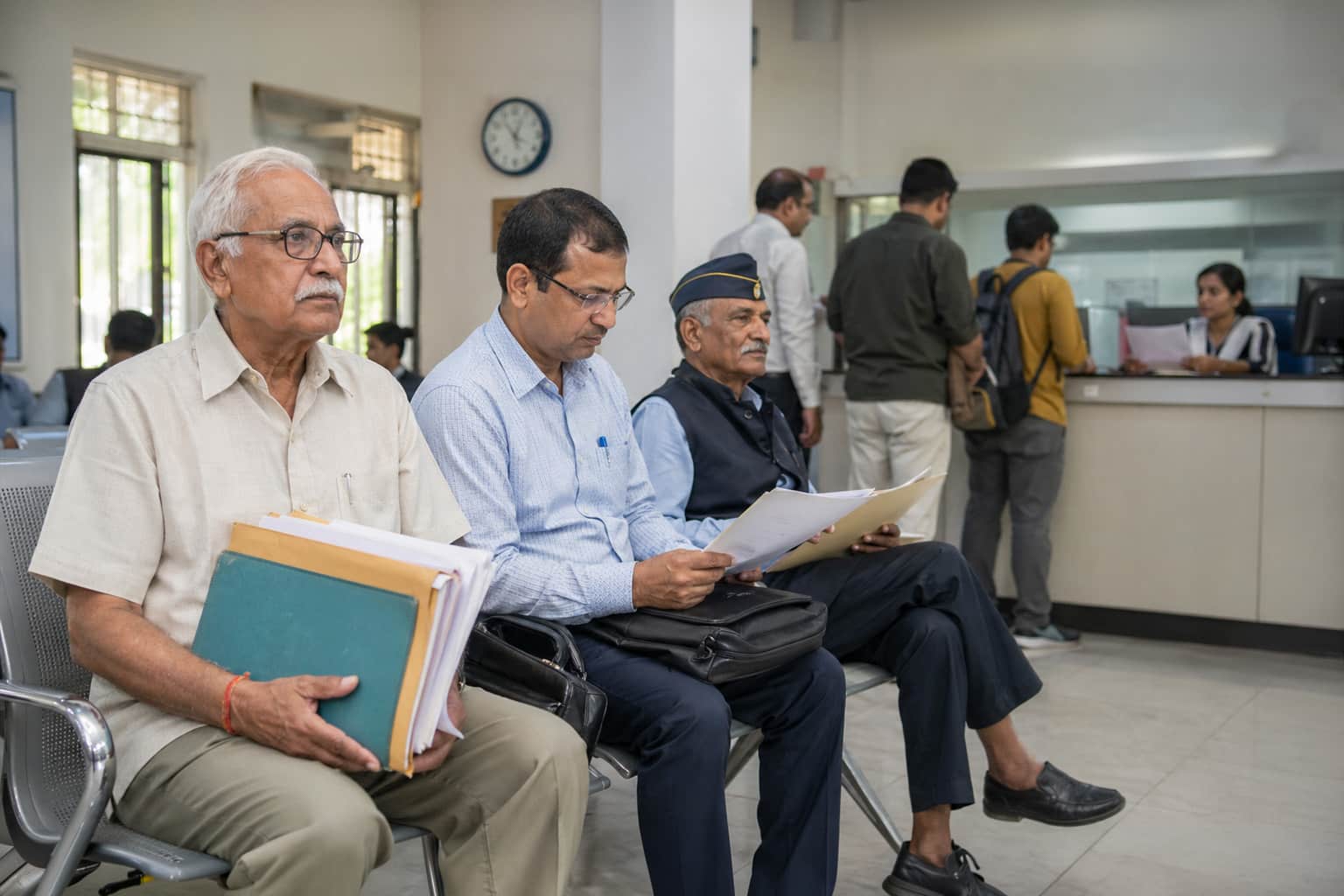
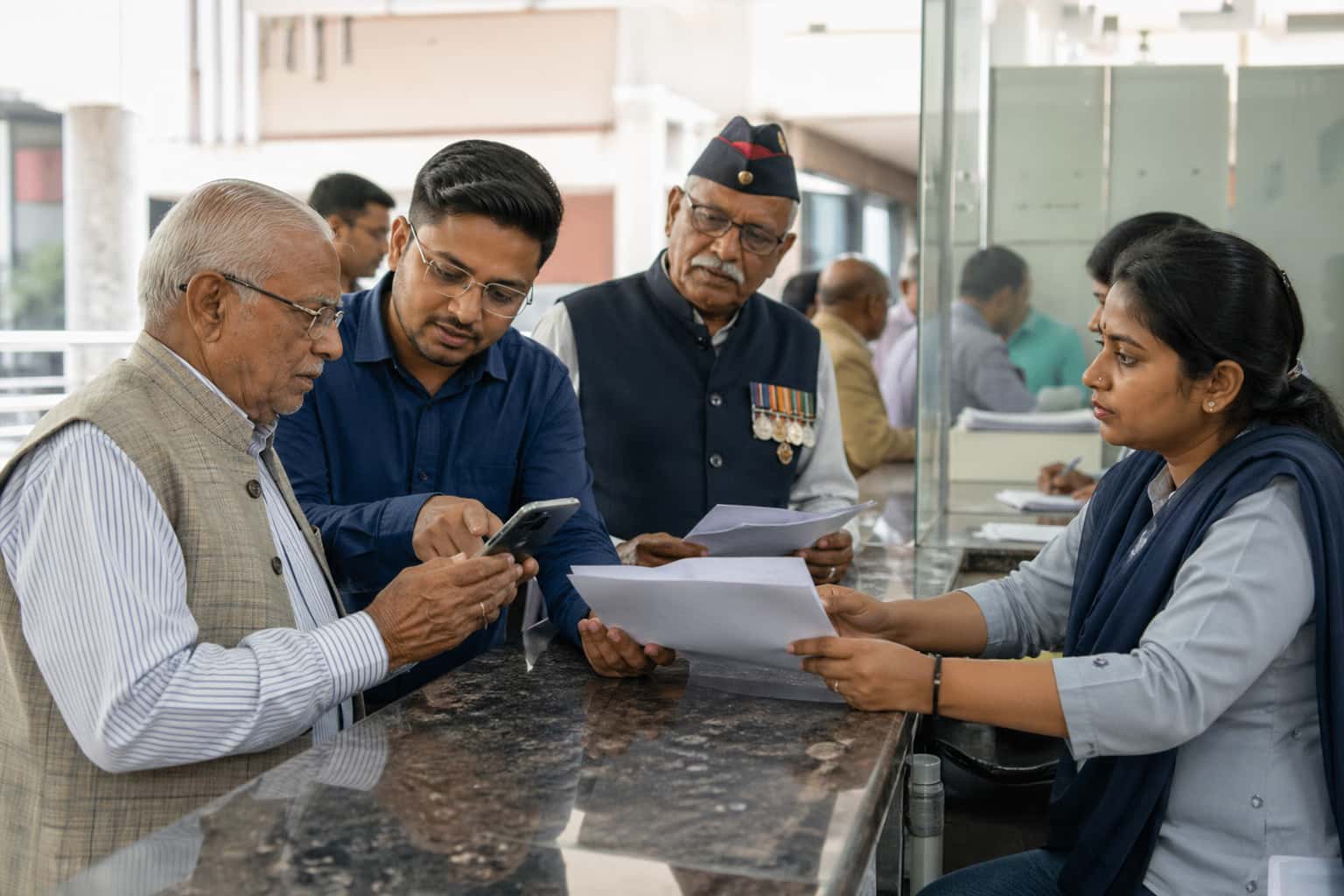
This is especially important for defence pensioners and ex-servicemen. Their concerns often include MSP, OROP anomalies, disability pension, ECHS, CGHS, early retirement, rank parity and service-specific hardship. If the ToR is interpreted narrowly, such issues may need strong representation through associations and memorandums.
Employees should also avoid depending only on rumours about fitment factor or salary multiplication. A Pay Commission does not work only on public expectations. It works within official terms, economic conditions, fiscal prudence and the data placed before it. The 8th CPC ToR specifically asks the Commission to keep in view the country’s economic conditions, fiscal prudence, welfare spending needs, cost of non-contributory pension schemes and likely impact on state finances.
That is why representation matters. If employees, pensioners and veterans want an issue to be considered, it must be placed before the Commission clearly, with facts, examples and justification. Emotional concern alone may not be enough. A short, structured and evidence-based memorandum can be more effective than a long general complaint.
The controversy over the 8th CPC ToR is not just about wording. It is about confidence. Employees want clarity that the date of effect will follow the 10-year cycle. Pensioners want assurance that they will not be left out. NPS-covered employees want their pension concerns heard. Defence veterans want their service-related issues treated with seriousness.
The government has clarified that pension-related recommendations are part of the Commission’s work, but employee bodies are still demanding stronger ToR language to avoid ambiguity. That is the heart of the debate.
The 8th Pay Commission is now active, but the final outcome is still far away. The present stage will decide what enters the discussion, what gets documented and what is finally examined. For employees and pensioners, this is the time to stay informed, read the official language carefully and ensure that their concerns are submitted through proper channels.
Because in a Pay Commission, every word matters. And when those words decide salary, pension and retirement security, even a missing line can become a national concern.




Leave a Reply