

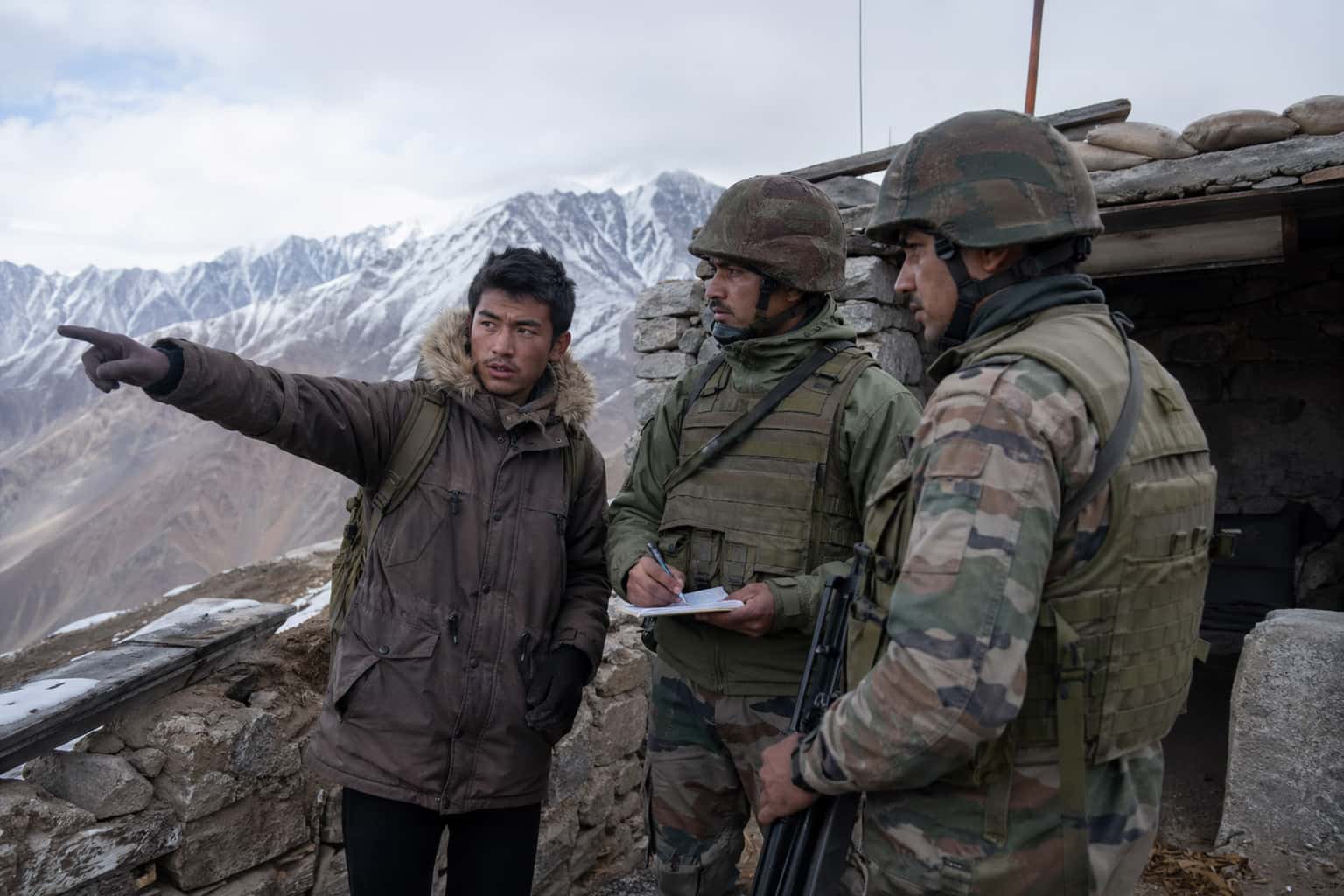
One such story emerges from a veteran conversation with Col Bhupendra Shahi, who shared a rare anecdote connected to military intelligence work in the Ladakh-Kargil region near the Line of Control. What makes this story truly memorable is not only the operational setting, but the human journey at the center of it. It is the story of a young man from a porter family, someone who had seen the Army up close in a tough border environment, and who later became part of a highly sensitive intelligence effort.
That is what makes this account so powerful. It reminds us that in the mountains, in border sectors, and in conflict-prone areas, national security does not depend only on weapons and technology. It also depends on human relationships, trust networks, cultural understanding, and the ability to work with people who know the land better than anyone else.
The story begins in the background of the Kargil period and the hard realities of military life in remote terrain. In places like Ladakh and nearby operational sectors, the Army has historically depended on local support systems in many ways, including porters who help move supplies and assist troops in difficult high-altitude zones. These are areas where weather, terrain, and isolation create challenges that people living in cities often cannot fully imagine.
From that environment came a young man whose family had links with this support ecosystem. According to the account, he was the son of a porter and had been around the Army’s working environment. He was later recruited into the unit and trained, but had to leave the Army during training. In many stories, that might have been the end of his connection with military service. But in this case, it became the beginning of something far more unusual.
Years later, a need arose within Military Intelligence. There was a requirement for a local language asset, someone who could understand the area, blend naturally, and function in a highly sensitive role. This was not about dramatic heroism. It was about suitability. The person needed the right background, the right local familiarity, and the ability to move without attracting the kind of attention that would immediately raise suspicion.
That is when this young man returned to the picture.
What followed, as narrated in the conversation, reflects the less visible face of intelligence work. Before any such individual can be trusted with a sensitive role, there has to be preparation. There has to be training, grooming, assessment, and careful handling. Nothing about this kind of work is casual. Every small detail matters, because in hostile or sensitive environments, even a small mistake can create major consequences.

The mission itself, as described, was dangerous in a very real and understated way. The individual had to cross the Line of Control, remain embedded, observe what was necessary, and return with information. There was no glamour in it. There was no dramatic background score. There was only risk, discipline, and the pressure of surviving in a place where one wrong move could end everything.
This is also where the story becomes a lesson in the value of human intelligence, or HUMINT. In an age when people often assume that satellites, drones, and technical surveillance can answer everything, stories like this remind us that technology is powerful, but not complete on its own. Mountains hide movement. Weather changes visibility. Human behavior cannot always be interpreted from a distance. Local patterns, conversations, habits, and anomalies are often best understood through human sources and trusted field networks.
That is why HUMINT continues to matter, especially in complex terrain.
According to the narration, the young man spent a long period under cover, quietly observing and working inside a hostile environment. When the time came to return, he had been given a strict return window. But real operations do not always move according to a neat plan. Heightened alertness, changing conditions, and increased checking on the other side made return more difficult. He missed the exact timeline, which naturally increased concern and risk.
This part of the story is important because it shows how fragile such missions can be. Timing in military and intelligence work is not a side detail. It is central. A missed window is not just a scheduling issue. It can affect the individual’s safety, the receiving troops’ preparation, and the larger handling of the mission. Yet the story also shows the calm professionalism with which such situations are handled. There is no panic-driven drama here. There is only alertness, patience, and a disciplined response.
Eventually, the individual did return. He reported to a forward post, was moved for proper debriefing, and the intelligence he brought was checked against existing inputs. Some of the material reportedly matched what was already suspected. Some of it added new value and pointed toward activity that needed further verification.
This is a critical point. Actionable intelligence is not about collecting random information. It is about collecting information that can be assessed, compared, verified, and turned into useful understanding. That is what separates meaningful intelligence from noise.
For readers, especially younger audiences, this story offers an important corrective to the way intelligence work is often imagined. Popular culture sometimes presents covert work as a nonstop chain of dramatic escapes and instant breakthroughs. Real military intelligence is very different. It is slower, more disciplined, more uncertain, and much more dependent on preparation, local credibility, and careful evaluation.
Another meaningful layer in this conversation is the connection to cinema. Col Bhupendra Shahi has also spoken about his role as a military consultant, helping ensure that the Army’s behavior, field conduct, uniforms, and operational realities are shown correctly on screen. That makes this story doubly valuable. It not only gives us insight into the real world of military work, but also explains why veterans are so important in shaping realistic military storytelling in films and series.
Authenticity in defence cinema does not come only from good camera work or action sequences. It comes from understanding how soldiers think, how command works, how the field feels, and how operations unfold in real terrain. Veterans bring that truth. They protect the dignity of the uniform by making sure military life is not reduced to cliché.
In the end, this story is not just about one mission or one individual. It is about the larger ecosystem of national security. It is about how ordinary backgrounds can produce extraordinary contributions. It is about how the Army values reliability, local insight, and courage in different forms. And it is about how some of the most important work in service of the nation happens far from public applause.
For veterans, defence learners, and younger readers, the deeper lesson is simple. Respect the visible soldier, but also respect the invisible network behind national security. Respect the porter, the scout, the local source, the intelligence handler, and the veteran who keeps these stories alive with responsibility and restraint.
Because sometimes, the real story of service is not the one that makes the loudest noise. It is the one that quietly protects the nation.


Leave a Reply