

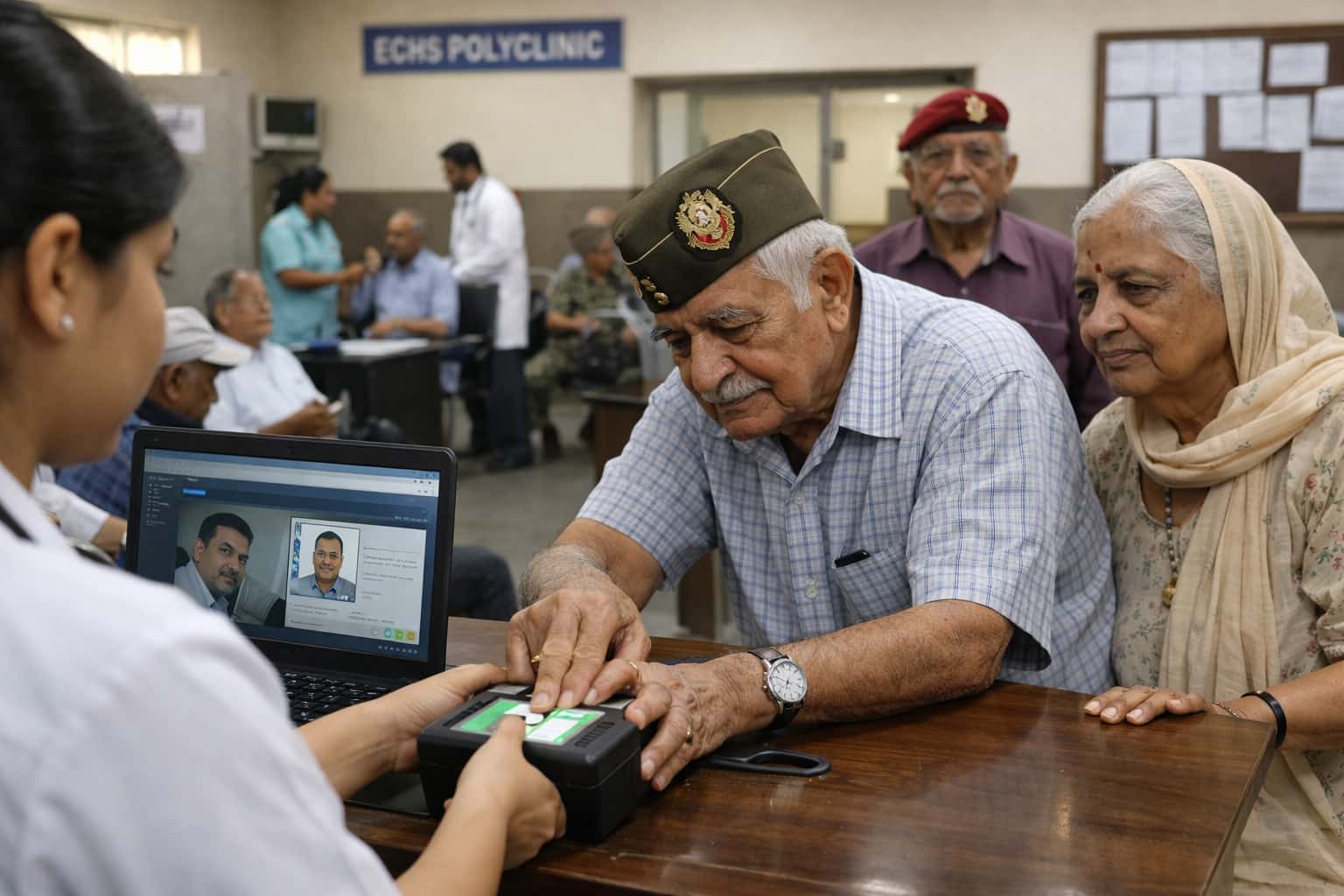
For lakhs of ex-servicemen, defence pensioners, and their families, ECHS is not just a healthcare scheme. It is a lifeline. That is why the latest move towards Aadhaar-based biometric verification has started drawing serious attention. The update may look administrative on the surface, but its impact could be felt directly at the level of treatment access, identity checks, and day-to-day service for genuine beneficiaries.
The big question now is simple. Is this a strong reform that will protect veterans from fraud, or could it become another hurdle for elderly beneficiaries who already struggle with documentation and verification issues?
That is exactly why this development matters.
The latest update indicates that ECHS is moving towards Aadhaar-based biometric authentication through the Beneficiary Verification application, also referred to as the BSA app. The purpose behind this system is to verify beneficiaries more securely before medical services are accessed. In plain terms, the intention is to make sure that treatment is being availed only by those who are genuinely entitled to it.
This is being seen as a major policy-level shift because it changes the way identity may be checked in the ECHS ecosystem. Instead of relying mainly on cards, records, and manual validation, the system is being designed to use biometric or Aadhaar-linked authentication to confirm whether the beneficiary is genuine.
That change is important because misuse in such welfare systems does not just create a financial burden. It also affects real veterans and families who depend on timely treatment.
Why is ECHS moving towards Aadhaar verification now?
The answer appears to lie in the growing concern around misuse and fraudulent access. Whenever an identity-based medical scheme expands, the risk of duplication, impersonation, or wrongful claims also increases. In such situations, even one case of misuse can create trouble for the actual beneficiary.
If a genuine cardholder’s identity is wrongly used, the consequences can be serious. Records may get flagged, cards may be blocked, and the real beneficiary may end up facing delays at the moment treatment is actually needed. For elderly veterans and dependents, that kind of situation can be deeply stressful.
This is where biometric authentication is being projected as a solution. The idea is that Aadhaar-based validation can make identity confirmation stronger and reduce the chances of fraudulent use. If implemented properly, it could help ensure that ECHS resources are used for genuine ex-servicemen, dependents, and authorised beneficiaries only.
In that sense, the reform is being positioned not just as a control mechanism, but also as a protective measure for genuine users.

Why this update matters for every veteran family?
Many people may assume this is relevant only for those who visit ECHS facilities frequently. But the truth is wider than that. This change matters to every veteran family because identity verification is not a niche issue. It sits at the heart of access.
If the verification system becomes a standard part of treatment access in the future, then every beneficiary will need to be ready. Those who have updated documents, active mobile links, and matching records may pass through the process smoothly. Those with outdated biometrics, spelling mismatches, or inactive Aadhaar-linked mobile numbers could face delays.
That is why this is not the kind of update that should be ignored until the last moment. It is the kind of update where preparation in advance can save trouble later.
The strongest message emerging from this development is clear. Readiness will matter.
How the rollout may happen and why that is important?
The implementation is expected to happen in phases rather than all at once. That is an important detail because it gives beneficiaries time to prepare before the process becomes more widely enforced.
A phased rollout usually means pilot testing first, followed by gradual expansion. This is often done to identify technical issues, fix ground-level problems, and understand how the new system works in real conditions. In the case of ECHS, that approach makes sense because beneficiaries include many senior citizens, dependents, and families across different regions with different levels of digital comfort.
This also means that the present stage is the best time for awareness. Once nationwide implementation expands, the people who prepared early will face fewer problems than those who ignored the update.
What beneficiaries should do before verification becomes mandatory?
This is where the update becomes practical.
The first step is to check Aadhaar biometrics. Many senior citizens experience fingerprint issues due to ageing. Fingerprints may not scan clearly, especially after years of wear. In such cases, biometric records should be refreshed at an authorised Aadhaar centre. If available, iris details should also be updated because they can help when fingerprint verification fails.
The second step is to ensure that the Aadhaar-linked mobile number is active. This matters because OTP-based verification is often used as a backup where biometric matching does not work smoothly.
The third step is document consistency. Details such as name spelling, date of birth, and linked information should match across Aadhaar, ECHS records, and pension-related documents. Even small mismatches can create unnecessary complications in digital authentication systems.
The fourth step is to keep essential papers organised. Aadhaar card, ECHS card, PPO details, and dependent-related records should be stored together in one file so that they can be produced quickly when needed.
These are simple actions, but they can make a very real difference.
What problems may arise on the ground?
Even a well-intentioned reform can create difficulty if the ground reality is not taken seriously. That is why many veterans will naturally look at this update from both sides.
On one hand, biometric verification can reduce fraud and improve fairness. On the other hand, elderly beneficiaries often face problems with fingerprints, phone access, mobility, and document mismatches. If these issues are not handled sensitively, a system designed to protect beneficiaries could also inconvenience them.
For example, fingerprint mismatch is common among older people. Name differences between documents are also widespread. Some beneficiaries may not use smartphones regularly. Others may not have their Aadhaar-linked mobile number updated.
These are not minor issues. They are exactly the kind of real-life challenges that implementation teams must account for.
That is why the success of this move will depend not only on policy intent but also on how flexibly and practically it is executed on the ground.
Could this actually improve ECHS services for genuine users?
Yes, it could. If done properly, this reform has the potential to strengthen the system for genuine beneficiaries.
A reliable identity check can reduce misuse, stop false claims, and improve the overall credibility of the scheme. In the long run, that can support smoother service delivery and better protection for real users. It can also reduce the panic that arises when cards are flagged or benefits are disrupted due to suspicious activity linked to identity misuse.
For genuine ex-servicemen and families, that is an important advantage.
But the real test will be balance. A strong system must be secure without becoming harsh. It must stop fraud without troubling elderly people who are entitled to care. It must improve verification without turning every clinic visit into a paperwork struggle.
That balance will define whether this becomes a successful reform or a frustrating one.
The real takeaway veterans should not ignore
This is not just another routine administrative circular. It could become one of the more important operational changes in how ECHS functions in the coming period.
The smartest response right now is not panic. It is preparation.
Beneficiaries who update biometrics, activate linked mobile numbers, fix mismatched records, and keep their documents ready will place themselves in a much safer position if and when verification becomes mandatory. That is the practical takeaway.
For veterans and their families, the message is simple. This reform may be aimed at stopping fraud, but its smoothness will depend heavily on whether genuine users are ready before the system reaches them.
And that is why this update deserves close attention today, not after problems begin at the counter.


Leave a Reply