

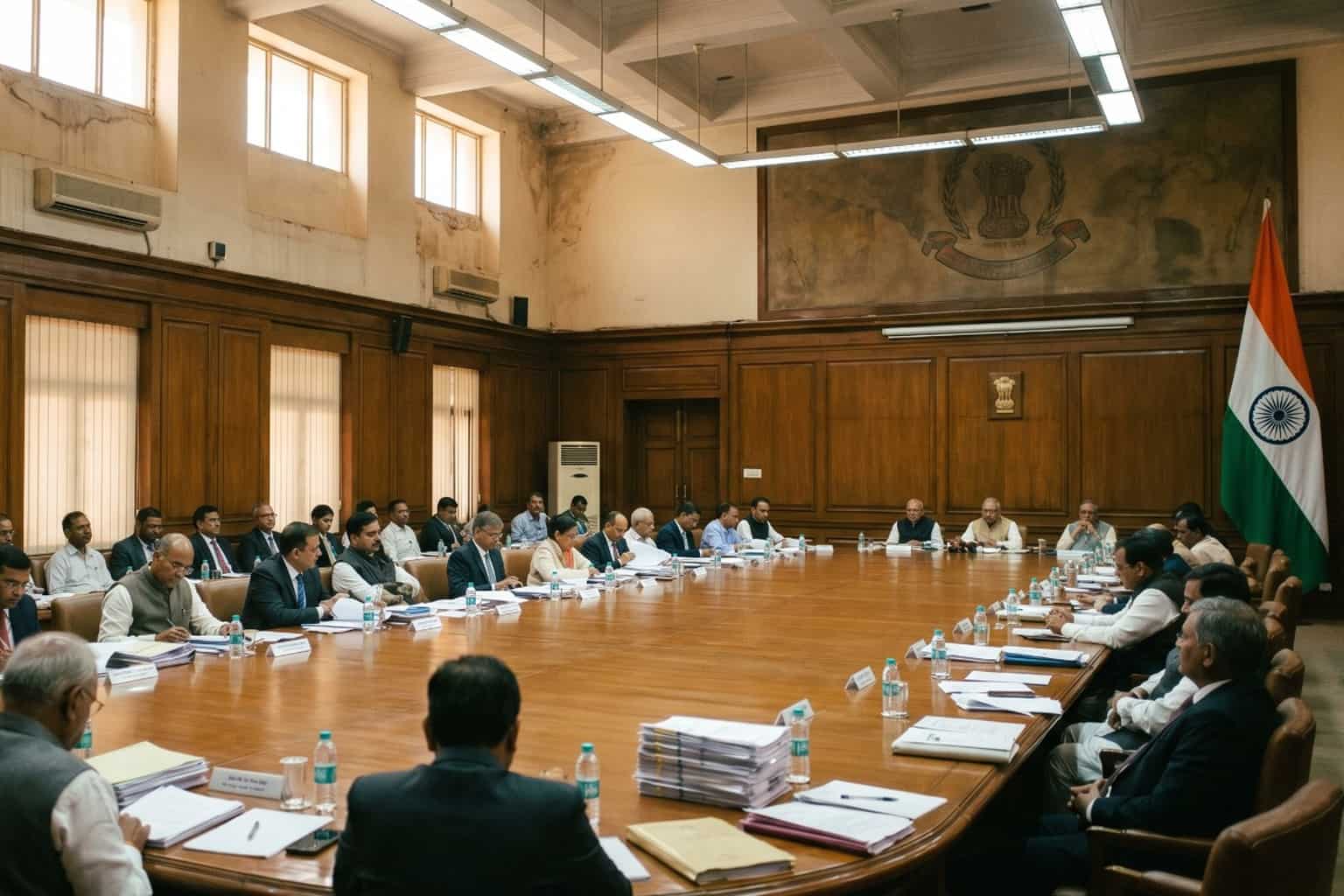
The 8th CPC Dehradun stakeholder meeting gave ex-servicemen organisations a chance to raise OROP, MSP, disability, ECHS and pension issues. The key message was clear: every demand must be submitted through the official memorandum portal.
For many ex-servicemen, the 8th Central Pay Commission is not only about a new pay table.
It is about old pension anomalies.
It is about OROP-related concerns.
It is about Military Service Pay.
It is about disability issues.
It is about ECHS, MACP, honorary ranks, technical pay and the feeling that some service-related problems have remained unresolved for years.
That is why the 8th CPC stakeholder interaction in Dehradun became important for the veteran community.
The meeting gave some ex-servicemen organisations a chance to speak directly before the Commission’s team. But the most important message from that interaction was not merely that issues were heard.
The real message was this: every issue must be placed on the official record through the 8th CPC memorandum submission system.

Why the Dehradun meeting mattered?
The 8th CPC had issued an official notice for its visit to Dehradun, Uttarakhand, on 24 April 2026. Interested stakeholders, including Central Government organisations, institutions, unions and associations, were asked to seek appointment before the visit.
This made the Dehradun meeting one of the early physical stakeholder interactions of the Commission.
For ex-servicemen, such a meeting carried special value because many defence pension and service-condition issues are not always easy to explain through one-line demands.
Some concerns need background.
Some need examples.
Some need comparison between old and new pensioners.
Some need explanation of rank, group, service condition and post-retirement impact.
That is why a physical interaction can help.
But a meeting room has limits.
A portal record has continuity.
What the transcription tells us?
According to the shared transcription, the speaker was part of the Dehradun interaction and represented a veterans’ organisation.
The speaker says the panel listened patiently and gave more time than the allotted slot. He also says several ex-servicemen-related organisations and representatives were present.
The issues discussed included OROP anomalies, bonus, disability-related matters, Military Service Pay, ECHS, MACP/MSCP, honorary rank benefits, X Group or technical pay, premature retirement, technical pay after honorary rank, old and new pensioner differences, Assam Rifles issues and time-scale promotion.
These are not small administrative points.
For veterans, these are lived issues.
They affect monthly pension, medical access, rank recognition, post-retirement dignity and family security.
The most important advice from the panel
The strongest message in the transcription is that the panel advised stakeholders to submit all issues through the official 8th CPC website.
This point is important.
A verbal discussion may create awareness.
A written submission creates a record.
A meeting may give the panel a sense of the problem.
A memorandum gives the Commission a structured point to examine later.
This is why the advice to submit memoranda online was significant.
It meant that veterans should not depend only on who attended the meeting. Every group, individual, pensioner or association had a route to place its issue formally before the Commission.
Why online memorandum submission became the real key?
The official 8CPC memorandum submission page confirms that representations, memoranda and suggestions were invited from Central Government employees, Defence Forces personnel, pensioners, service associations, unions, Ministries, Departments, organisations and others in a structured format.
The same official page also makes it clear that paper-based memoranda, hard copies, PDFs and emails were not being considered or entertained by the Commission.
This is why the portal was important.
A demand written on paper but not submitted through the accepted system could be left outside the formal process.
A PDF sent by email may not carry the same value if the Commission has specifically rejected that route.
A verbal point raised in a meeting may be noted, but a structured online memorandum gives the issue a clearer identity.
That is why the transcript’s central message is very practical: submit the issue officially.
Why memo ID matters?
The transcription also mentions that once a memorandum is submitted, a memo ID is generated.
This is important for accountability.
A memo ID gives the submitter proof that the issue has entered the system.
For an individual veteran, it means his concern is not only discussed in a WhatsApp group.
For an association, it means its memorandum is formally submitted.
For a pensioner, it means the issue has a traceable record.
In a process as large as the Pay Commission, documentation matters.
Without record, even a strong grievance can become a floating complaint.
With record, the issue becomes part of the structured material available for examination.

Why this matters for veterans in remote areas?
Many ex-servicemen live in villages, hill areas, border regions and small towns.
Not everyone can attend a stakeholder meeting.
Not everyone can reach Dehradun, Delhi or any other city where the Commission may interact with selected organisations.
Many senior veterans may also not be comfortable with online systems.
This is why the message from the transcription becomes even more important.
Those who understand the portal should help others.
Younger veterans can help older pensioners.
Associations can organise assistance camps.
Local ex-servicemen groups can collect issues and guide members.
A pensioner who cannot type well should not lose his chance to place a genuine issue before the Commission.
What issues were raised by veterans?
The transcription mentions several defence-related concerns.
The first major issue was OROP-related anomaly. This remains one of the most sensitive subjects among defence pensioners because it directly affects pension parity and perceived fairness between different batches of retirees.
Military Service Pay was another important concern. For many soldiers and veterans, MSP is linked with the unique hardship, risk and discipline of military life.
Disability-related issues were also discussed. These matters are always sensitive because disability in service affects dignity, medical needs, family planning and post-retirement life.
ECHS was also mentioned. For retired personnel and families, healthcare access is not a secondary matter. It is one of the strongest pillars of veteran welfare.
MACP or MSCP issues were also raised. Promotion-linked financial progression affects both service morale and pension outcomes.
The transcript also refers to honorary ranks, X Group or technical pay, premature retirement, Assam Rifles issues and time-scale promotion.
Together, these points show that the meeting was not about one demand.
It was about a wide set of military service and post-retirement concerns.
What should not be misunderstood?
The Dehradun meeting should not be presented as if the 8th CPC accepted all veterans’ demands.
That would be wrong.
The transcription says the issues were heard and the panel advised stakeholders to submit them through the official portal.
There is no confirmation that OROP anomalies were resolved.
There is no confirmation that MSP demand was accepted.
There is no confirmation that ECHS, disability, honorary rank or technical pay issues were settled.
There is no final recommendation in this meeting.
The correct wording is:
Veteran issues were raised.
The panel listened.
Stakeholders were advised to submit memoranda online.
The issues still require examination by the Commission.
This keeps the article factual and responsible.
The deadline point needs careful writing
The transcription refers to 30 April 2026 as the last date for memorandum submission.
That was the deadline being discussed at that time.
However, the official 8CPC memorandum page now records the final memorandum window as 5 March 2026 to 15 June 2026, and the submission window is now closed.
So the correct way to write this is:
At the time of the Dehradun interaction, stakeholders were being reminded about the then memorandum deadline. Later, the official memorandum submission window was extended and finally closed on 15 June 2026.
This avoids confusion for readers who may check the official website today.
Why this meeting still matters after the portal closed?
Some readers may ask why the Dehradun meeting matters now if the memorandum window has already closed.
It matters because it tells us how the Commission was approaching stakeholder engagement.
The Commission was not only waiting for files.
It was meeting selected stakeholders.
It was listening to issues.
It was asking them to put points into the structured system.
This shows that the Pay Commission process was being built through both listening and documentation.
For veterans, this is an important lesson for future policy matters also.
A demand has more strength when it is properly written, supported and submitted through the accepted channel.
Why associations have a special responsibility?
Veteran associations play an important role in such processes.
An individual veteran may know his own problem, but an association can connect hundreds or thousands of similar cases.
An association can identify patterns.
It can compare old and new rules.
It can prepare tables.
It can collect examples.
It can explain the financial effect of an anomaly.
It can submit a stronger memorandum than a scattered individual complaint.
That is why organisations representing ex-servicemen must handle such opportunities seriously.
The Dehradun meeting showed that access to the panel is useful only when it is followed by proper documentation.
Why individual veterans also matter?
At the same time, individual veterans should not think that only associations matter.
The official memorandum platform allowed individuals, employees, pensioners and other categories to submit their issues.
This is important because some problems may not be fully covered by large organisations.
A widow may have a pension issue that is very specific.
A retired JCO may face an anomaly not widely discussed.
A technical group pensioner may have a pay-related concern.
An Assam Rifles veteran may have a service-condition issue needing separate attention.
Individual submissions can help the Commission see the variety of real problems.
Why technology became part of welfare?
The transcription repeatedly emphasises online submission.
This is important because welfare is no longer only about writing letters and sending files.
Technology has become part of the process.
A portal can collect issues from across the country.
A memo ID can confirm submission.
Digital records can be sorted, grouped and analysed.
But technology also creates a challenge for older veterans.
Many may not know how to use the portal.
Some may not have proper internet access.
Some may depend on cyber cafés.
Some may fear making mistakes.
This is why veteran welfare groups must combine digital awareness with ground support.
What is the larger lesson for the defence community?
The larger lesson is simple.
If an issue is important, document it.
If a demand affects pension, explain it with examples.
If an anomaly affects many people, submit it in a structured way.
If a point is raised in a meeting, also put it in writing through the accepted system.
In policy matters, emotional pain must be converted into clear documentation.
That is how a demand becomes examinable.
Why this topic is important for readers?
The 8th CPC is expected to examine pay, pension, allowances and service conditions.
For Central Government employees, the conversation often revolves around fitment factor and pay matrix.
For defence personnel and veterans, the discussion is wider.
It includes pension parity, military hardship, rank recognition, medical support, disability issues, premature retirement and service-specific anomalies.
The Dehradun meeting is important because it shows how these defence-related issues entered the consultation space.
But the final impact will depend on what the Commission studies, accepts and recommends later.
Comment
The Dehradun meeting should be remembered not as a place where demands were settled, but as a reminder that representation must be formal.
The panel may listen patiently.
The organisations may speak strongly.
Veterans may feel heard.
But in a Pay Commission process, the strongest voice is the one that is properly recorded.
That is why the memorandum portal was so important.
A veteran’s issue should not remain only in conversation.
It should become part of the official file.
Final takeaway
The 8th CPC Dehradun stakeholder meeting gave ex-servicemen organisations an opportunity to place important pension and welfare issues before the Commission’s team.
According to the shared transcription, issues such as OROP anomalies, MSP, disability matters, ECHS, MACP, honorary rank benefits, technical pay, premature retirement, Assam Rifles and time-scale promotion were discussed.
But the most important message was clear: every issue had to be submitted through the official memorandum portal.
The meeting gave voice.
The portal gave record.
For veterans, pensioners and associations, this is the biggest lesson.
In the 8th CPC process, a demand becomes stronger when it is not only spoken, but documented, structured and submitted through the official channel.
Sources:-
Official 8th CPC notice regarding Dehradun visit on 24 April 2026:
https://8cpc.gov.in/document/notice-regarding-visit-to-dehradun-uttarakhand-on-24th-april-2026/
Official 8CPC Memorandum Submission page:
https://8cpc.gov.in/8cpc-memorandum-submission/
StaffNews report on 8th CPC Dehradun visit:
https://www.staffnews.in/2026/03/8th-central-pay-commission-dehradun-visit.html


Leave a Reply