

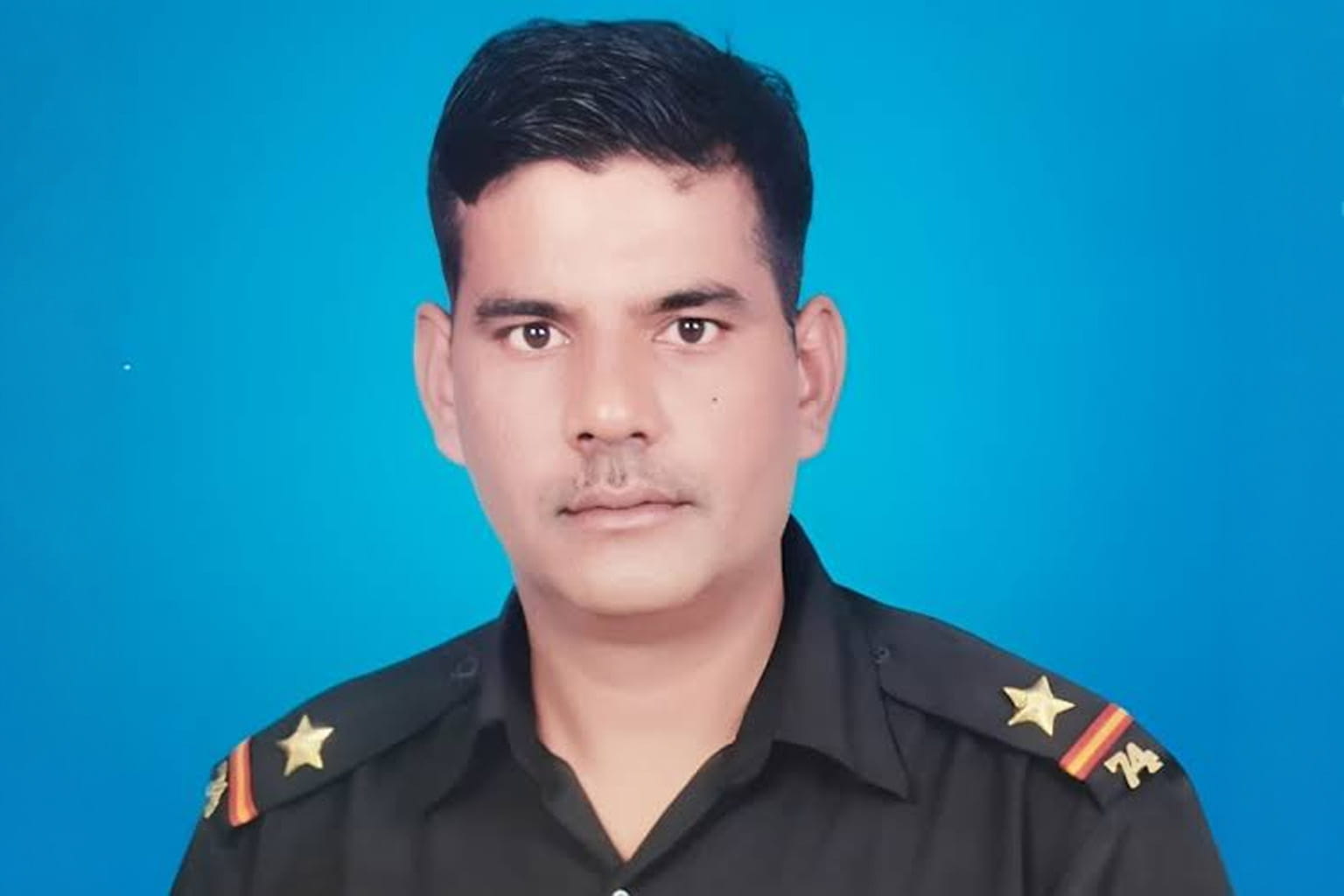
Naib Risaldar Virender Singh served the country for more than 18 years. Even after his military journey ended, his service to humanity continued.
The Junior Commissioned Officer of 74 Armoured Regiment suffered a severe brain stroke while deployed at an altitude of approximately 16,000 feet in Ladakh. He was given emergency medical treatment and air-evacuated to Command Hospital, Western Command, Chandimandir, on 16 July 2026.
Despite extensive medical efforts, doctors declared him brain dead on 21 July 2026. During this moment of profound grief, his wife, Smt Kusum, consented to donate his organs.
Doctors retrieved his two kidneys, liver, lungs and both corneas. The donation gave six recipients a new opportunity to live, see and return to their families.
His military service protected the country. His family’s final decision protected six more lives.
Who was Naib Risaldar Virender Singh?
Naib Risaldar Virender Singh was a Junior Commissioned Officer serving with 74 Armoured Regiment.
Reports identify him as a native of Mahendragarh district in Haryana who had served the country for more than 18 years. At the time of his medical emergency, he was deployed in Ladakh at an altitude of around 16,000 feet.
Publicly available reports do not provide a complete account of his postings, military achievements or family history. These details should therefore not be added without confirmation from the Army or his family.
What is firmly established is that his service continued until his final days in one of India’s most demanding deployment environments.
What happened during his Ladakh deployment?
Virender Singh suffered a severe brain stroke while on duty in Ladakh.
He received immediate medical assistance before being airlifted to Command Hospital, Western Command, at Chandimandir on 16 July.
Military medical teams continued treating him, but his condition did not improve. He was declared brain dead on 21 July after the prescribed medical assessment.
This was a medical emergency during deployment. Available reports do not describe his death as the result of enemy action or a combat incident.
For accuracy and dignity, the incident is best described as:
A soldier’s final act of service after suffering a fatal medical emergency while deployed in Ladakh.

What does brain death mean?
Brain death is frequently misunderstood as a coma. The two conditions are not the same.
According to the National Organ and Tissue Transplant Organisation, brain-stem death means the permanent and irreversible cessation of brain-stem functions. A brain-stem-dead person cannot breathe independently and has legally died, even though a ventilator may temporarily maintain oxygen supply and heartbeat.
Brain-stem death must be certified according to accepted medical standards and the legal procedure prescribed under India’s transplant framework. The certification process is conducted by an authorised board of medical experts.
How is brain death different from a coma?
A patient in a coma is alive and may retain some brain function. Depending on the cause and severity, recovery may sometimes be possible.
Brain-stem death is irreversible. There is no possibility of the person regaining consciousness or breathing independently.
Machines may temporarily maintain circulation so that medically suitable organs remain viable for donation. This does not mean that the person remains alive.
Why is family consent important?
Under the organ-donation process, the person legally in possession of the deceased’s body—usually a spouse, parent, adult child or other authorised near relative—provides consent.
The family’s permission is documented formally and retained by the hospital. If the family refuses, the donation does not proceed.
In this case, Smt Kusum’s decision was central.
The medical system could identify potential organs, arrange teams and coordinate transportation, but none of it could move forward without the family’s informed consent.

Which organs and tissues were donated?
Doctors reportedly retrieved:
| Organ or tissue | Reported destination or use |
|---|---|
| First kidney | Transplanted at Command Hospital, Chandimandir |
| Second kidney | Allocated through SOTTO Haryana |
| Liver | Sent to Army Hospital Research and Referral, New Delhi |
| Lungs | Transported to KIMS Hospital, Hyderabad |
| First cornea | Used through Command Hospital |
| Second cornea | Used through Command Hospital |
Together, these donations benefited six recipients.
The public reports confirm organ retrieval, allocation and transplantation arrangements. They do not provide private medical details or long-term outcomes of individual recipients.
Those identities and clinical records should remain confidential.
Why can one deceased donor help several people?
A medically suitable deceased donor may donate several organs and tissues.
NOTTO states that kidneys, liver, heart, lungs, pancreas and intestine can potentially be donated following brain-stem death, while tissues may include corneas, skin, bones, tendons and heart valves. Suitability depends on medical assessment at the time of death.
NOTTO’s awareness material explains that one organ donor can potentially save up to eight lives and improve several others through tissue donation.
Virender Singh’s case demonstrates this impact in a direct and deeply human way: one family’s consent gave six recipients another chance.

The courage behind Smt Kusum’s decision
Organ donation stories are often presented mainly through numbers: how many organs were retrieved and how many recipients benefited.
But behind those figures was a wife facing the sudden loss of her husband.
Smt Kusum had to consider organ donation while dealing with grief, shock and the finality of brain death. Her consent allowed medical teams to begin a highly time-sensitive process.
The Army paid tribute to Virender Singh and his family’s generosity, describing their decision as an example of humanity and resilience that could inspire others to consider organ donation.
Her decision did not reduce the family’s pain. It transformed part of that pain into hope for six other families.
Why the family should remain at the centre of the story
The organs could not have been donated solely through a hospital’s decision.
The process required:
- sensitive family counselling;
- voluntary consent;
- medical suitability checks;
- legal documentation;
- coordination with authorised allocation organisations;
- multiple transplant teams;
- urgent transportation.
The family’s consent was therefore not a small procedural step. It was the moral centre of the entire operation.
How were the organs transported?
Organ transplantation is extremely time-sensitive.
Different organs remain suitable for transplantation for different periods. NOTTO explains that lungs generally require transplantation within a much shorter period than kidneys, making rapid allocation and transportation essential.
In Virender Singh’s case, a green corridor was created with assistance from:
- Military Police;
- civil administration;
- local authorities;
- medical and transplant teams.
This coordination enabled the organs to reach the designated transplant centres without avoidable delay.
Where were the donated organs sent?
The organs were distributed across multiple centres:
- Command Hospital, Chandimandir;
- SOTTO Haryana’s authorised allocation system;
- Army Hospital Research and Referral in New Delhi;
- KIMS Hospital in Hyderabad.
This required coordination across military and civilian systems, hospitals, cities and transportation networks.
What is a green corridor?
A green corridor is a specially coordinated route created to minimise traffic delays during the transportation of time-sensitive organs.
Police, administration, hospitals and transport teams work together so that the ambulance or authorised vehicle can travel quickly between the donor hospital, airport and transplant centre.
It is not merely a ceremonial arrangement. It can directly affect whether an organ reaches a recipient within its medically viable time window.

A medical milestone for Command Hospital
The operation reportedly marked the first retrieval of lungs from a deceased donor at Command Hospital, Western Command.
This was an important medical milestone because lung retrieval requires:
- rapid assessment;
- specialist transplant coordination;
- careful donor management;
- timely retrieval;
- urgent transportation;
- preparedness at the receiving hospital.
The achievement reflects the expanding transplant capability and coordination of the Armed Forces Medical Services.
It should, however, be reported accurately as the hospital’s first lung-retrieval procedure—not necessarily the first military lung transplant or first such procedure anywhere in the Armed Forces.
How are donated organs allocated?
Organs are not privately selected for individual recipients by the donor family.
NOTTO explains that allocation considers factors such as:
- medical suitability;
- urgency;
- time spent on the waiting list;
- geographical location;
- compatibility and organ-specific requirements.
NOTTO, Regional Organ and Tissue Transplant Organisations and State Organ and Tissue Transplant Organisations coordinate the authorised system.
In this case, one kidney was specifically allocated through SOTTO Haryana, demonstrating the role of the state-level transplant network.
Why this story matters beyond the Indian Army
The incident is significant for more than one reason.
It honours:
- a soldier who served for more than 18 years;
- a military family that chose generosity during grief;
- medical personnel who maintained and assessed the donor;
- transplant teams operating across several cities;
- authorities who created time-sensitive transport routes;
- recipients waiting for life-saving treatment.
It also provides an opportunity to improve public understanding of organ donation.
Organ donation is voluntary
A family must be informed and must voluntarily consent. Donation cannot proceed simply because a hospital believes organs may be suitable.
Brain death is not coma
Brain-stem death is permanent, irreversible and legally recognised as death.
Donation follows an authorised system
Allocation is based on medical and administrative criteria. It should never be conducted through private brokers or unofficial arrangements.
Treatment and donation are separate decisions
NOTTO clarifies that a patient’s medical treatment is not reduced or affected if the family refuses organ donation. Treatment and organ-donation decisions are handled separately.

Can people pledge their organs in advance?
Yes.
Citizens can register an organ-donation pledge through the authorised NOTTO system. However, families should still know about the individual’s wishes because their cooperation remains important when donation is considered after death.
NOTTO also provides a 24-hour toll-free helpline for organ-donation and transplant-related information:
1800-11-4770
A pledge is not a guarantee that all organs will be retrieved. Medical teams must assess suitability at the time of death.
Frequently asked questions
Who was Naib Risaldar Virender Singh?
He was a Junior Commissioned Officer of 74 Armoured Regiment who had served for more than 18 years and was deployed in Ladakh.
What happened to him?
He suffered a severe brain stroke while deployed at around 16,000 feet. He was air-evacuated to Command Hospital, Chandimandir, but was declared brain dead on 21 July 2026.
Who consented to the organ donation?
His wife, Smt Kusum, consented after counselling and certification of brain death.
Which organs were donated?
Two kidneys, a liver, lungs and both corneas were retrieved.
How many people benefited?
The donation reportedly benefited six recipients.
Did he die in combat?
Available reports state that he suffered a brain stroke while deployed in Ladakh. They do not describe the death as resulting from enemy action.
Is brain death the same as coma?
No. Coma does not necessarily mean irreversible loss of all brain-stem functions. Brain-stem death is permanent and legally recognised as death.
Can a donor’s family select the recipients?
No. Allocation is handled through the authorised transplant network using medical suitability, urgency, waiting-list and geographical criteria.
Was this operation medically significant?
Yes. It reportedly included the first deceased-donor lung retrieval performed at Command Hospital, Western Command.
Conclusion
Naib Risaldar Virender Singh spent more than 18 years serving the country. His final deployment placed him in the difficult high-altitude terrain of Ladakh.
After his fatal brain stroke, his family faced a decision no family expects to make.
Smt Kusum’s consent allowed doctors to retrieve two kidneys, a liver, lungs and two corneas. Six recipients received renewed hope, while several military and civilian institutions worked together to ensure that each organ reached its destination in time.
The story represents two different forms of courage:
- the courage of a soldier who served in demanding conditions; and
- the courage of a family that chose organ donation amid immense grief.
Naib Risaldar Virender Singh’s duty ended, but through his family’s decision, the gift of his life continued in six others.
Official and supporting sources
- National Organ and Tissue Transplant Organisation — FAQs on brain death, consent and organ allocation
- NOTTO — Brain-stem death certification under Indian law
- NOTTO — Official organ-donation portal
- Hindustan Times — Final act of service gives six families a new lease of life
- Times of India — Naib Risaldar Virender Singh saves six lives after death


Leave a Reply